
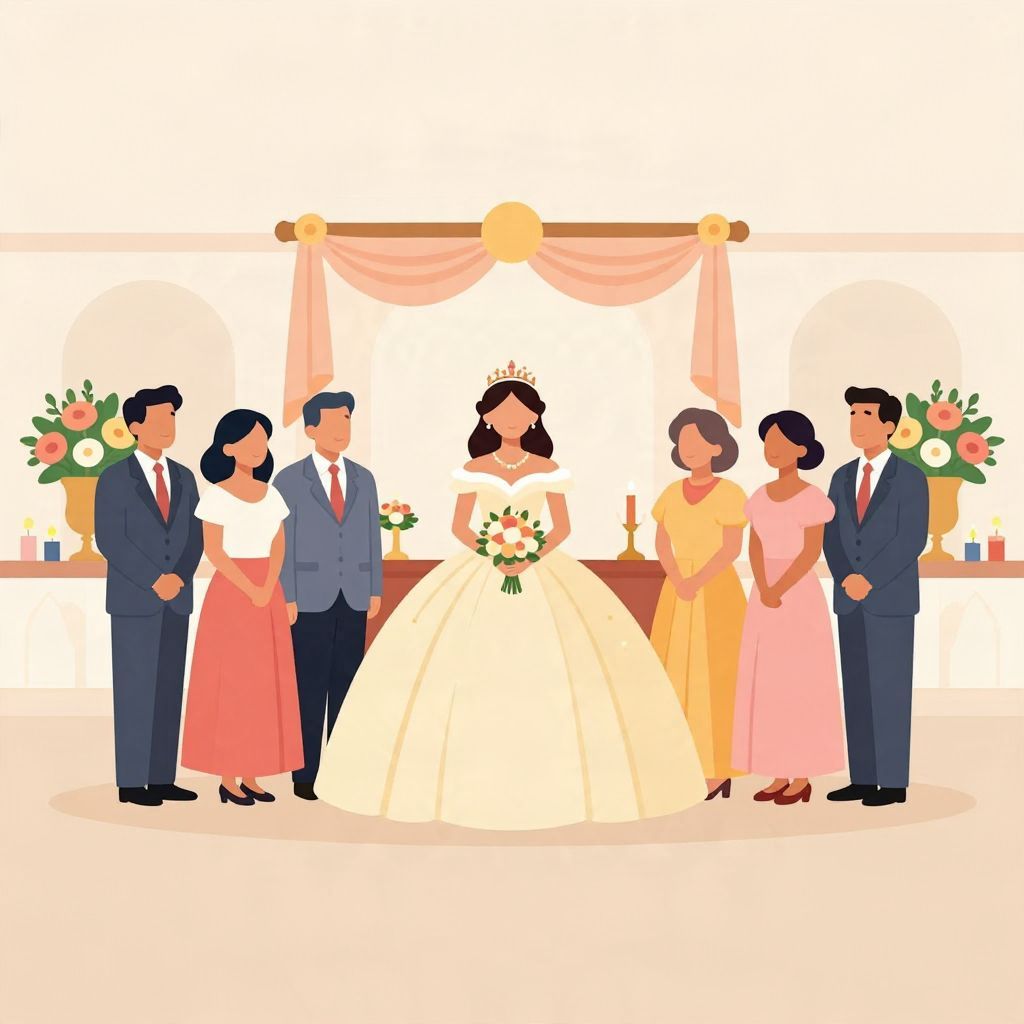
What is a quinceañera? At its simplest, it is a traditional coming-of-age celebration for a girl’s 15th birthday, especially in Mexico and across Latin American communities. The event marks a social transition from childhood toward young womanhood, though its meaning has changed over time and varies by family, region, and faith.
Today, the quinceañera is both a family celebration and a cultural tradition shaped by Indigenous, Spanish, Catholic, and modern influences. It is not a single ancient ritual with one fixed origin, but a living custom that developed over centuries and continues to evolve in the Americas and beyond.
What Is Quinceañera?
A quinceañera is a celebration of a girl turning 15, often including a religious ceremony, a formal reception, symbolic rituals, and a gathering of family and friends. Historically, it signaled a girl’s readiness for new social roles. In modern practice, it is usually a cultural and family milestone rather than a legal or universal rite.
Where Did the Quinceañera Tradition Come From?
The quinceañera tradition has no single founder or exact starting date. Historians generally see it as the result of layered cultural influences: pre-Columbian rites of passage, Spanish colonial customs, and Catholic religious practice. Over time, these influences blended into the celebration recognized today.
Indigenous roots and coming-of-age customs
Before Spanish colonization, many Indigenous societies in Mesoamerica marked important life transitions with ceremonies. These rites varied widely by community, but they often emphasized education, duty, marriageability, and social responsibility. It is important not to oversimplify these traditions into one uniform “original quinceañera,” because no single pre-Hispanic ceremony can be identified as the direct source of the modern event.
Spanish and Catholic influence
After the Spanish conquest in the 16th century, Catholic practices and European social customs reshaped local traditions. In colonial society, girls from elite families were often introduced more formally into social life as they approached marriageable age. The modern quinceañera developed in this colonial and postcolonial environment, where Catholic rites, family status, and ideas about femininity all played a role.
How Did the Quinceañera Develop Over Time?
The quinceañera changed gradually rather than appearing all at once. By the 19th and 20th centuries, especially in Mexico and other Latin American countries, the celebration became more recognizable as a birthday event centered on age 15. Migration later carried the tradition into the United States and other countries, where it adapted to new settings and family circumstances.
From social debut to family celebration
In earlier centuries, the celebration could function as a debut into society, especially among urban or wealthy families. Over time, it became more widely practiced across social classes and less tied to formal courtship or marriage. In many families today, the quinceañera is less about preparing for marriage and more about honoring identity, faith, and family continuity.
The role of migration and diaspora
As Latin American communities settled in the United States, Canada, and elsewhere, the quinceañera became a powerful marker of heritage. Families often preserved the tradition while adapting it to local customs, budgets, and languages. This helped the celebration remain relevant while also making it more diverse in style and scale.
What Happens at a Quinceañera?
Although details differ, many quinceañeras follow a similar pattern. The celebration often begins with a Catholic Mass or blessing, followed by a reception with music, dancing, food, and symbolic moments. Common elements include a formal dress, a court of attendants, and rituals that represent maturity and family support.
Common traditions and symbols
- The dress: Often formal and elaborate, symbolizing the transition to young womanhood.
- The court: Friends or relatives, sometimes called damas and chambelanes, accompany the quinceañera.
- The father-daughter dance: A symbolic moment highlighting family bonds and change.
- Changing of shoes: Flat shoes may be replaced with heels to symbolize growth and maturity.
- The last doll: In some families, this represents leaving childhood behind.
- Ceremonial gifts: These may include a tiara, rosary, Bible, or jewelry, depending on family tradition.
Religious and secular versions
Not every quinceañera includes a church ceremony. Some families emphasize the religious dimension, while others focus on the party and social aspects. In secular celebrations, the symbolism remains, but the event may be framed more broadly as a family milestone than a Catholic rite.
Why Is Age 15 Important?
Age 15 became significant because it was traditionally seen in many Hispanic societies as a threshold between childhood and adulthood, especially for girls. That does not mean a quinceañera declared a person legally adult. Rather, it marked a cultural expectation that a girl was entering a new stage of social life.
Gender, family, and social expectations
The tradition reflects historical ideas about gender roles, family honor, and social responsibility. In the past, a girl’s transition to womanhood was often linked to marriage prospects and domestic duties. Modern quinceañeras may still carry traces of those ideas, but many families now interpret the event in broader terms: self-esteem, education, faith, and cultural pride.
How Is a Quinceañera Different from a Birthday Party?
A quinceañera is more than a birthday party because it is structured around ritual meaning. The event usually includes planning, symbolism, and a formal presentation that sets it apart from an ordinary celebration. For many families, it is one of the most important milestones in a young person’s life.
Key differences
- Purpose: A birthday party celebrates age; a quinceañera celebrates a life transition.
- Formality: Quinceañeras often involve formal dress, choreography, and ceremonial roles.
- Religious dimension: Many include a Mass or blessing.
- Family significance: The event often reflects heritage, values, and intergenerational identity.
Is the Quinceañera Only Mexican?
No. Although the quinceañera is strongly associated with Mexico, it is also widely celebrated in many Latin American countries and among Latino communities in the United States and elsewhere. The exact customs vary by region, religion, and family background, so there is no single “correct” version of the tradition.
Regional variation across the Americas
In some countries, similar celebrations may have different names or slightly different customs. Families may emphasize church ceremonies, while others focus on dancing and social presentation. In the United States, the celebration often blends Latin American tradition with local customs, making it both familiar and adaptable.
What Does the Quinceañera Mean Today?
Today, the quinceañera carries multiple meanings at once. For some families, it is a religious milestone. For others, it is an expression of cultural heritage, a celebration of family unity, or a cherished rite of passage. Its endurance shows how traditions can survive by changing with the people who practice them.
Modern changes and continuing debates
Modern quinceañeras may be smaller, more expensive, more personalized, or more gender-inclusive than in the past. Some families question traditional gender expectations, while others preserve older symbols. These changes do not weaken the tradition; they show that it remains alive and responsive to contemporary life.
Why the Quinceañera Matters in History
The history of the quinceañera reveals how customs develop through cultural contact, religion, migration, and family life. It is a reminder that traditions are not frozen relics. They are historical creations that absorb new meanings over time while preserving a link to the past.
So, what is a quinceañera? It is a 15th-birthday coming-of-age celebration rooted in Latin American history, shaped by Indigenous, Spanish, and Catholic influences, and still meaningful today as a symbol of family, identity, and transition. For more on related cultural traditions, see how Christmas is celebrated in Mexico and why Mexicans celebrate Christmas on the 24th.