
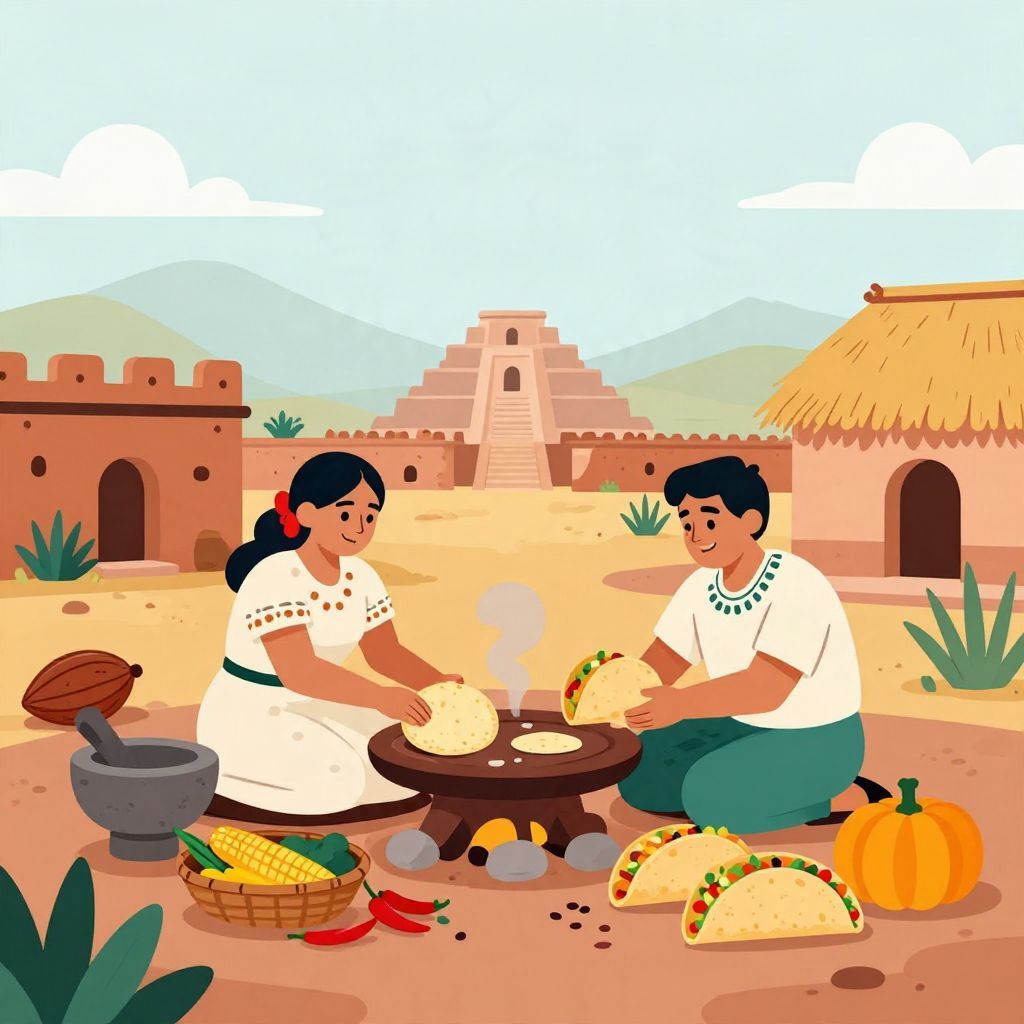
Where did tacos originate? The short answer is that tacos originated in Mexico, with roots in pre-Columbian Mesoamerican food traditions. Long before the modern taco took shape, Indigenous peoples in the region were using corn tortillas as edible vessels for beans, fish, game, and other fillings.
The exact moment the “first taco” appeared is impossible to identify, but the taco as a recognizable food developed over centuries in central and southern Mexico and later spread across the country and beyond.
Where did tacos originate?
Tacos originated in Mexico, especially from Indigenous Mesoamerican cooking traditions that predate Spanish colonization. The basic idea—placing food inside a tortilla and eating it by hand—emerged from long-standing corn-based foodways. The modern taco, however, evolved gradually in colonial and postcolonial Mexico rather than appearing at one single date.
The deep roots of the taco in Mesoamerica
To understand taco origins, it helps to look at the broader history of corn in the Americas. In Mesoamerica, corn was not just a crop; it was the foundation of daily life, religion, and cuisine. Indigenous communities developed nixtamalization, a process that treats corn with lime to improve its nutrition and make it easier to grind into dough. From that dough came tortillas, which became one of the most important foods in the region.
Once tortillas existed, it was natural to use them as a practical way to carry and eat other foods. Archaeological and historical evidence does not point to a single inventor of tacos, but it does show that Indigenous peoples in Mexico had many tortilla-based dishes long before Europeans arrived. In that sense, the taco belongs to a very old culinary tradition rather than to a modern invention.
Why tortillas mattered
Tortillas were portable, inexpensive, and adaptable. They could be made fresh each day and paired with whatever ingredients were available: beans, squash, chili peppers, turkey, fish, insects, or small game. Folding or wrapping food in a tortilla made it easier to eat while traveling, working, or farming. This practicality is one reason taco-like foods became so durable in Mexican cuisine.
Did tacos exist before the Spanish arrived?
Yes, in a broad sense. While the word taco is Spanish, the food concept existed in Indigenous Mesoamerican practice before the Spanish conquest in the 16th century. Early forms were not necessarily called tacos, but they fit the same basic pattern: tortilla plus filling, eaten by hand. The Spanish encounter did not create the idea; it changed the ingredients and the social world around it.
After conquest, new animals and foods entered Mexican cuisine. Pork, beef, chicken, cheese, onions, and wheat flour became part of local diets. Indigenous tortilla traditions persisted, and over time they blended with these introduced ingredients. This mixing helped shape the taco as it is known today.
What the word “taco” originally meant
The history of the word is more complicated than the food itself. In Spanish, taco could refer to a plug, a wad, or a short, thick object. In Mexico, the term came to describe food wrapped or assembled in a compact way. Some historians connect the word to mining and labor slang in colonial Mexico, where “tacos” may have described paper-wrapped charges or bundled items. That explanation is plausible, but the exact linguistic path remains debated.
How the taco developed in colonial Mexico
During the colonial period, Mexico became a place of culinary exchange. Indigenous cooking methods remained central, but they absorbed ingredients brought by the Spanish and, later, by African and Asian influences through the wider Spanish empire. The taco evolved in this environment as an everyday food for working people, market vendors, and rural communities.
Rather than being a single elite dish, the taco grew from ordinary life. It was inexpensive, flexible, and easy to prepare in many regions. Different areas of Mexico developed their own fillings, sauces, and tortilla styles. This regional variety is one reason tacos became such a lasting national food.
Common early fillings and styles
- Beans and chili peppers, which were already staple foods in Indigenous diets
- Fish and seafood in coastal regions
- Small game and turkey in inland areas
- Pork and beef after Spanish colonization
- Vegetables and herbs, depending on season and region
Where in Mexico did tacos become especially important?
Tacos were not invented in one city, but their history is strongly tied to central Mexico and the broader Valley of Mexico, where dense populations, markets, and agricultural systems supported tortilla-based eating. Over time, other regions developed their own taco traditions as well. Northern Mexico, for example, became known for flour tortillas and grilled meats, while coastal areas emphasized fish and seafood.
Mexico City later became a major center for taco culture because it drew people from many regions. Street vendors, market stalls, and urban workers helped popularize tacos in forms that were affordable, quick, and highly adaptable. The city did not invent the taco, but it played a major role in making it a national urban staple.
The modern taco: from local food to national symbol
The taco became more recognizable in its modern form during the 19th and 20th centuries, especially as urbanization, rail travel, and migration spread regional foods more widely. As Mexico modernized, tacos remained tied to everyday life rather than disappearing into elite cuisine. Their popularity grew because they were practical, flavorful, and easy to customize.
By the 20th century, tacos had also become a symbol of Mexican identity. They represented continuity with Indigenous food traditions while also reflecting centuries of change. This balance—ancient roots and modern adaptability—helps explain why tacos became one of Mexico’s most enduring culinary exports.
How migration spread tacos abroad
Mexican migration, especially to the United States in the late 19th and 20th centuries, helped tacos reach new audiences. In border regions and American cities, Mexican cooks and vendors adapted taco styles to local ingredients and tastes. Over time, tacos became internationally known, though often in forms that differed from traditional Mexican regional versions.
This global spread sometimes obscured the taco’s origins. In many places, tacos are now associated with fast food or Tex-Mex cuisine, but their historical roots remain firmly Mexican and Indigenous. The food’s worldwide fame should not be mistaken for its place of origin.
Popular myths and common misunderstandings
Because tacos are so familiar today, several myths surround their origin. One common misunderstanding is that tacos are a recent invention. In fact, the food’s roots are much older than the modern restaurant version. Another misconception is that the taco came from Spain; while the Spanish influenced Mexican cuisine, the tortilla-based foundation of the taco was already Indigenous.
It is also important to distinguish between the taco as a food tradition and the taco as a commercial product. Packaged hard-shell tacos, for example, are a much later development and should not be confused with the long history of soft tortilla-based tacos in Mexico.
Why the taco’s origin matters
The story of the taco is really a story about continuity and adaptation. It shows how Indigenous food traditions survived conquest, absorbed new ingredients, and remained central to everyday eating. Tacos are not just a convenient street food; they are part of a long historical chain linking ancient Mesoamerican agriculture to modern Mexican cuisine.
Understanding where tacos originated also helps correct a common habit of flattening history into a single invention story. The taco was not created by one person or in one moment. It emerged from centuries of culinary practice in Mexico, especially from the deep history of corn, tortillas, and portable meals.
Conclusion
Tacos originated in Mexico, with roots in pre-Columbian Mesoamerican tortilla traditions and centuries of development after the Spanish conquest. Their history is both Indigenous and colonial, local and national, ancient and modern. If you want to explore related food histories, you may also enjoy reading about where tamales originated and where salsa originated.