
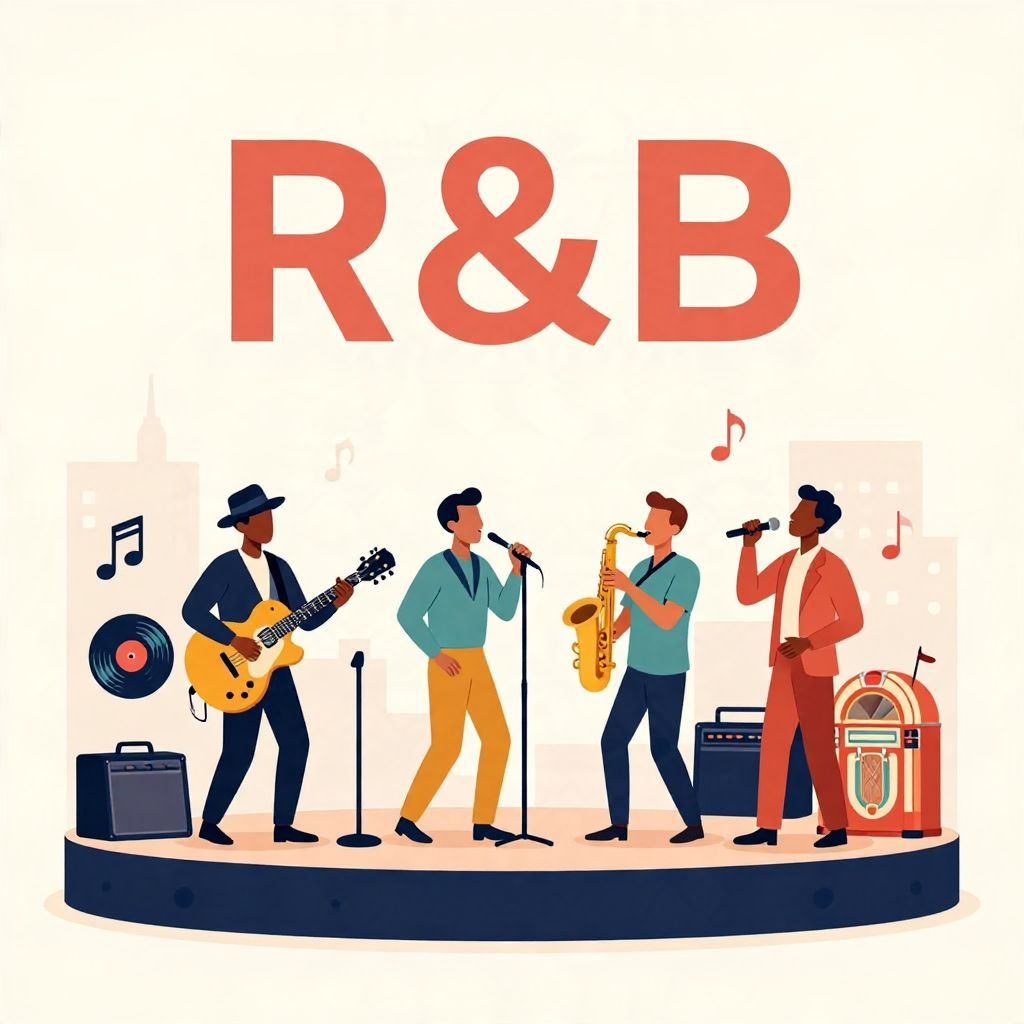
What does R&B stand for? The short answer is rhythm and blues, a term that emerged in the United States in the 20th century to describe a broad style of Black popular music. Over time, the label came to cover several related sounds, from blues-influenced dance music to soul, funk, and later contemporary pop styles.
Because the term has changed meaning across decades, the history of R&B is also the history of American music, recording industry marketing, and cultural change.
What does R&B stand for?
R&B stands for rhythm and blues. The phrase was popularized in the late 1940s as a replacement for the older industry label “race records.” It originally referred to Black American popular music that blended blues, jazz, gospel, and dance rhythms, and later became a wider category for many styles of Black popular music.
How the term R&B began
The label “rhythm and blues” was introduced in the United States in the late 1940s, especially through the music press and record industry charts. In 1949, Billboard began using the term “Rhythm & Blues” for chart categories that had previously been called “race records.” This shift reflected both changing marketing language and the growing influence of Black musicians in postwar popular music.
Why the name changed
The older term “race records” had been used since the early 20th century to market music made by Black artists to Black audiences. By the 1940s, many people considered that label outdated and offensive. “Rhythm and blues” sounded more modern and less explicitly racial, even though the music itself remained deeply rooted in Black cultural expression.
The musical roots of R&B
R&B did not appear out of nowhere. It grew from earlier traditions, including:
- Blues, especially urban and electric blues
- Jazz and swing-era dance music
- Gospel harmonies and vocal power
- Boogie-woogie piano styles and driving rhythms
These influences helped create music that was energetic, danceable, and emotionally direct. In the postwar years, that sound found a large audience through jukeboxes, radio, and touring performers.
What rhythm and blues meant in the 1940s and 1950s
In its earliest form, R&B was a broad commercial category rather than a single fixed style. It could include jump blues, vocal harmony groups, electric blues, and upbeat dance songs. Artists such as Louis Jordan helped define the sound with witty lyrics, strong backbeats, and arrangements that appealed to both Black and white listeners.
Key characteristics of early R&B
Early rhythm and blues often featured:
- a strong, driving beat
- blues-based chord patterns
- prominent saxophone, piano, or guitar
- call-and-response vocals
- lyrics about love, work, nightlife, and everyday life
These traits made the music highly adaptable. It could be performed by small combos, vocal groups, or larger bands, and it crossed over into other emerging genres.
The role of the record industry
Record labels and chart compilers used genre names to organize sales and radio play. “Rhythm and blues” became a practical industry term, but it also shaped how audiences understood the music. As the market expanded, the label came to encompass a changing set of sounds rather than one strict musical formula.
How R&B evolved over time
R&B changed significantly after the 1950s. What began as a label for postwar Black popular music gradually broadened into a family of styles. In the 1960s, soul music, Motown, and funk all overlapped with R&B. Later, the term was used for contemporary Black pop, quiet storm, new jack swing, and modern urban radio formats.
From rhythm and blues to soul
In the 1950s and 1960s, artists such as Ray Charles, Ruth Brown, and Sam Cooke helped bridge R&B and soul. Their music drew on gospel intensity, blues feeling, and pop structure. As the civil rights era reshaped American culture, “soul” became a powerful term of identity and pride, though many listeners and industry professionals still used R&B as an umbrella category.
Motown, funk, and crossover success
Motown Records, founded in Detroit in 1959, helped bring Black music to a broad national audience. Its polished sound influenced the way R&B was produced and marketed. In the 1970s, funk artists such as James Brown and groups like Earth, Wind & Fire pushed rhythm and blues toward heavier grooves, horn-driven arrangements, and more complex studio production.
R&B in the late 20th century
By the 1980s and 1990s, the term R&B often referred to a mix of soul, pop, funk, and hip-hop influences. New jack swing, for example, combined R&B vocals with hip-hop beats. Artists such as Whitney Houston, Boyz II Men, Mary J. Blige, and others showed how flexible the category had become.
What makes R&B different from blues or soul?
Because the term has shifted so much, people sometimes ask whether R&B is the same as blues or soul. The answer is no, but the genres overlap. Blues is an older musical tradition with its own structures and themes. Soul grew from gospel and R&B in the 1950s and 1960s. R&B is broader still, acting as both a genre and an industry label.
Simple comparison
- Blues: older roots, often centered on personal hardship, expressive guitar or vocal lines, and a distinct musical form
- Soul: emotionally charged popular music shaped by gospel and rhythm and blues
- R&B: a broad category covering many Black popular music styles across decades
In practice, a song may fit more than one label depending on the era, the artist, and the audience.
Why the term still matters today
Today, R&B remains a major genre label in music charts, awards, and radio programming. It now includes a wide range of styles, from smooth ballads to trap-influenced production. Modern R&B artists may sound very different from the performers of the 1940s, but the term still carries the history of Black American musical innovation.
R&B as a cultural category
The importance of R&B is not only musical. The term reflects how Black artists have shaped American popular culture while often working within industry systems that renamed, packaged, and marketed their work. Understanding the phrase helps explain how genre labels can both describe music and reveal social history.
Common misconceptions about R&B
One common misconception is that R&B has always meant the same thing. In reality, the term has been flexible from the start. Another misconception is that it refers only to slow love songs. While ballads are an important part of the genre, R&B has also included upbeat dance music, vocal groups, and rhythm-heavy tracks.
What the abbreviation does and does not mean
- It does mean rhythm and blues.
- It does not mean one single sound, one decade, or one fixed style.
- It does reflect a long history of Black musical creativity in the United States.
The lasting history behind a familiar abbreviation
R&B stands for rhythm and blues, but the phrase does more than name a genre. It marks a turning point in American music history, when Black popular styles were redefined for a changing postwar market and then expanded into soul, funk, and modern R&B. The term has endured because the music has kept evolving.
If you want to explore other abbreviation histories, you may also enjoy what FBA stands for and what BCE means.