
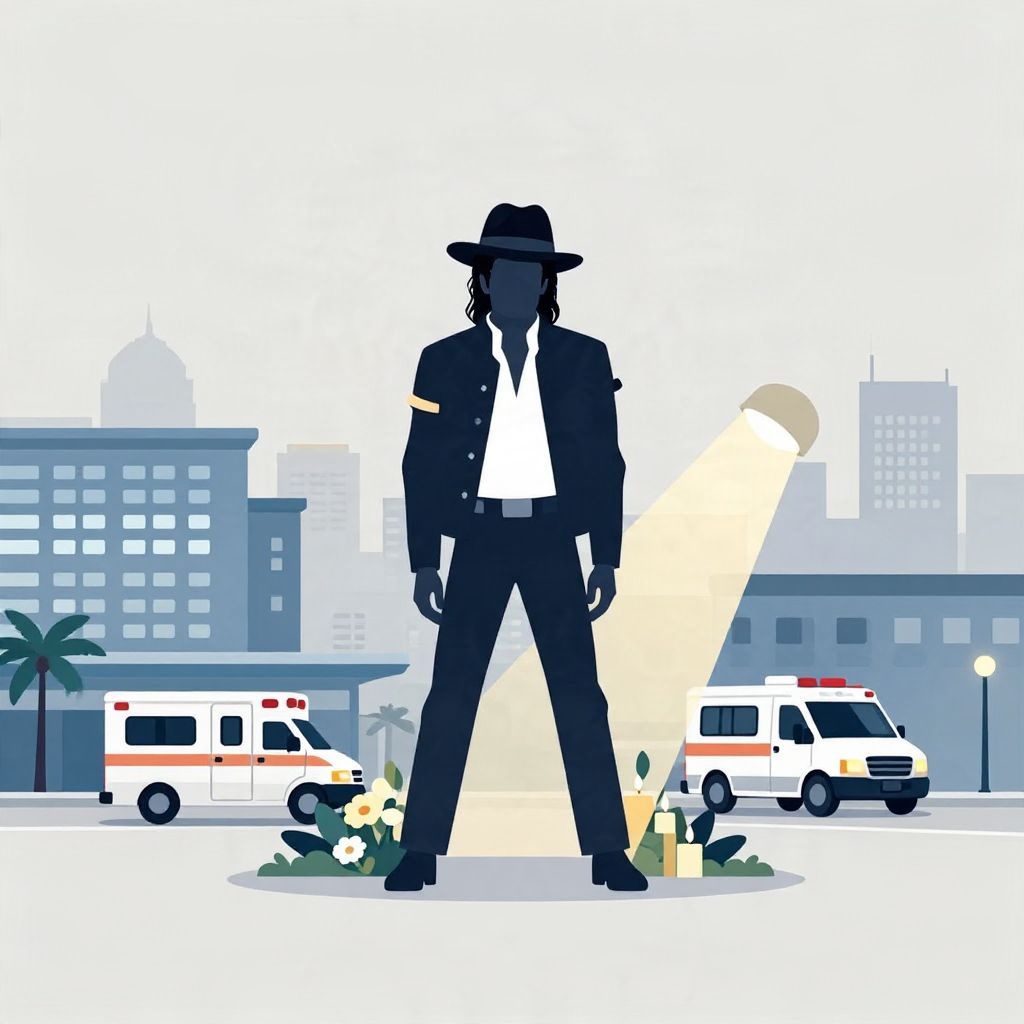
When did Michael Jackson die? The answer is precise: June 25, 2009. He died in Los Angeles, California, at age 50, after suffering cardiac arrest at his rented home while preparing for his planned “This Is It” concert comeback.
His death became a major global news event because Jackson was one of the most famous entertainers in modern history. The circumstances also led to a high-profile investigation, a criminal trial, and years of public debate about celebrity medicine, responsibility, and the pressures surrounding his final months.
When Did Michael Jackson Die?
Michael Jackson died on June 25, 2009, in Los Angeles, California. He was pronounced dead at Ronald Reagan UCLA Medical Center after emergency responders were called to his home in the Holmby Hills neighborhood. The official cause of death was acute propofol intoxication, with other sedative drugs contributing.
What Happened on the Day He Died?
Jackson’s death followed a medical emergency at his residence on the afternoon of June 25, 2009. Paramedics were called after he stopped breathing, and efforts to revive him were unsuccessful. He was transported to the hospital, where he was later pronounced dead. The event immediately drew worldwide attention because of his enormous fame and the suddenness of the loss.
The immediate sequence of events
- Jackson was at home in Los Angeles on June 25, 2009.
- Emergency services were called after he became unresponsive.
- He was taken to UCLA Medical Center.
- He was pronounced dead later that day.
Because Jackson was in the middle of preparing for a major series of comeback concerts, his death shocked fans, the music industry, and the broader public. The planned performances at London’s O2 Arena were promoted as a major return to the stage, making the timing even more dramatic.
Why Was His Death So Widely Reported?
Michael Jackson was not just a successful singer; he was a global cultural figure whose career had shaped pop music, dance, music videos, and celebrity culture for decades. By 2009, he had been famous for most of his life, first as a child star with the Jackson 5 and later as a solo artist whose albums transformed popular music.
His death was reported instantly around the world because it combined several powerful historical forces: the reach of 24-hour news, the internet, and Jackson’s extraordinary fame. In the modern era, few entertainment figures have commanded such immediate international attention.
Jackson’s place in music history
Jackson’s influence stretched across multiple generations. Albums such as Off the Wall, Thriller, and Bad helped define the sound and visual style of late 20th-century pop. His death therefore marked not only the loss of a performer, but also the end of an era in popular culture.
What Caused Michael Jackson’s Death?
The official cause of death was acute propofol intoxication, with benzodiazepines and other drugs also present. Propofol is a powerful anesthetic normally used in medical settings, not as a sleep aid. The medical and legal scrutiny that followed focused on how and why such drugs were being used in a private home.
In 2011, Jackson’s personal physician, Conrad Murray, was convicted of involuntary manslaughter. The case centered on Murray’s role in administering medications and his conduct in the hours before Jackson died. The trial became one of the most closely watched celebrity legal proceedings of the early 21st century.
Why the case mattered
The aftermath raised broader questions about prescription drug misuse, the responsibilities of physicians, and the intense demands placed on high-profile performers. Jackson’s death was not simply a private tragedy; it became a public case study in the dangers of unmanaged medication use and the vulnerabilities of celebrity life.
How Old Was Michael Jackson When He Died?
Michael Jackson was 50 years old when he died. He was born on August 29, 1958, in Gary, Indiana. His death at age 50 came relatively early compared with the length of his career, which had already spanned more than four decades by 2009.
His age is often noted because he had been performing since childhood. By the time of his death, he had lived through multiple reinventions: child star, teen idol, record-breaking solo artist, and late-career comeback figure. That long public life made the news of his death feel especially historical.
What Was Michael Jackson Doing in 2009?
In 2009, Jackson was preparing for a major return to live performance called This Is It. The concerts were scheduled for London and were intended to restore him to the stage after years of reduced public appearances. Rehearsals and promotional efforts were underway in the months before his death.
This context matters because Jackson’s final months were shaped by both ambition and strain. The comeback was meant to be a triumphant new chapter, but it also placed intense physical and emotional pressure on him. His death abruptly ended that plan and transformed the concert project into a memorial of sorts.
The unfinished comeback
The planned concerts were never performed by Jackson himself. Instead, rehearsal footage and preparations were later assembled into the documentary film This Is It, which gave the public a glimpse into his final creative work. The film became a major release and added to the historical record of his last days.
What Happened After His Death?
Jackson’s death triggered a global wave of mourning. Fans gathered outside hospitals, memorial sites, and public spaces in cities around the world. Radio stations played his music continuously, and television networks devoted extensive coverage to his life and career.
A formal public memorial service was held on July 7, 2009, at the Staples Center in Los Angeles. The event drew enormous attention and featured performances, speeches, and tributes from family members, friends, and fellow entertainers. It became one of the most watched memorial events in modern entertainment history.
Long-term consequences
His death also had lasting legal and financial consequences. The estate became the focus of major business decisions, copyright management, and posthumous releases. Jackson’s catalog continued to generate enormous revenue, and his legacy remained a subject of public fascination, criticism, and admiration.
Why Do People Still Ask When Michael Jackson Died?
People still search for the date because Jackson’s life and death remain part of modern cultural memory. He was so famous that even basic facts about his biography are widely discussed. The question also appears frequently because his death is tied to a larger story about celebrity, medicine, and the pressures of fame.
There is another reason the date remains memorable: it is a clear historical marker. June 25, 2009, is the day the world learned that one of the most recognizable performers of the 20th century had died unexpectedly in the middle of a planned comeback.
Michael Jackson’s Death in Historical Perspective
Jackson’s death belongs to the history of modern celebrity as much as it belongs to music history. In earlier eras, famous deaths were often remembered through newspapers and public mourning; in Jackson’s case, the event unfolded in real time across television, websites, and social media. That made the public response unusually immediate and global.
It also highlighted how the lives of major entertainers can become historical events in themselves. Jackson’s career had already changed popular culture, but his death cemented his place in the modern historical record, where personal tragedy, media coverage, and legal aftermath all became part of the story.
In short: Michael Jackson died on June 25, 2009, in Los Angeles at age 50. The date is remembered not only because of who he was, but because his death marked the sudden end of a landmark career and set off one of the most widely followed celebrity stories of the 21st century. For related reading, see when Michael Jackson died and what year Michael Jackson passed away.