
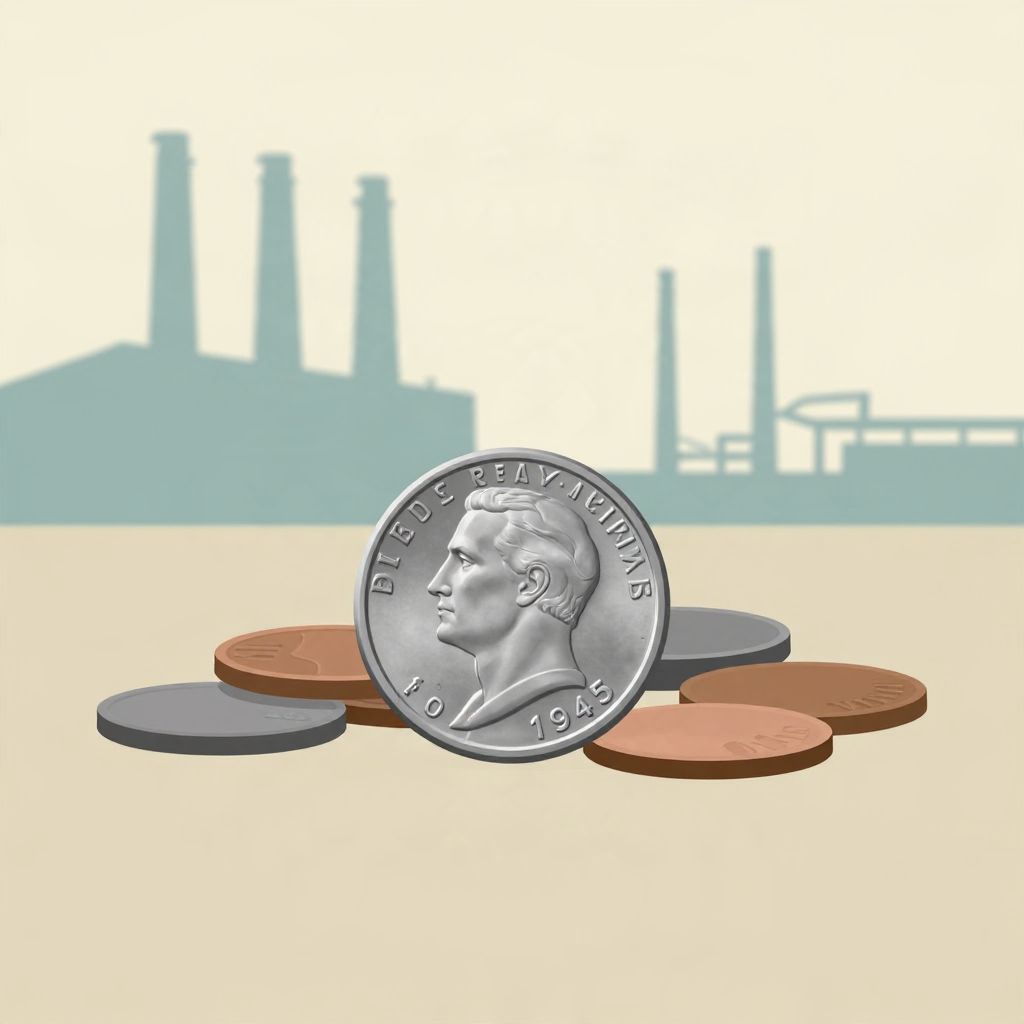
If you have ever wondered what year nickels are silver, the short answer is that U.S. five-cent coins were made with silver only during World War II, from 1942 through 1945. These are usually called wartime nickels, and they look slightly different from regular nickels because of a temporary change in metal composition.
The story behind them is a practical one: the government needed nickel metal for the war effort, so the Mint replaced it with a silver-based alloy. That change created one of the most recognizable and collectible U.S. coin varieties of the 20th century.
What Year Nickels Are Silver?
Nickels are silver in the years 1942, 1943, 1944, and 1945, but only the five-cent coins made during World War II with the special wartime alloy. These coins contain silver, copper, and manganese, not the usual copper-nickel mix. They were produced to conserve nickel for military use, and they are the only U.S. nickels commonly described as “silver nickels.”
The exact wartime composition
From late 1942 through 1945, the U.S. Mint used a composition of 56% copper, 35% silver, and 9% manganese. This alloy gave the coins a slightly different appearance and a distinctive tone when dropped. It also made them easy to identify once collectors learned what to look for.
Why Were Nickels Made With Silver During World War II?
The change was driven by wartime shortages. Nickel was an important strategic metal used in armor plating, stainless steel, and other military applications. By reducing or eliminating nickel from the five-cent coin, the government could redirect that metal toward the war effort without stopping coin production.
This was not a symbolic choice. It was a wartime supply decision based on industrial necessity. The Mint had to keep producing coins for everyday commerce, but it also had to adapt to the demands of a global war that affected nearly every material used in American industry.
The role of the Treasury and the Mint
Officials at the Treasury Department and the U.S. Mint searched for a substitute alloy that would work in vending machines, coin counters, and ordinary circulation. The silver-manganese alloy was chosen because it could be struck successfully and would behave more consistently than some other experimental mixtures.
How to Identify a Silver Wartime Nickel
Collectors and casual finders often ask how to tell whether a nickel is one of the silver wartime issues. The easiest clue is the date: 1942 to 1945. But there is one important detail—only some 1942 nickels are silver, because the change happened partway through the year.
Look for the mint mark above Monticello
Most wartime nickels have a large mint mark above Monticello on the reverse, rather than the usual location on the obverse. This is one of the fastest ways to identify them. The Philadelphia Mint also used a large “P,” which was the first time that mint mark appeared on a circulating U.S. coin.
- 1942: Only the coins struck after the composition change are silver wartime nickels.
- 1943–1945: All regular five-cent pieces from these years are silver wartime nickels.
- Mint mark placement: Large mint marks appear above Monticello on the reverse.
Why 1942 is the tricky year
In 1942, the Mint changed the alloy during the year, so not every 1942 nickel is silver. Early 1942 nickels were still made in the standard copper-nickel composition. The silver wartime version began later in the year, after the new alloy was approved and production was adjusted.
The Story Behind the Wartime Nickel
The wartime nickel is a good example of how world events can reshape everyday objects. A coin that millions of Americans used for small purchases became a tool in a larger industrial and military strategy. It also shows how quickly governments can alter familiar designs when circumstances demand it.
A coin designed for public use and war production
The new alloy had to satisfy several practical goals at once. It needed to preserve nickel, remain durable in circulation, and work in the machines that depended on consistent coin size and weight. The result was a coin that looked and felt slightly different but still functioned as money in daily life.
Because silver was already a familiar and valuable metal, the change also gave the coin a special place in later collecting. People often assume “silver” means the coin was made of pure silver, but that is not true. Wartime nickels were silver alloy coins, not solid silver coins.
Are All Old Nickels Silver?
No. Most nickels in U.S. history were never silver at all. The standard five-cent piece was usually made from a copper-nickel alloy. The wartime issues are the exception, not the rule. If a nickel is dated outside 1942–1945, it is almost certainly not a silver nickel in the usual sense.
Common misunderstanding about “silver nickels”
Some people use the phrase loosely to mean any old nickel that has a gray or shiny appearance. But appearance alone is not enough. Wear, toning, cleaning, and lighting can all make a coin look silvery. The historical test is composition, and the key dates are the wartime years.
Why Collectors Care About Silver Nickels
Wartime nickels are popular with collectors for several reasons. They are historically meaningful, easy to identify, and still obtainable in circulated condition. They also mark a clear break in U.S. coinage history, when the demands of war changed the metal in an everyday coin.
Collecting value and historical interest
Many examples are not rare in a strict sense, but certain dates, mint marks, and high-grade specimens can be more desirable. Collectors also value them because they connect numismatics to a major world event. A wartime nickel is a small object with a very large historical backstory.
- Historical context: They were created because of World War II shortages.
- Easy identification: The dates and mint marks make them recognizable.
- Collector appeal: They are among the most famous U.S. coin varieties.
What Happened After 1945?
After the war, the Mint returned to the regular copper-nickel composition. The silver alloy was only a temporary solution, and once wartime pressure eased, the government no longer needed to conserve nickel in the same way. By 1946, standard nickels were back in circulation.
The end of the silver nickel era
This brief period lasted only a few years, but it left a lasting mark on American coinage. The wartime nickel is remembered not just because it contains silver, but because it reflects the way a nation at war adapted even its smallest daily objects to meet larger needs.
Quick Answer for Coin Hunters
If you are sorting pocket change or old coin rolls, remember this simple rule: U.S. nickels are silver only for the wartime issues dated 1942 to 1945, with the important exception that only some 1942 nickels qualify. Look for the large mint mark above Monticello to confirm you have a wartime nickel.
That makes the silver nickel a short-lived but important chapter in U.S. history: a coin changed by war, remembered by collectors, and still easy to identify today. If you want to explore the topic further, see when nickels were silver and when they stopped making silver nickels.