
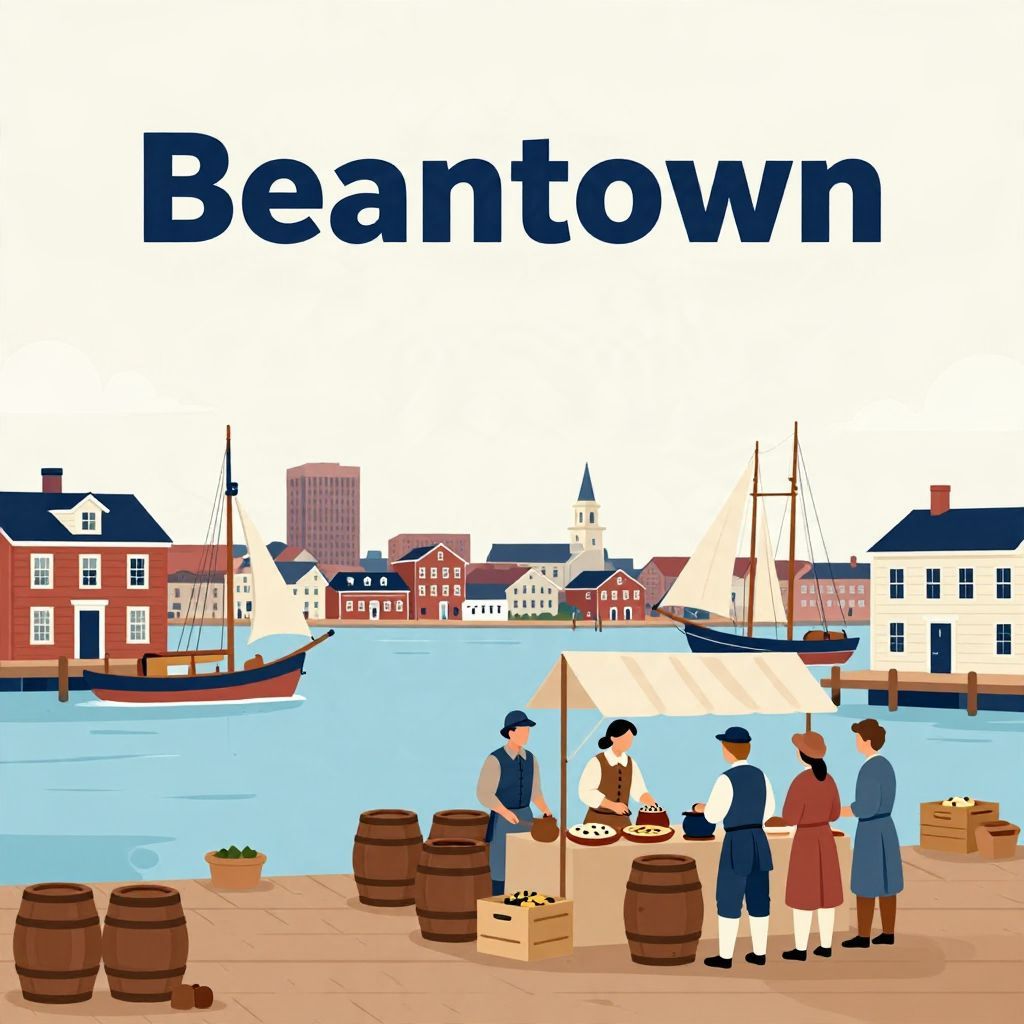
Why is Boston called Beantown? The short answer is that the nickname comes from Boston’s long association with baked beans, especially the city’s colonial-era habit of cooking beans with molasses and salt pork. Over time, that food tradition became a symbol of Boston itself, and the nickname stuck in popular culture.
But the story is more than a simple food joke. “Beantown” reflects Boston’s Puritan roots, its role in New England cooking, and the way outsiders and locals alike turned a practical dish into a civic identity.
Why Is Boston Called Beantown?
Boston is called Beantown because baked beans were a familiar and widely associated dish in the city and throughout New England, especially from the colonial period onward. The nickname grew from Boston’s reputation for bean-based cooking, then spread through newspapers, tourism, and everyday speech. It is a cultural nickname, not an official one.
The Food Behind the Nickname
The most important reason Boston became known as Beantown is the city’s long connection to baked beans. In colonial New England, beans were inexpensive, filling, and easy to store. When combined with molasses and pork, they became a hearty dish well suited to the region’s climate and economy.
Why beans mattered in New England
Beans were practical food for early settlers. They grew well in the region, could be dried for winter, and fit into household cooking that valued thrift and endurance. Boston, as the largest city in colonial New England, became strongly associated with this style of cooking. That association gradually turned into a nickname.
Boston’s bean reputation was also tied to the broader New England habit of slow-cooked, economical meals. Baked beans were not unique to Boston, but the city became the best-known symbol of them. In the same way that some cities become identified with a single product or dish, Boston’s image became linked to beans.
Colonial Boston and the Origins of the Dish
The roots of Boston’s bean identity go back to the 17th and 18th centuries, when Puritan settlers shaped the culture of Massachusetts Bay. Their food traditions emphasized simplicity, restraint, and practicality. Beans fit that world perfectly, especially when paired with molasses, a sweetener that became common in the Atlantic economy.
Molasses, trade, and New England cooking
Molasses helped make baked beans distinctive in Boston and the surrounding region. New England merchants were deeply involved in Atlantic trade, including the rum economy, which relied on molasses imported from the Caribbean. That ingredient gave Boston-style baked beans their characteristic sweet flavor and tied the dish to the port city’s commercial life.
Salt pork or bacon often joined the beans in the pot, adding richness to an otherwise simple meal. The result was a dish that was cheap, practical, and flavorful enough to become a regional staple. Over time, it became one of the foods most closely identified with Boston.
How the Nickname Became Popular
The exact moment when “Beantown” began is hard to pin down. Like many nicknames, it likely developed gradually in speech before appearing widely in print. By the 19th and early 20th centuries, Boston’s bean association was well established, and the nickname became part of the city’s public image.
From local habit to public identity
As Boston grew into a major American city, its older colonial traditions became part of its identity. Visitors, journalists, and advertisers often used local food customs to describe the city. “Beantown” worked because it was memorable, slightly humorous, and instantly recognizable.
The nickname also fit Boston’s reputation for preserving older New England traditions. In popular imagination, the city represented a mix of old-fashioned respectability, historical memory, and regional pride. Calling it Beantown turned a humble dish into a shorthand for all of that.
Is “Beantown” a Compliment or an Insult?
It can be either, depending on tone and context. For many people, Beantown is affectionate and playful, a nickname that celebrates Boston’s heritage. For others, especially in earlier periods, it could sound teasing or mocking, suggesting a city defined by a simple, even provincial food.
That dual meaning is common in nicknames. A term that begins as an outsider’s joke can later become a badge of pride. Boston residents and sports fans often embraced Beantown over time, especially as the city leaned into its historical image.
What Boston’s Bean Nickname Reveals About History
Beantown is not just about food. It shows how everyday habits can become part of historical memory. A basic household dish, repeated across generations, can come to symbolize a city’s economy, culture, and social identity. In Boston’s case, beans connected domestic life, Atlantic trade, and regional tradition.
Food as historical memory
Historical nicknames often preserve older realities in simplified form. Boston really did have a strong bean tradition, but the nickname compresses a much larger story: colonial settlement, New England thrift, maritime trade, and the making of a regional identity. The name survives because it is vivid and easy to remember.
It is also worth noting that Boston’s identity has never been limited to beans. The city is equally associated with the American Revolution, education, immigration, politics, and sports. Still, Beantown remains one of its most enduring popular labels because it captures a distinct slice of its past.
Common Myths and Misunderstandings
One common misunderstanding is that Boston was officially named Beantown or that there was a single event that created the nickname. There is no evidence for that. The name developed gradually from long-standing associations rather than from a formal naming moment.
Not just about one recipe
Another misconception is that Boston’s nickname comes from one specific recipe or one famous restaurant. In reality, the connection is broader and older. The dish of baked beans was part of everyday New England life long before it became a marketing slogan or sports chant.
It is also inaccurate to treat Beantown as if it describes only Boston proper. The nickname reflects the wider cultural world of New England, where beans, molasses, and slow-cooked meals were common. Boston became the best-known symbol of that world because it was the region’s largest and most influential city.
Why the Nickname Still Matters
Boston is still called Beantown because the nickname has lasted far beyond the era that produced it. It survives in tourism, sports culture, local humor, and historical memory. Even people who have never eaten Boston baked beans know the phrase and understand what it suggests.
That endurance matters historically. Nicknames survive when they feel true enough to be useful, even if they simplify the past. Beantown does exactly that: it turns a regional food tradition into a lasting symbol of place.
Conclusion
Boston is called Beantown because baked beans became one of the city’s most recognizable cultural associations, rooted in colonial New England cooking and reinforced over time by popular speech. The nickname is affectionate, historical, and a little playful—an example of how ordinary food can shape the identity of a city. For more on food and historical memory, see the history of hamburgers and what happened in 1924.