
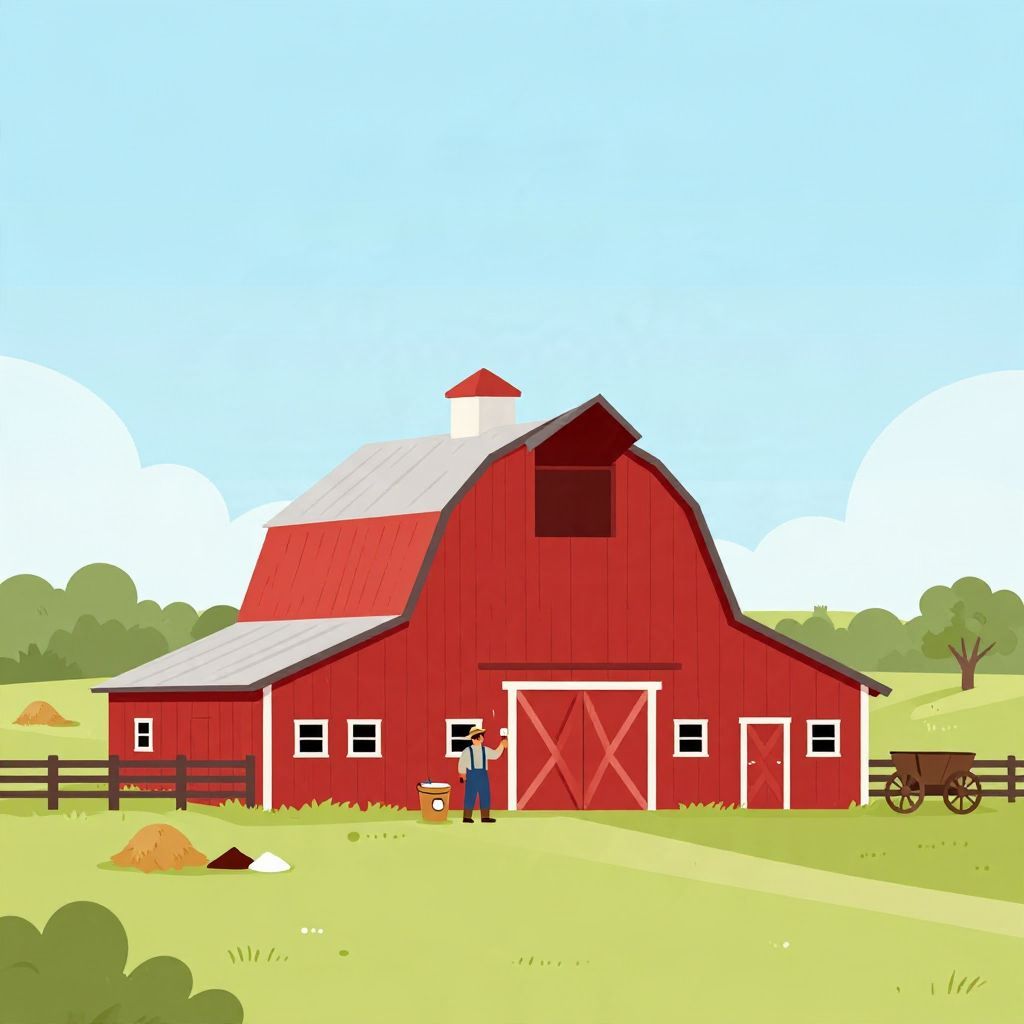
Why are barns painted red? The short answer is that red paint was once cheap, practical, and widely available, especially in rural North America and parts of Europe. Farmers often used homemade coatings made from ingredients like linseed oil, milk, lime, soot, and iron oxide, which helped protect wood while giving barns a distinctive red-brown color.
Over time, that practical choice became a tradition. Even after commercial paints became common, red barns remained popular because the color was familiar, visible, and strongly associated with farm life.
Why are barns painted red?
Barns were painted red mainly because early protective coatings were inexpensive and effective. Iron oxide, a common rust-colored pigment, was easy to obtain and helped preserve wood from weather and insects. The color became traditional because it was economical, durable, and eventually became a symbol of rural life.
The practical origins of red barn paint
The red barn is not an ancient architectural rule or a universal farming custom. It grew out of practical needs. Wooden barns needed protection from rain, sun, and decay, and farmers often made their own paint-like mixtures from materials they already had on hand. Red was a natural result of those ingredients.
Homemade farm coatings
Before mass-produced paint, farmers used mixtures that could seal wood and slow rot. A common recipe included linseed oil as a binder, milk or casein for body, and pigments such as iron oxide. Some mixtures also included lime, soot, or turpentine. These coatings were not always “paint” in the modern sense, but they served the same purpose.
Iron oxide was especially important. It gave the mixture a reddish color and had the practical advantage of being cheap and widely available. In many places, it could be gathered from local soil, rust, or natural mineral deposits. Because of that, red became one of the easiest colors for farmers to produce.
Protection mattered more than appearance
For most farmers, the first concern was not style. A barn was a working building that stored hay, housed animals, and protected tools and grain. A coating that helped wood last longer saved money and labor. Red paint offered a useful balance of protection and low cost, so it spread naturally through farm communities.
How red barns became a tradition
Once red barns became common, the color took on a life of its own. What began as a practical solution became a recognizable rural look. In the 19th century, especially in the United States, red barns were increasingly associated with prosperous farms, orderly landscapes, and a settled agricultural way of life.
Cheap paint and growing availability
By the 1800s, commercial paints became more available, but many farmers still preferred red because it remained affordable and familiar. Manufactured paints also made it easier to get a consistent color. As barn-building expanded across North America, red became the default choice in many regions.
This was not because every farmer believed red had special meaning. Rather, the color had already become normal. Once a practical habit becomes widespread, it can persist long after the original reason is forgotten.
Community influence and imitation
Farmers often copied what worked for their neighbors. If nearby barns were red, new barns were likely to be painted the same way. Over time, the color became part of the visual identity of farming communities. In this way, red barns were shaped by both economics and social imitation.
Was red the only barn color?
No. Barns were painted many colors, and some were left unpainted. Red became especially common, but it was never universal. The color depended on local materials, climate, wealth, and personal preference. In some places, barns were white, black, brown, or simply weathered gray.
White barns and other regional choices
White barns were also common, especially where limewash or white paint was practical and affordable. In some regions, black barns appeared because tar or dark preservatives were used on wood. Other barns were painted with whatever pigment was cheapest or most available locally.
The idea that all barns were once red is a myth. Red is simply the color that became most iconic in American popular memory. That memory was reinforced by paintings, calendars, advertisements, and later by tourism and nostalgia for the rural past.
The science behind the red color
The red in barn paint usually came from iron oxide, the same basic compound that makes rust look red-brown. Iron oxide pigments are stable, weather-resistant, and relatively inexpensive. That made them ideal for farm use, especially before industrial chemistry produced a wider range of low-cost paints.
Why iron oxide worked well
- Cheap: It was easier to obtain than many refined pigments.
- Durable: It held color reasonably well in sunlight and weather.
- Protective: Mixed with oil or other binders, it helped shield wood surfaces.
- Accessible: Farmers could often source it locally or cheaply.
Because the pigment was practical, it became a standard feature of rural building maintenance. The color was not chosen for symbolism at first; symbolism came later.
Did red barns have symbolic meaning?
Sometimes, but usually later rather than earlier. In the modern imagination, red barns suggest hard work, simplicity, family farming, and a nostalgic rural landscape. Those meanings are real as cultural associations, but they were not the original reason barns were painted red.
Red as a sign of prosperity
In some communities, a painted barn could suggest that a farmer was organized and successful enough to maintain the property. A freshly painted barn, whatever the color, signaled care and stability. Red may have stood out especially well against fields, snow, and trees, making a farm look neat and established.
Red in popular culture
By the late 19th and 20th centuries, the red barn had become a visual shorthand for “the countryside.” Artists, advertisers, and postcard makers repeated the image so often that it became almost timeless. As a result, many people now assume red barns are an old tradition rooted in symbolism, when the truth is more practical and ordinary.
What about Europe?
Red-painted farm buildings were not unique to the United States. In parts of northern Europe, similar coatings were used on wooden structures, especially where iron-rich pigments and protective oils were available. However, barn traditions varied widely by region, building material, and local climate.
Wooden architecture and preservation
Where wood was the main building material, protective coatings were especially important. In colder or wetter climates, paint helped slow deterioration. That is one reason red-coated wooden buildings appear in several European traditions, not just American farm culture. Still, the American red barn became the most famous version of the idea.
Common myths about red barns
Several popular explanations circulate about red barns, but not all are well supported by historical evidence. Some are folk stories that sound plausible but oversimplify the past.
- Myth: Barns were painted red because it was the only color available.
Reality: Red was cheap and common, but not the only option. - Myth: Red barns were painted that way for a single symbolic reason.
Reality: Practicality came first; symbolism developed later. - Myth: All old barns were red.
Reality: Many barns were white, black, unpainted, or weathered gray. - Myth: There is one exact origin story.
Reality: The tradition developed gradually across different regions and periods.
Why the red barn still matters today
The red barn remains powerful because it connects architecture, labor, and memory. It represents a time when buildings were made to serve daily agricultural work, not just to look picturesque. Even now, the red barn continues to shape how people imagine rural history in North America.
That lasting image also reminds us that many historical traditions begin with practical choices. A color selected for cost and preservation can eventually become a cultural icon. In the case of barns, red was not chosen because it was mysterious or ceremonial, but because it made good sense for farmers trying to protect their buildings.
The historical answer in one sentence
Barns were painted red because early farmers used inexpensive, weather-resistant coatings—often containing iron oxide—that protected wood, and the practical color later became a long-lasting rural tradition.
If you want to explore how everyday buildings carry cultural meaning, you may also enjoy reading about cultural preservation in architecture and the broader history of places and identities in What Is Persia Now?