
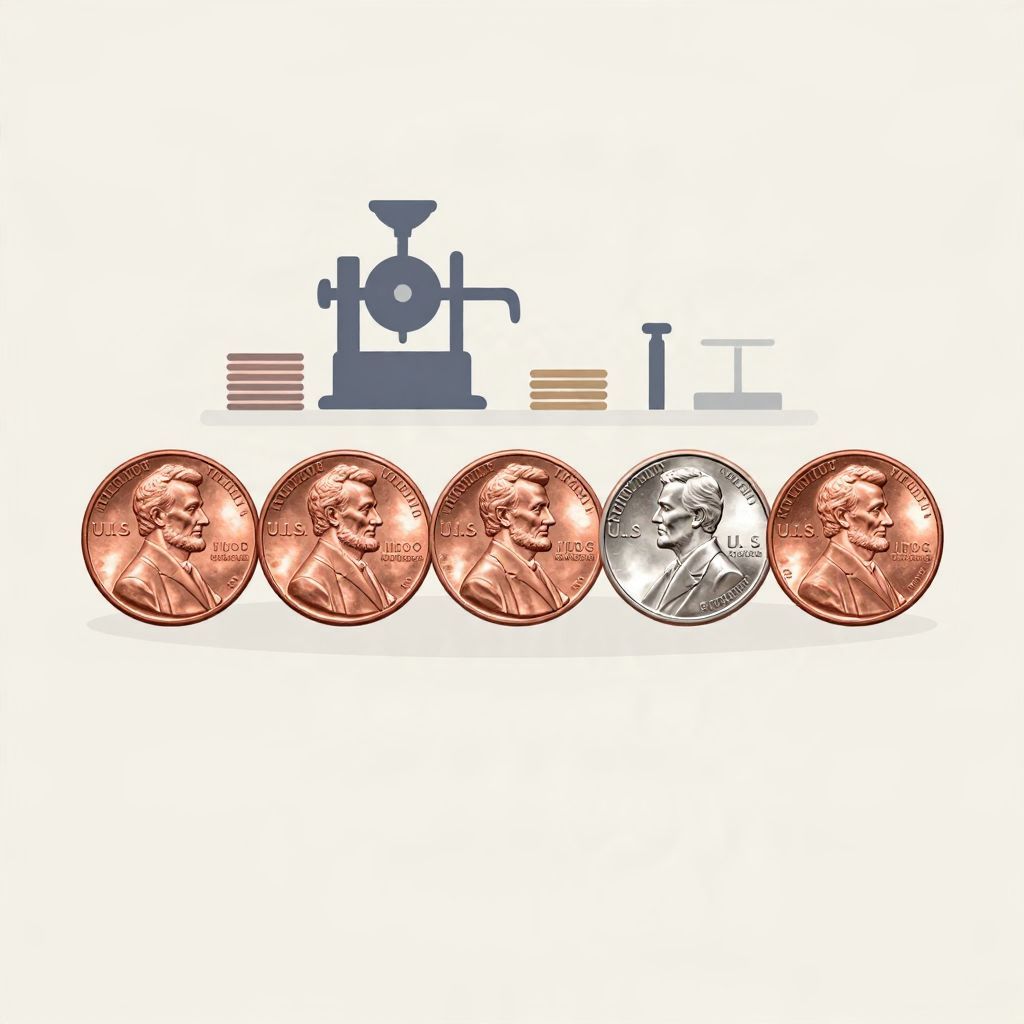
Ask “when did pennies stop being copper,” and the answer depends on which country you mean. In the United States, pennies stopped being made of mostly copper in 1982, when the U.S. Mint switched the cent from a bronze alloy to a zinc core with a thin copper coating.
That change did not happen overnight. It was driven by rising copper prices, the metal’s value on the market, and the practical problem of making a one-cent coin whose metal could cost more than its face value.
When did pennies stop being copper?
U.S. pennies stopped being mostly copper in 1982. Before that year, the cent was made of a copper-based bronze alloy. In 1982, the Mint changed the composition to 97.5% zinc with 2.5% copper plating. So modern pennies still look copper-colored, but they are no longer solid copper and have not been since 1982.
The short answer: 1982 was the turning point
If you are asking about the American penny, 1982 is the key date. That year marks the transition from the traditional copper-alloy cent to the modern zinc cent with copper plating. The switch was motivated by economics, not symbolism: copper had become too expensive to keep using in a low-value coin.
What changed in the coin?
- Before 1982: pennies were mostly copper, usually a bronze alloy.
- From 1982 onward: pennies were made primarily of zinc with a thin copper coating.
- Appearance: the color stayed coppery, so the change was not obvious at a glance.
Why did the U.S. penny stop being copper?
The main reason was cost. By the late 1970s and early 1980s, the price of copper had risen enough that the metal in a penny was worth far more than one cent. That created a problem for the U.S. government: minting a penny with copper became increasingly expensive and economically wasteful.
The U.S. Mint needed a cheaper metal that could still work in vending machines, coin-counting equipment, and everyday use. Zinc provided that solution. It was less expensive, easier to source in the needed quantities, and could be coated with copper so the coin would keep its familiar look.
Why not just keep using copper anyway?
Governments do not usually make coins from precious or high-value metals when the coin’s face value is very low. If the metal inside the coin becomes worth close to, or more than, the coin itself, people may hoard it, melt it, or simply remove it from circulation. That is one reason coin compositions change over time.
What exactly was a copper penny before 1982?
For most of the 20th century, the U.S. cent was not pure copper, but it was copper-based. From 1909 through 1982, the standard penny was typically made of 95% copper and 5% tin and zinc, a bronze alloy. That is why older pennies are often called “copper pennies.”
There is an important exception: during World War II, the Mint briefly changed the penny’s composition because copper was needed for war production. In 1943, pennies were made of zinc-coated steel. In 1944, the Mint returned to a copper-based alloy, using metal recovered from shell casings.
A brief timeline of U.S. penny metal changes
- 1909–1942: mostly copper alloy.
- 1943: steel cent, due to wartime copper shortages.
- 1944–1982: copper-based alloy again.
- Mid-1982 onward: zinc core with copper plating.
How the 1982 change happened
The transition in 1982 was not a single dramatic switch on one day. It was a manufacturing change made during the year, and both old and new compositions circulated around the same time. As a result, 1982 pennies can be confusing to collectors because some are copper-based and some are zinc-based.
The Mint produced different 1982 pennies and did not mark the coins in a way that clearly identified the metal. That means the date alone does not tell the whole story. A 1982 penny may be either composition, depending on which variety it is.
How can you tell a 1982 penny’s composition?
Collectors often use weight. A copper-based penny weighs about 3.11 grams, while a zinc penny weighs about 2.5 grams. The difference is small but measurable. The date is not enough; you need to know which 1982 variety you have.
Did pennies ever stop being copper in other countries?
Yes, in many countries the answer is different. “Penny” is often used loosely in English to mean a low-value coin, but coin materials have changed at different times around the world. Some countries stopped using copper in small coins much earlier than the United States, while others never used a coin called a penny at all.
If your question is about British pennies, for example, the story is different again. The old pre-decimal British penny was historically bronze, and modern British pennies have also changed composition over time. So the exact date depends on the nation and the coin system being discussed.
Why the wording matters
- “Copper” can mean pure copper or a copper-based alloy.
- “Penny” can refer to different coins in different countries.
- “Stopped being copper” may mean no longer mostly copper, or no longer containing any copper at all.
Why the penny still looks copper today
Modern U.S. pennies look almost the same as older ones because the Mint kept the copper color by plating the zinc core with a thin layer of copper. This was a practical choice. It preserved the familiar appearance of the cent while cutting costs dramatically.
The visual continuity also helped avoid confusion in circulation. If the penny had suddenly become silver-colored, people might have noticed the change more sharply, but the familiar copper tone made the transition smoother.
The historical significance of the change
The 1982 penny change reflects a broader pattern in monetary history: coins are not just symbols, but practical objects shaped by metal prices, industrial technology, and government budgeting. When the cost of producing a coin rises too high, states often alter its composition, size, or denomination.
The penny is especially important because it has long been a politically and culturally familiar coin in the United States, even as its purchasing power declined. The composition change did not end debates about the cent’s usefulness, but it did solve one immediate problem: keeping the coin inexpensive to make.
Common misconceptions about copper pennies
“All old pennies are pure copper.”
Not quite. Most older U.S. pennies were copper-based, but not pure copper. They were usually bronze alloys, and wartime pennies in 1943 were steel, not copper.
“1982 pennies are all zinc.”
Also not quite. 1982 is a transition year, so some pennies from that year are copper-based and some are zinc-based.
“Modern pennies contain no copper.”
False. Modern U.S. pennies still contain a small amount of copper on the outside. What changed is that copper is no longer the main body of the coin.
So, when did pennies stop being copper?
For the United States, the best answer is 1982. That is when the penny ceased to be mostly copper and became a zinc coin with a copper coating. If you mean older copper-alloy pennies, those were standard until the 1982 transition, with one wartime exception in 1943.
The story is a useful reminder that even the smallest coin can reveal a lot about economics, war, manufacturing, and government decision-making. For more on the history of the cent, see when the penny stopped being copper by year and when pennies were made of copper.