
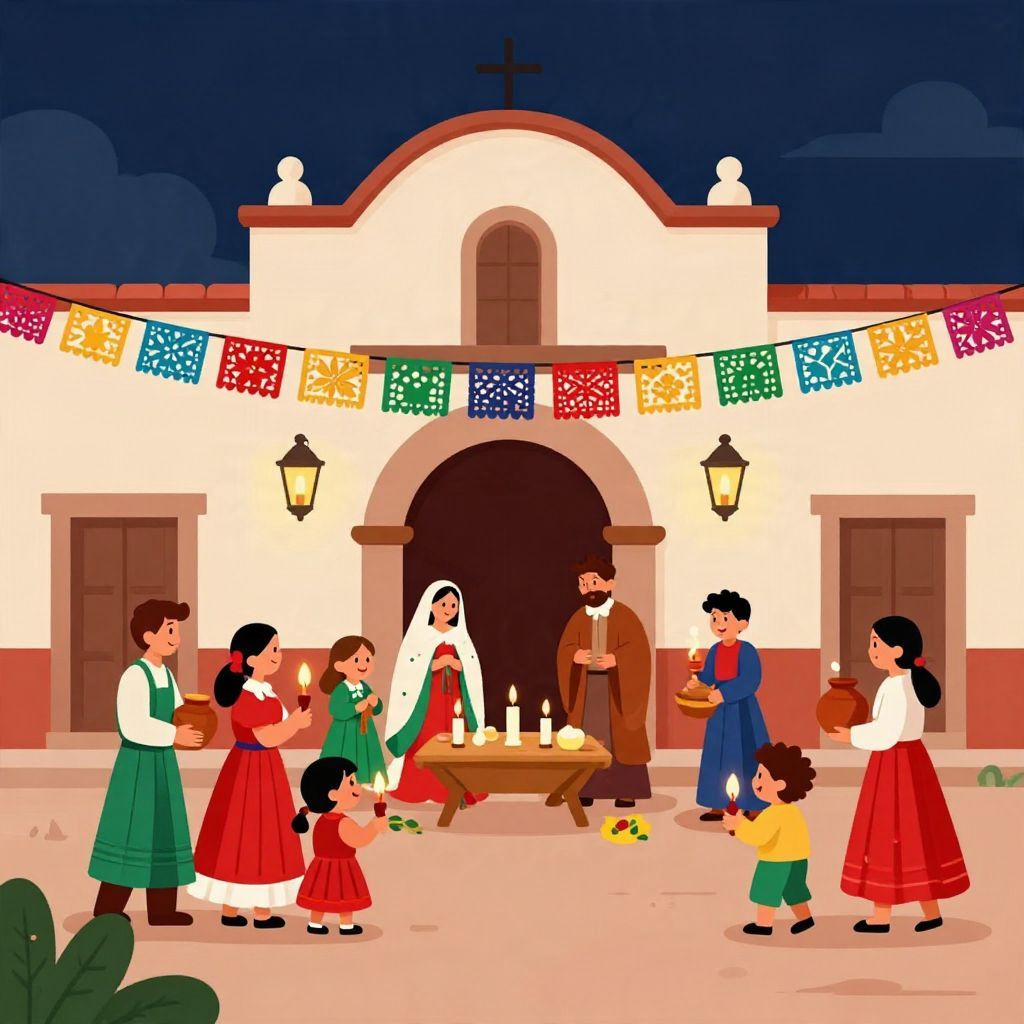
Christmas in Mexico is celebrated with a blend of Catholic devotion, family gatherings, regional customs, and festive public rituals. Its most distinctive traditions—especially Las Posadas, the Christmas Eve meal, midnight Mass, and celebrations that continue into Three Kings’ Day—reflect centuries of religious history and local adaptation.
The holiday is not just a single day but a season that builds from early December through January 6. Understanding how Christmas is celebrated in Mexico means looking at both the Spanish colonial past and the living traditions that still shape homes, churches, and neighborhoods today.
How is Christmas celebrated in Mexico?
Christmas in Mexico is usually celebrated with Las Posadas from December 16 to 24, family gatherings on Christmas Eve, midnight or late-night Mass, fireworks, food, music, and gift-giving that often continues through Día de los Reyes on January 6. The holiday emphasizes community, religious devotion, and extended family more than a single Christmas Day event.
The historical roots of Christmas in Mexico
Mexico’s Christmas traditions grew out of the Spanish conquest and the spread of Catholicism after 1521. Missionaries introduced European religious observances, but these customs were not simply copied; they were adapted to local Indigenous cultures, seasonal rhythms, and community life. Over time, Christmas became one of the most important annual celebrations in Mexican society.
From colonial evangelization to popular tradition
In the 16th century, Franciscan, Dominican, and Augustinian missionaries used processions, dramatized religious teaching, and feast-day observances to explain Christian stories. One of the most important results was the development of Las Posadas, a nine-night reenactment of Mary and Joseph seeking shelter before Jesus’ birth. While the exact origins are debated, the tradition became firmly associated with colonial Mexico and later spread widely.
Indigenous communities did not merely receive these customs passively. They often blended Christian symbols with local music, food, dance, and communal celebration. That is one reason Mexican Christmas has such a strong public and neighborhood character: it developed as a shared social event, not only a private religious one.
Las Posadas: the heart of the season
Las Posadas are among the most recognizable Christmas traditions in Mexico. Held from December 16 to 24, they symbolize the search for lodging before the birth of Jesus. In many towns and cities, neighbors take turns hosting the procession, which combines prayer, singing, candles, and hospitality.
How a Posada works
A typical Posada includes a procession of children and adults carrying candles or lanterns, often with figures of Mary and Joseph. The group sings a call-and-response request for shelter, and hosts inside the house initially refuse before finally welcoming them. The event ends with prayer, food, and a party for children.
- Procession: Participants walk through the neighborhood or from house to house.
- Singing: Traditional verses dramatize the search for lodging.
- Prayer: Many gatherings include the rosary or other Catholic devotions.
- Celebration: Food, punch, and a piñata often follow.
The meaning of the piñata
The piñata is one of the most famous features of a Mexican Posada. In many Christian interpretations, the traditional star-shaped piñata with seven points represents the seven deadly sins, and breaking it symbolizes overcoming temptation. Whether or not every family understands it that way, the piñata has become a beloved part of the season, especially for children.
Its origins are complex. Similar festive objects existed in pre-Hispanic Mesoamerica, but the modern Christmas piñata in Mexico was shaped by colonial religious practice and later popular culture. This is a good example of how Mexican Christmas traditions combine older local forms with Catholic symbolism.
Christmas Eve is often the main family celebration
In Mexico, Christmas Eve—Nochebuena—is often more important than Christmas morning. Families gather for a large meal, exchange gifts, attend Mass, and stay up late. The focus on December 24 reflects Catholic liturgical tradition and the social habit of celebrating at night, when the family can be together after the day’s work is done.
Midnight Mass and religious observance
Many families attend La Misa de Gallo or another late Mass on Christmas Eve. The name literally means “Rooster’s Mass,” traditionally referring to the midnight hour and the dawn of Christmas Day. Not every family attends church, but the religious dimension remains central for many people, especially in smaller communities and among older generations.
After Mass, families return home for food, conversation, and often fireworks. In many places, the celebration continues well past midnight, making Christmas Eve the emotional center of the holiday season.
Food and drink in Mexican Christmas celebrations
Mexican Christmas food varies by region and family tradition, but certain dishes appear again and again. The meal is usually abundant, festive, and prepared with care. It reflects both Catholic feast-day customs and Mexico’s rich culinary heritage.
Common Christmas dishes
- Tamales: Corn dough filled with meats, chiles, cheese, or sweet ingredients.
- Bacalao a la vizcaína: Salt cod cooked with tomatoes, olives, capers, and potatoes.
- Romeritos: A traditional dish made with a local green herb, often with mole and shrimp cakes.
- Pozole: A hominy-based stew served in some regions during holiday gatherings.
- Buñuelos: Fried pastries dusted with sugar or cinnamon.
- Ponche navideño: A warm fruit punch made with seasonal fruits such as tejocote, guava, sugar cane, and cinnamon.
These foods are more than recipes. They mark family identity, regional belonging, and the effort of preparing a feast for guests. In many homes, Christmas cooking begins well before December 24 and involves several generations working together.
Christmas Day and the days that follow
Although Christmas Day is important, it is often quieter than Christmas Eve in Mexico. Some families rest, visit relatives, or attend another Mass. The holiday season then continues toward January 6, the Feast of the Epiphany, when the arrival of the Three Kings is celebrated.
Día de los Reyes and the Rosca de Reyes
Día de los Reyes is especially important in Mexican Christmas culture. On January 6, families share a Rosca de Reyes, a ring-shaped sweet bread decorated with candied fruit. Inside is one or more small figurines representing the baby Jesus. Whoever finds the figure is traditionally expected to host or provide tamales on Candlemas, February 2.
This custom helps explain why Christmas in Mexico is often understood as a season stretching from Advent into the new year. The gift-giving cycle may begin on Christmas Eve but often concludes with the Three Kings, who are especially important in children’s traditions.
Regional differences across Mexico
Mexico is a large country, and Christmas is celebrated differently from region to region. Urban neighborhoods, rural villages, Indigenous communities, and coastal cities all have their own variations. Yet the same basic structure—Posadas, family meals, Mass, and Epiphany—appears in many places.
Urban and rural celebrations
In cities, Christmas may include public lights, shopping districts, school events, and neighborhood Posadas organized by apartment blocks or local groups. In rural areas, celebrations may be more closely tied to parish life, local saints, and extended kin networks. Fireworks, music, and communal food are common in both settings, though the scale and style may differ.
Indigenous and local traditions
Some Indigenous communities maintain distinctive Christmas practices shaped by local language, ritual, and community authority. These traditions can include special dances, processions, or forms of worship that are not identical to mainstream urban customs. Rather than being separate from Mexican Christmas, they show how the holiday has been localized over centuries.
Music, decorations, and public festivity
Christmas in Mexico is also a visual and musical season. Homes and churches may display nativity scenes, candles, poinsettias, and lights. Streets fill with carols, bells, and sometimes brass bands or local ensembles. The festive atmosphere is public as well as domestic.
The nativity scene and the Christmas tree
The nacimiento, or nativity scene, is especially important in Mexican homes and churches. Some families arrange elaborate displays with figures, landscapes, and animals. The Christmas tree is also common today, especially in cities, but the nativity often remains the more traditional centerpiece of decoration.
As in many parts of the world, modern commercial influences have expanded Christmas décor in Mexico. Yet the religious nativity scene still reflects the holiday’s historical roots more strongly than imported commercial imagery alone.
Why Christmas in Mexico lasts so long
One reason Christmas in Mexico feels so extended is that it combines several religious observances rather than centering on one date. Advent, Las Posadas, Christmas Eve, Christmas Day, New Year’s celebrations, and Epiphany all connect into a single festive season. This long calendar gives the holiday a communal rhythm that is both religious and social.
It also reflects the fact that Mexican Christmas developed in a society where neighborhood life, parish life, and family life were closely linked. The holiday was never only about private gift exchange. It was also about public devotion, hospitality, and belonging.
Modern changes and continuity
Today, Christmas in Mexico includes both old traditions and modern influences. Television specials, commercial shopping, imported decorations, and Santa Claus imagery have all become more visible, especially in cities. At the same time, Posadas, nativity scenes, Christmas Eve meals, and the Rosca de Reyes remain deeply rooted in everyday life.
The result is not a loss of tradition so much as a layering of traditions. Mexican Christmas is historically dynamic: it preserves colonial-era Catholic customs, adapts Indigenous and regional practices, and absorbs modern global habits without losing its distinct seasonal structure.
Conclusion
Christmas in Mexico is celebrated as a season of faith, family, food, and community, with Las Posadas, Nochebuena, and Día de los Reyes forming its historical core. Its customs grew from colonial Catholic practice but were reshaped by local culture over centuries, giving Mexican Christmas its rich and enduring character. For related reading, see why Mexicans celebrate Christmas on the 24th.