
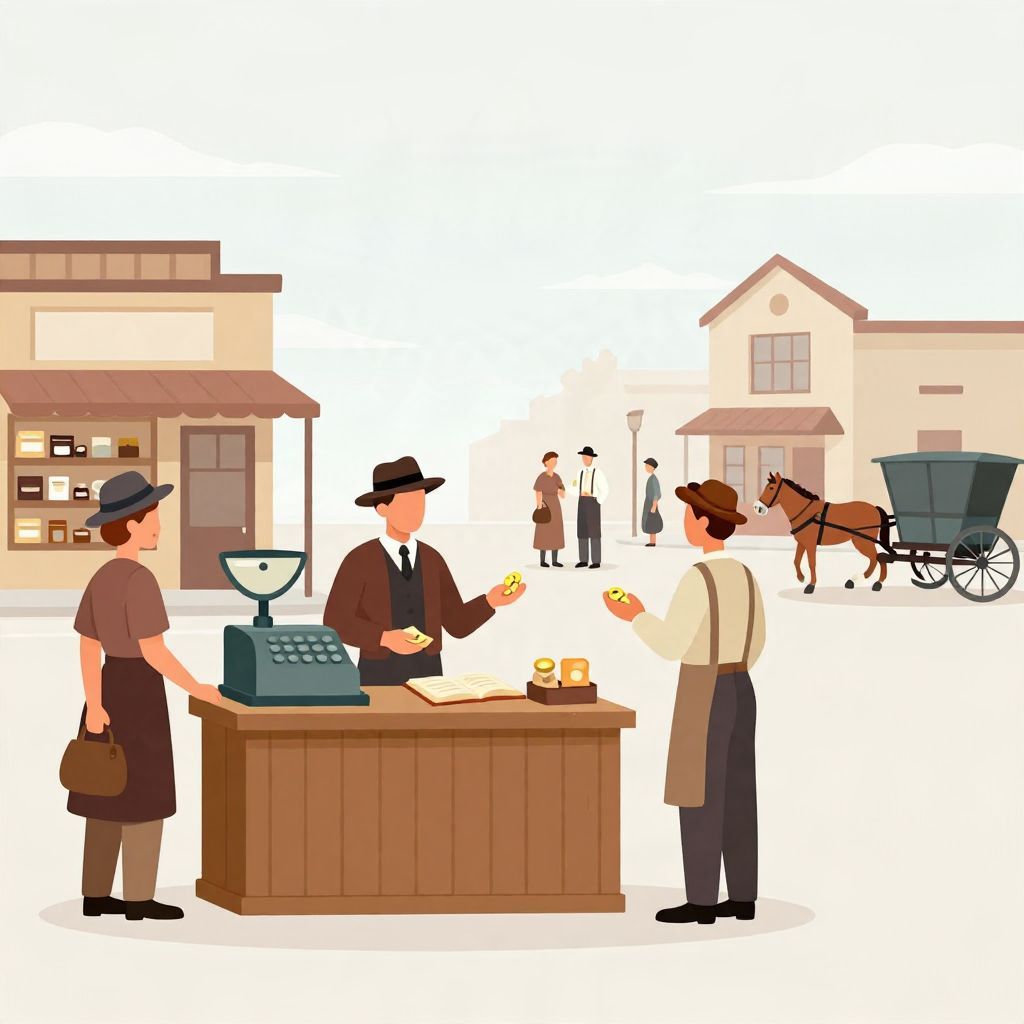
Why wasn’t using credit to buy products and services common before 1920? The short answer is that most people lacked the income stability, banking access, consumer culture, and legal protections that make everyday credit practical. Before the 20th century, many purchases were made with cash, barter, store accounts, or short-term informal borrowing rather than modern installment credit.
By 1920, those conditions were changing fast. Mass production, rising wages for some workers, department stores, mail-order businesses, and new lending practices helped make credit a normal part of consumer life. But for most of the 19th century and earlier, credit was narrower, riskier, and far less suited to ordinary shopping.
Why wasn’t using credit to buy products and services common before 1920?
Credit existed long before 1920, but it was usually limited, personal, and tied to business relationships rather than everyday consumer spending. Most households had irregular incomes, banks served only a small share of the population, and lenders were cautious because collecting debts was difficult. As a result, buying on credit was not yet a routine mass-market habit.
Credit did exist, but it worked differently
Old forms of credit were personal and local
Credit is not a modern invention. Merchants, landlords, farmers, and lenders had used it for centuries. In the 18th and 19th centuries, shopkeepers often kept running accounts for trusted customers, and farmers borrowed against future crops or land. But these arrangements were usually local, personal, and based on reputation rather than standardized consumer lending.
It was not the same as modern consumer credit
Today, credit often means a formal loan, a credit card transaction, or an installment plan with clear terms. Before 1920, those systems were still limited. Many transactions depended on trust between known parties, and the buyer often had to settle accounts in a lump sum. That made credit useful in some settings, but not as a routine way to buy clothing, furniture, or household goods.
The main reasons credit was uncommon before 1920
1. Most people had unstable or low incomes
For much of the 19th century, many workers were paid irregularly or seasonally. Farm families depended on harvests, laborers faced layoffs, and wages could fluctuate sharply. When income is uncertain, lenders hesitate to extend credit, and borrowers are less able to commit to future payments. Cash purchases were simpler and safer for both sides.
2. Banking and lending systems were limited
Modern consumer credit depends on institutions that can assess risk, record debts, and enforce repayment. Before 1920, many Americans and Europeans had little access to banks, especially in rural areas. Even where banks existed, they usually focused on businesses, landowners, and commercial paper rather than ordinary shoppers buying household goods in small amounts.
3. Debt collection was harder and riskier
Before modern credit reporting and standardized contracts, lenders had fewer tools to judge whether a customer would repay. If someone defaulted, collecting the debt could be expensive, slow, or socially awkward. A shopkeeper might lose money and a customer might disappear, move away, or simply refuse to pay. That made small consumer loans unattractive unless the buyer was well known.
4. Many purchases were still made in local, cash-based economies
In much of the world, especially outside major cities, people still relied on cash, barter, or exchange within tight local networks. Families produced many goods at home, from food to clothing, so they bought fewer manufactured items in the first place. Where markets were smaller and less specialized, there was less pressure to develop broad consumer credit systems.
5. Consumer culture had not yet fully developed
Before the late 19th and early 20th centuries, many households bought only what they needed and could immediately afford. The idea of frequent shopping for branded goods, fashionable clothing, and durable household products was still developing. Credit becomes more useful when people regularly purchase items with a price beyond a single paycheck or harvest; that pattern became much more common only later.
6. Moral attitudes often discouraged debt
In many communities, debt carried a stigma. Religious teachings, self-help literature, and middle-class values often praised thrift, restraint, and paying as you go. Debt could be seen as a sign of poor character or dangerous living beyond one’s means. These attitudes did not eliminate credit, but they made open borrowing for consumer goods less socially accepted.
How people actually bought things before 1920
Cash, barter, and informal accounts
Many everyday purchases were paid for in cash when possible. In rural and frontier settings, barter remained important, especially where money was scarce or inconvenient. Some stores kept “charge accounts” for trusted customers, but these were often settled periodically rather than through a formal monthly billing system like later consumer credit.
Layaway and installment buying were not yet dominant
Some merchants did offer payment plans before 1920, especially for expensive goods such as furniture, pianos, sewing machines, or farm equipment. But these arrangements were not yet widespread enough to reshape everyday shopping. They were often limited to larger towns, particular industries, or customers with known reliability.
Borrowing from family and neighbors mattered more
In many societies, the first place people turned for short-term help was not a bank but relatives, neighbors, employers, or local merchants. These personal networks provided flexibility, but they were also limited by social obligation and trust. Such borrowing could help a family through a crisis, yet it did not create a broad consumer credit market.
What changed around 1900 to 1920?
Mass production made consumer goods more available
Industrial production lowered the cost of many goods and made them more standardized. As factories produced furniture, clothing, appliances, and vehicles in larger quantities, merchants had more incentive to sell to a wider public. Credit became more useful because people could now buy higher-value goods that were desirable but not always affordable all at once.
Urbanization and wage labor created regular payment cycles
As more people moved to cities and worked for wages, pay became more regular for a growing share of workers. Weekly or monthly wages made installment payments more practical than they had been in a largely agrarian economy. A customer with a steady paycheck was easier to evaluate than a farmer whose income depended on weather and harvests.
Retailers wanted to expand sales
Department stores and chain retailers increasingly used credit to attract customers and increase purchases. Rather than waiting for buyers to save enough cash, merchants could spread payments over time. This helped businesses sell more goods, especially higher-priced items. Credit was not just a convenience; it became a marketing strategy.
Automobiles helped normalize installment credit
The rise of the automobile is one of the clearest examples of how consumer credit expanded. Cars were expensive, and few households could pay the full amount immediately. Installment plans made ownership possible for a much larger market and helped normalize the idea of paying over time for durable goods. This model soon spread to other products as well.
Financial institutions became more sophisticated
By the early 20th century, credit reporting, standardized paperwork, and more organized lending practices were developing. These tools reduced uncertainty for lenders and made it easier to extend credit to people they did not know personally. The growth of these systems was gradual, but it was crucial for turning credit into a mass consumer practice.
Why 1920 is a useful turning point
The 1920s did not invent credit, but they expanded it
Credit was still uneven and not universally available after 1920, but the decade marked a major shift in consumer life, especially in the United States and other industrial economies. The combination of mass advertising, installment buying, and expanding retail networks made borrowing for consumer goods far more visible and normal than it had been before.
World War I and its aftermath mattered
The First World War accelerated industrial production, altered labor markets, and changed government and business practices. After the war, many economies experienced both growth and instability, but consumer markets continued to expand. The postwar world was more open to large-scale selling, including selling on credit, than the pre-1914 world had been.
What this tells us about everyday life before 1920
Credit depended on modern systems, not just willingness to borrow
The lack of common consumer credit before 1920 was not because people had never heard of debt. It was because the social and economic infrastructure for routine borrowing was still incomplete. Stable wages, broad banking access, retail financing, and consumer-focused lending all had to develop before credit could become ordinary.
It was a transition from personal trust to mass finance
Earlier credit systems were built on face-to-face trust and local knowledge. The modern consumer economy required something different: impersonal systems that could lend to millions of strangers. That transformation took time, and it helps explain why everyday credit was rare before 1920 but increasingly common afterward.
In short, using credit to buy products and services wasn’t common before 1920 because most people lived in cash-lean, locally organized economies with unstable incomes, limited banking, and little consumer finance infrastructure. As industrial production, wage labor, and modern retail expanded, credit became far more practical and eventually routine. For more historical context, you may also find what American imperialism was and what happened in 1924 useful for understanding the broader early 20th-century world.