
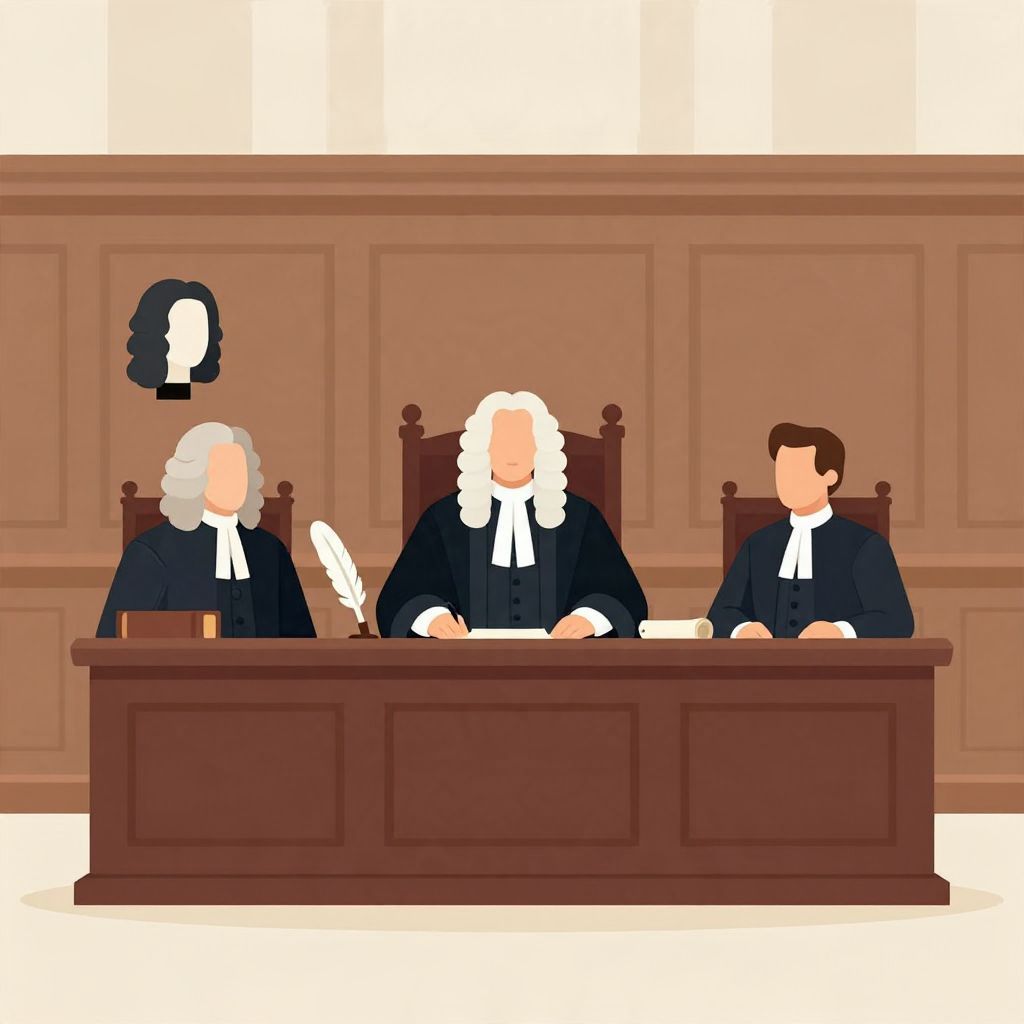
Why do British judges wear wigs? The short answer is that wigs became a visible symbol of legal authority, professionalism, and continuity in the 17th and 18th centuries, and the tradition survived long after wigs stopped being everyday fashion. What began as courtly style turned into a marker of the dignity and impersonality of the law.
Today, the wig is less about comfort or necessity than about tradition. It signals that a judge is not acting as a private individual, but as a representative of the legal system with a role shaped by centuries of custom.
Why do British judges wear wigs?
British judges wear wigs because the practice grew out of 17th-century fashion and became a legal symbol of authority, neutrality, and continuity. Wigs were once common in elite society; when they fell out of everyday use, judges and barristers kept them as part of courtroom dress, preserving the appearance of an old and respected institution.
How wigs entered British legal dress
From fashion to professional uniform
Wigs were not originally invented for the law. They became fashionable in Europe in the 1600s, especially among aristocrats and officials. In England, the wearing of wigs spread during the reigns of Charles II and James II, when court fashion strongly influenced public life. Lawyers and judges adopted the style as part of the broader culture of elite dress.
By the late 17th century, legal dress in England was becoming more standardized. The courtroom was a place where appearance mattered greatly. A wig helped create a formal, recognizable image for legal professionals, much as robes, gowns, and other ceremonial clothing did in other institutions.
The Restoration period and the rise of legal ceremony
The Restoration after 1660 brought a renewed emphasis on ceremony, hierarchy, and visible rank. The legal profession, which valued order and precedent, was especially receptive to this. Wigs suited that world. They made judges and barristers look distinguished, disciplined, and separate from ordinary social life.
Over time, the wig became more than a fashion accessory. It became part of the language of the courtroom. Even after most men stopped wearing wigs in daily life, lawyers kept them because changing the dress of the bench and bar would have seemed to break with tradition and weaken the symbolic continuity of the courts.
The historical reasons wigs survived in court
Authority and impersonality
One reason British judges wear wigs is that they help emphasize the impersonal nature of justice. The wig, along with the robe, hides individuality and reminds everyone that the judge is acting in an official capacity. In theory, the person behind the wig matters less than the office itself.
This idea fit well with the legal culture of Britain, where continuity and precedent are highly valued. The wig visually separates the courtroom from ordinary life and reinforces the sense that law operates by rules older than any one judge.
Continuity with the past
Legal traditions often survive because they are tied to institutional memory. Once wigs became associated with the courts, they acquired a conservative value of their own. Removing them would not simply mean changing clothing; it would mean altering a public ritual that had come to symbolize the stability of the legal system.
That is why the wig remained long after it ceased to be fashionable elsewhere. In the 18th century, ordinary men increasingly abandoned wigs, but judges and barristers kept them. The law, more than many other professions, tends to preserve ceremonial practices that other parts of society discard.
Respectability and public confidence
Wigs also helped create a respectable public image for the legal profession. In an era when personal appearance carried social meaning, the wig suggested learning, seriousness, and status. For litigants and spectators, it made the courtroom look ordered and authoritative.
That visual authority mattered in a legal culture that depended on public trust. A judge in full traditional dress was meant to appear above personal fashion, personal politics, and personal vanity. The wig helped present the law as something enduring rather than temporary or casual.
When did judges start wearing wigs?
Approximate timeline
The exact moment when wigs became standard in the English legal profession is not tied to a single date, but the main shift occurred in the late 17th century. By the early 18th century, wigs were a well-established part of legal dress in Britain. Their use then persisted for centuries.
- Mid-1600s: Wigs become fashionable among European elites.
- Late 1600s: English lawyers and judges increasingly adopt wigs.
- 1700s: Wigs are firmly established as courtroom dress.
- 1800s–1900s: The wig remains in use even as everyday fashion changes dramatically.
- 2000s: Some parts of the legal system reduce or modify wig use, especially in certain civil and family contexts.
This chronology matters because it shows that the wig tradition is not medieval, as many people assume. It is early modern, rooted in court culture and aristocratic fashion rather than in the distant Middle Ages.
What do British judges’ wigs mean?
Symbolism in the courtroom
The wig carries several meanings at once. It represents tradition, but also discipline. It suggests that the judge is part of a formal system governed by rules, not by personal preference. It can also act as a kind of costume that transforms the wearer into an office-holder rather than an individual.
In that sense, the wig is similar to uniforms in other institutions. It marks role and rank. Just as military dress or clerical vestments communicate authority and function, the judicial wig signals that the wearer participates in a ceremonial and legal order.
Not a relic of medieval justice
Popular imagination often treats wigs as a leftover from the Middle Ages, but that is inaccurate. The tradition belongs to the age of monarchy, empire, and professionalized law in the 17th and 18th centuries. It is a surviving piece of early modern elite culture, not a direct inheritance from medieval courts.
That distinction is important because it shows how legal traditions can outlive the social worlds that created them. The wig is a historical artifact that has been preserved by institutional habit, not because it is legally required for justice to function.
Do all British judges still wear wigs?
Modern changes to courtroom dress
Not all British judges wear wigs in every setting today. The rules have changed over time, especially in response to reforms aimed at making courts feel less intimidating and more accessible. In some modern proceedings, particularly in family and civil contexts, wig use has been reduced or abolished.
Even so, wigs remain part of the ceremonial dress of many judges and barristers in parts of the British legal system, especially in more formal or traditional courts. The practice survives because it still serves a symbolic purpose, even if that purpose is now mainly ceremonial rather than practical.
Why reform did not erase the tradition completely
Attempts to modernize courtroom dress have often been cautious. Legal institutions tend to preserve symbols that are seen as harmless, dignified, or useful for maintaining continuity. The wig has therefore become a compromise between tradition and modernization: retained where it still seems meaningful, relaxed where it seems outdated.
This is a common pattern in British public life. Older customs are often not abolished all at once; instead, they are narrowed, adapted, or reserved for special occasions. The wig has followed that path.
Why the tradition lasted longer in Britain than elsewhere
Legal conservatism and ceremonial culture
Britain’s legal system has long valued precedent and continuity. That culture helped preserve the wig even after it disappeared from ordinary dress. In countries where legal dress changed more quickly, wigs were more likely to vanish. In Britain, the combination of tradition, symbolism, and institutional conservatism kept them alive.
The British legal profession also developed a strong ceremonial identity. Court dress, formal language, and ritual procedure all reinforced the sense that law was an inherited institution. The wig fit naturally into that environment.
Public familiarity and institutional identity
Once a symbol becomes widely recognized, it can be difficult to replace. The British public came to associate wigs with judges and barristers. That familiarity gave the tradition a kind of cultural power. Even people who found the wigs old-fashioned often still recognized what they stood for.
In this way, the wig became part of the visual identity of British justice. It is not merely decorative; it is a historical emblem that helps define how the legal system presents itself to the public.
The deeper historical meaning of judicial wigs
The answer to why British judges wear wigs is ultimately about the survival of a symbol. The wig began as fashionable elite dress in the 17th century, then became part of legal costume, and finally outlived its original fashion context. It remains because it conveys authority, continuity, and the impersonality of justice.
Seen historically, the wig is a reminder that institutions often preserve the outward forms of the past long after their original purpose has changed. In British courts, that preserved form still tells a story about tradition, power, and the long memory of the law.