
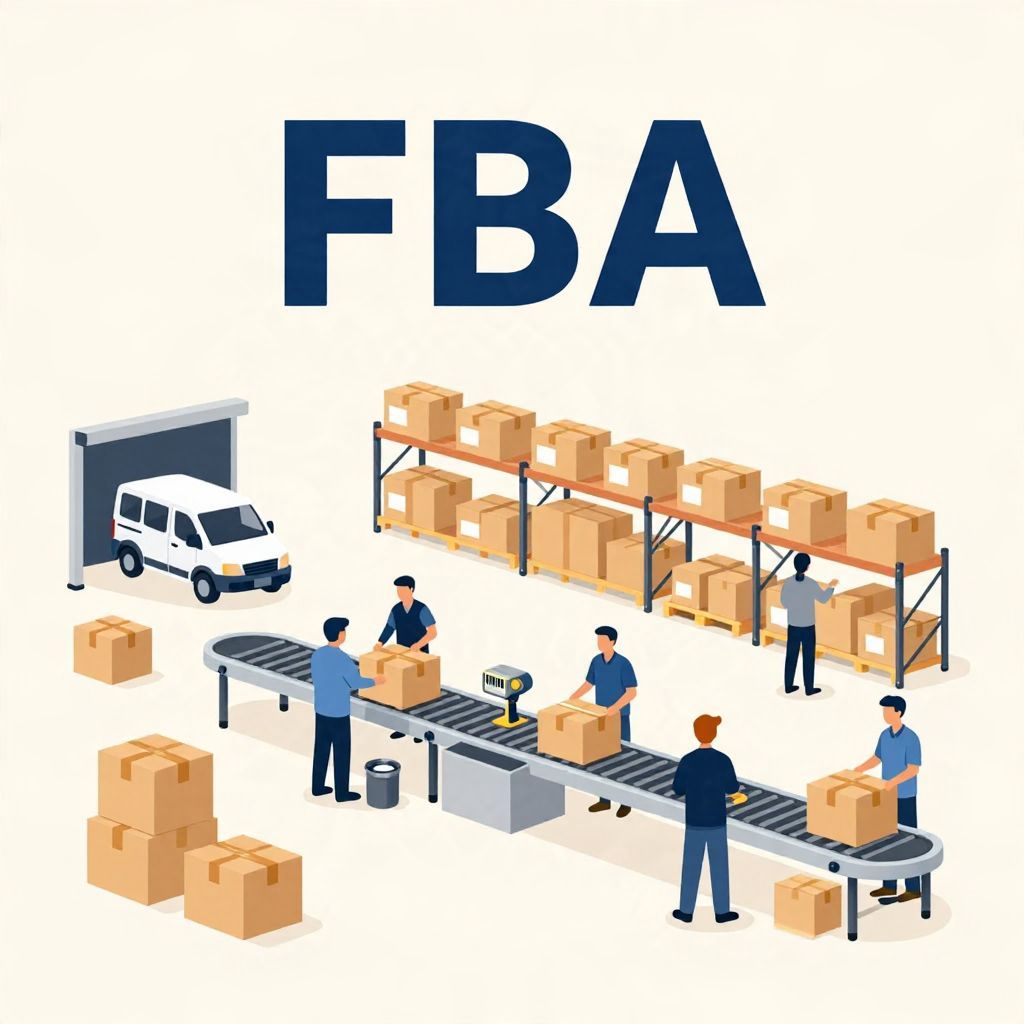
What does FBA mean? In modern usage, the most common answer is Fulfillment by Amazon, a logistics service launched by Amazon in the early 2000s that changed how many online businesses store, pack, and ship products. But the abbreviation can also mean other things in different historical or institutional settings.
Because acronyms often shift over time, the history of “FBA” is really the history of how a short business term became widely associated with e-commerce, digital retail, and the global expansion of Amazon’s marketplace.
What does FBA mean in history and business?
FBA most commonly means Fulfillment by Amazon. It refers to a system in which sellers send inventory to Amazon warehouses, and Amazon handles storage, packing, shipping, customer service, and many returns. The term became prominent as Amazon expanded from an online bookstore into a major global marketplace in the 2000s.
How Fulfillment by Amazon began
To understand FBA, it helps to see how online retail developed. In the 1990s, e-commerce was still new, and many small sellers struggled with the practical work of shipping individual orders. Amazon, founded in 1994, initially sold books but soon broadened into a platform for many products. As the company grew, it needed a way to help third-party sellers reach customers without building their own nationwide logistics networks.
The rise of marketplace selling
Amazon’s marketplace model allowed outside merchants to sell alongside Amazon’s own inventory. This was important historically because it turned Amazon from a retailer into a platform. Once thousands of independent sellers joined, the company needed a standardized fulfillment system to keep shipping fast and reliable. FBA emerged from that need.
When FBA appeared
Amazon introduced Fulfillment by Amazon in 2006. The service let sellers ship inventory to Amazon fulfillment centers, where Amazon would manage warehousing and order processing. This was a major step in the history of online commerce because it reduced one of the biggest barriers for small and medium-sized sellers: the burden of logistics.
Why FBA mattered in the growth of e-commerce
FBA mattered because it solved a practical problem that had limited online selling for years. Before services like FBA, a seller had to maintain storage space, hire staff, negotiate shipping rates, and handle customer complaints. Amazon’s system centralized those tasks and made it easier for sellers to scale quickly, especially during periods of rapid demand.
A shift in retail logistics
Historically, retail depended on physical storefronts, regional warehouses, and established distribution chains. FBA helped accelerate a newer model: remote sellers using a shared logistics network. This did not eliminate traditional retail, but it changed expectations about delivery speed and inventory management. Two-day shipping, once remarkable, became a standard many consumers came to expect.
How sellers used the system
- Sellers sent products to Amazon fulfillment centers.
- Amazon stored the goods until customers placed orders.
- Amazon picked, packed, and shipped the items.
- Amazon also handled many customer-service issues and returns.
This arrangement made small businesses appear more “Amazon-like” to customers, especially through fast shipping and standardized service. For many sellers, that convenience outweighed the fees charged for the service.
The historical impact of FBA on Amazon and online commerce
FBA helped strengthen Amazon’s dominance in e-commerce by tying sellers more closely to its platform. It encouraged more products to be listed on Amazon and made Prime-style delivery experiences more common. In effect, Amazon became not just a marketplace but a logistics infrastructure company, shaping how consumers and merchants interacted.
Effects on small businesses
For small businesses, FBA could be transformative. A seller in one state or country could reach customers nationwide without building a warehouse network. That lowered the entry barrier to online retail. At the same time, dependence on Amazon also created risks. Sellers had to follow Amazon’s rules, pay fees, and compete in a crowded marketplace where visibility could be difficult to secure.
Effects on consumers
Consumers benefited from faster shipping, broader product choice, and easier returns. But the convenience also reinforced a larger historical trend: the concentration of retail power in a few large platforms. FBA therefore belongs to the broader story of digital capitalism, where convenience, scale, and data-driven logistics reshape everyday commerce.
Other meanings of FBA
Although Fulfillment by Amazon is the best-known meaning today, abbreviations can have multiple definitions depending on context. In historical or institutional writing, FBA may refer to something entirely different. The exact meaning depends on the field, country, and period being discussed.
Common alternate meanings
- Fellow of the British Academy — a scholarly honor in the United Kingdom.
- Florida Bar Association — a professional legal organization.
- Free Before Arrival — a commercial shipping term in some contexts, though less common than FBA as an Amazon abbreviation.
Because abbreviations are context-dependent, historians and researchers should avoid assuming a single meaning without checking the surrounding text. A business article from the 2010s is likely to mean Amazon; a scholarly biography may mean a fellowship or professional title.
How FBA fits into the history of Amazon
FBA is part of a larger Amazon story that began with online bookselling and expanded into cloud computing, digital advertising, and global logistics. Over time, Amazon built warehouses, sorting systems, and delivery partnerships that made rapid shipping possible on a massive scale. FBA turned that infrastructure into a service for outside merchants.
From bookstore to logistics giant
Amazon’s growth reflected a broader late-20th- and early-21st-century shift toward platform businesses. Instead of simply selling products it owned, Amazon increasingly enabled others to sell through its system. FBA was one of the clearest examples of that shift because it merged marketplace access with industrial-scale fulfillment.
Why the acronym became so familiar
The abbreviation became widely recognized because sellers, marketers, and online entrepreneurs used it constantly. As e-commerce education expanded through blogs, courses, and seller communities, “FBA” became shorthand for a whole business model. In that sense, the acronym is not just a label; it represents a stage in the history of online retail.
What historians and business analysts can learn from FBA
FBA is useful as a historical example because it shows how technology, infrastructure, and consumer behavior interact. The service did not appear in isolation. It grew out of the rise of internet shopping, the need for efficient distribution, and the pressure to deliver goods faster and more reliably than traditional mail-order systems could manage.
Key historical themes
- Platform power: large companies can shape markets by controlling access and logistics.
- Globalization: sellers can reach distant customers through centralized systems.
- Consumer expectation: fast delivery becomes normal once infrastructure supports it.
- Business dependence: convenience can bring new costs and reduced independence for sellers.
These themes place FBA within the broader history of modern commerce, not just within Amazon’s corporate story.
So, what does FBA mean?
In the most common modern sense, FBA means Fulfillment by Amazon. Historically, it refers to a service launched in 2006 that helped transform online retail by making Amazon’s warehouse and shipping network available to third-party sellers. In other contexts, FBA can mean something else, so the surrounding text always matters.
Understanding FBA is really about understanding a turning point in retail history: the moment when logistics became a platform service. If you are interested in related history topics, you may also want to explore the broader history of online commerce and the rise of global trade networks.