
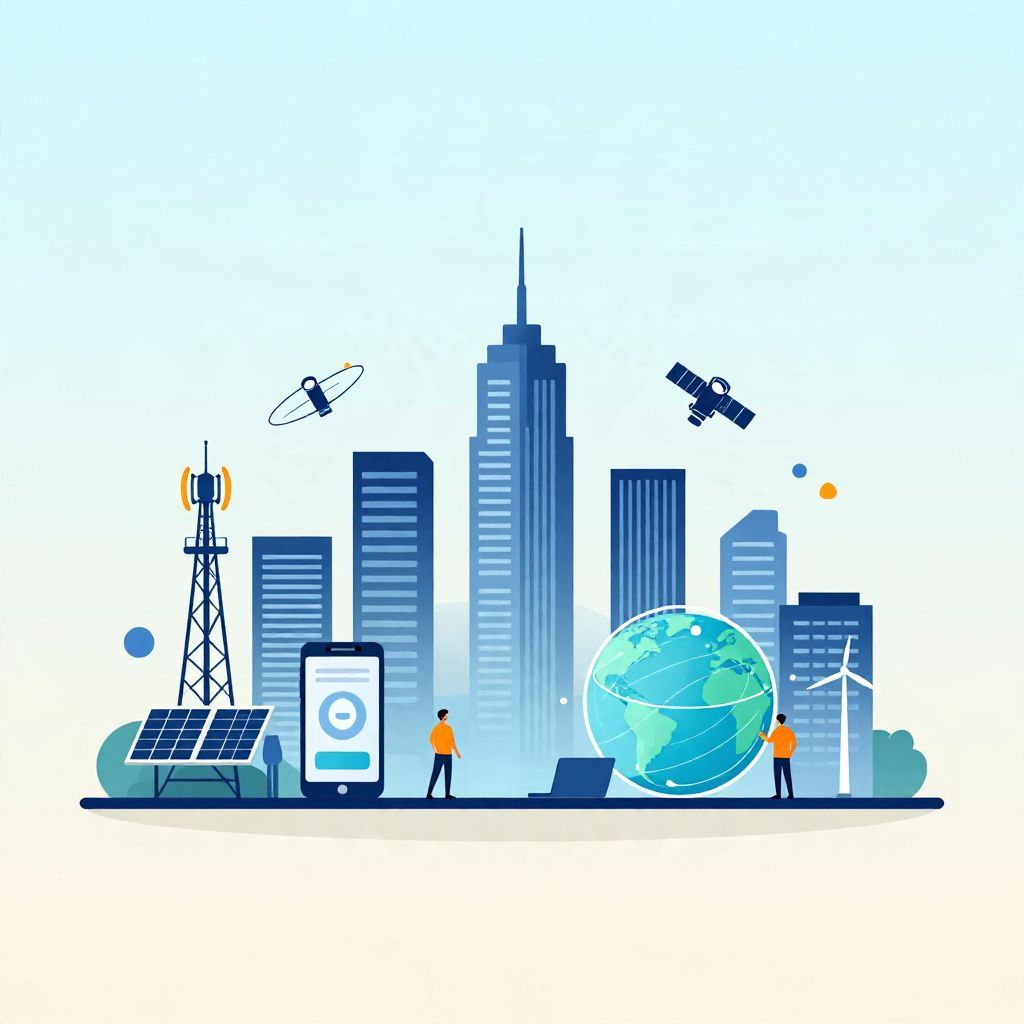
The 21st century is the period of history that began on 1 January 2001 and will end on 31 December 2100. It is the current century in the Gregorian calendar, the calendar most widely used in international life today.
People often think of the year 2000 as the start of the century, but by the way centuries are counted, the first century ran from year 1 to year 100, so the 21st century began in 2001. That simple calendar fact sits behind a much larger historical story: a world shaped by digital technology, globalization, climate change, shifting power, and fast-moving political and cultural change.
What Is The 21st Century?
The 21st century is the hundred-year span from 2001 to 2100 in the Gregorian calendar. Historically, it refers not only to dates but also to the era’s defining changes: the rise of the internet, smartphones, global connectivity, new security threats, environmental pressures, and major shifts in international politics and society.
Why the 21st century begins in 2001, not 2000
The numbering of centuries follows a simple rule: because there was no year 0 in the Gregorian calendar, the first century began with year 1. That means each new century starts with a year ending in 01. By this system, the 20th century ended on 31 December 2000, and the 21st century began the next day.
This point is sometimes confusing because everyday language often treats round numbers like 2000 as symbolic beginnings. In cultural memory, the turn of the millennium felt like a major threshold, and it was. But in strict historical chronology, the century changed in 2001.
The historical background of the 21st century
The 21st century did not emerge from nowhere. It grew out of late 20th-century developments such as the end of the Cold War, the spread of personal computers, expanding global trade, and the rise of satellite communication and the early internet. These forces created the conditions for a more interconnected world.
At the same time, the century opened with unresolved tensions: inequality between and within countries, regional conflicts, environmental degradation, and debates over sovereignty, identity, and globalization. The 21st century is therefore best understood as both a continuation of earlier trends and a period with its own distinct character.
The legacy of the 20th century
- Technological foundations: computers, digital networks, and mobile communication became the basis for modern life.
- Political aftershocks: the collapse of the Soviet Union reshaped international relations, but did not eliminate conflict.
- Economic globalization: trade, finance, and manufacturing became more tightly linked across continents.
- Social change: migration, urbanization, and expanding access to education transformed many societies.
Key facts about the 21st century
Several broad facts help define the century so far. It has been marked by rapid technological innovation, especially in digital communication and artificial intelligence. It has also seen major wars and security crises, including terrorism, civil conflicts, and renewed great-power rivalry. At the same time, climate change has become one of the central historical issues of the era.
1. The digital revolution accelerated
The internet moved from a specialist tool into a daily necessity for billions of people. Search engines, social media, streaming services, cloud computing, and smartphones changed how people work, learn, shop, organize politics, and form relationships. This transformation is one of the most important features of the 21st century.
The speed of change also altered historical experience itself. News now travels instantly, public debate can spread globally in minutes, and private life is often mediated through digital platforms. Historians studying this era must account for both the benefits of connectivity and the problems of misinformation, surveillance, and online polarization.
2. Globalization deepened, then came under strain
In the early decades of the century, trade networks, supply chains, and international finance became even more interconnected. Goods, capital, data, and people moved across borders more quickly than ever before. Many countries benefited from this system, though the gains were uneven.
Later, the limits of globalization became more visible. Financial shocks, pandemics, trade disputes, and geopolitical conflict exposed how dependent many societies had become on fragile international systems. The 21st century has therefore been shaped by both integration and backlash.
3. Security threats changed form
Traditional interstate warfare did not disappear, but the century opened with a different kind of global fear: transnational terrorism. The attacks of 11 September 2001 in the United States had a profound effect on world politics, leading to wars, expanded security policies, and long debates over civil liberties and foreign intervention.
Later crises included insurgencies, civil wars, cyber conflict, and the use of information warfare. In many cases, the battlefield was no longer only physical. Digital infrastructure, media narratives, and public trust became strategic targets as well.
4. Climate change became a defining historical issue
Although climate science had been developing for decades, the 21st century made the consequences of global warming harder to ignore. Rising temperatures, extreme weather, droughts, floods, wildfires, and sea-level rise became major political and social concerns. Environmental history is now inseparable from the history of this century.
Climate change also affects migration, food security, public health, and international diplomacy. Unlike many earlier historical problems, it is global in scale and long-term in impact, which makes it one of the most urgent issues of the era.
Major themes that define the era
Historians often describe the 21st century through a set of overlapping themes rather than a single event. These themes help explain why the period feels so distinctive compared with earlier centuries.
Technology and everyday life
Few centuries have changed daily routines as quickly as this one. Mobile phones became universal tools for communication, navigation, banking, photography, and entertainment. Artificial intelligence, automation, and data analytics began reshaping workplaces and institutions. Even ordinary tasks such as reading the news or finding a job became deeply digital.
Power shifts in world politics
The century has seen the relative influence of different states change. The United States remained highly influential, but other powers, especially China, expanded their economic and geopolitical reach. Regional organizations, multinational corporations, and non-state actors also gained importance. This has made the international order more complex and less predictable.
Identity, nationalism, and social change
Questions of national identity, ethnicity, religion, gender, and migration have become central in many countries. In some places, globalization encouraged openness and cosmopolitanism; in others, it triggered stronger nationalist reactions. Debates over borders, citizenship, and belonging have therefore become a major part of 21st-century politics.
Public health and global vulnerability
The COVID-19 pandemic, which began in 2019 and reshaped the early 2020s, revealed how interconnected and vulnerable modern societies are. It disrupted economies, education, travel, and healthcare systems across the world. The pandemic also highlighted the importance of scientific research, public institutions, and international cooperation.
How historians may view the 21st century
Because the century is still unfolding, historians cannot yet give it a final verdict. Its long-term meaning will depend on later developments that are impossible to predict with certainty. Still, some patterns are already clear: digital transformation, climate pressure, demographic change, and the tension between global interdependence and political fragmentation.
Future historians may divide the century into phases. The first decades may be remembered for the rise of the internet age, the shock of terrorism, the financial crisis of 2008, and the pandemic. Later decades may be judged by how societies responded to climate change, artificial intelligence, and shifting global power. For now, the 21st century remains an open historical chapter.
Why the 21st century matters
The 21st century matters because it is the era in which many people alive today are making history in real time. It is a period of rapid change, but not random change. Its events grow out of earlier developments and continue to shape the future in politics, technology, culture, and the environment.
In the simplest terms, the 21st century is the hundred years from 2001 to 2100. In historical terms, it is the age of digital life, global interconnection, and mounting pressure on political and environmental systems. To understand it fully, it helps to look at the wider forces behind it, including nationalism in history and American imperialism, both of which continue to influence the modern world.