
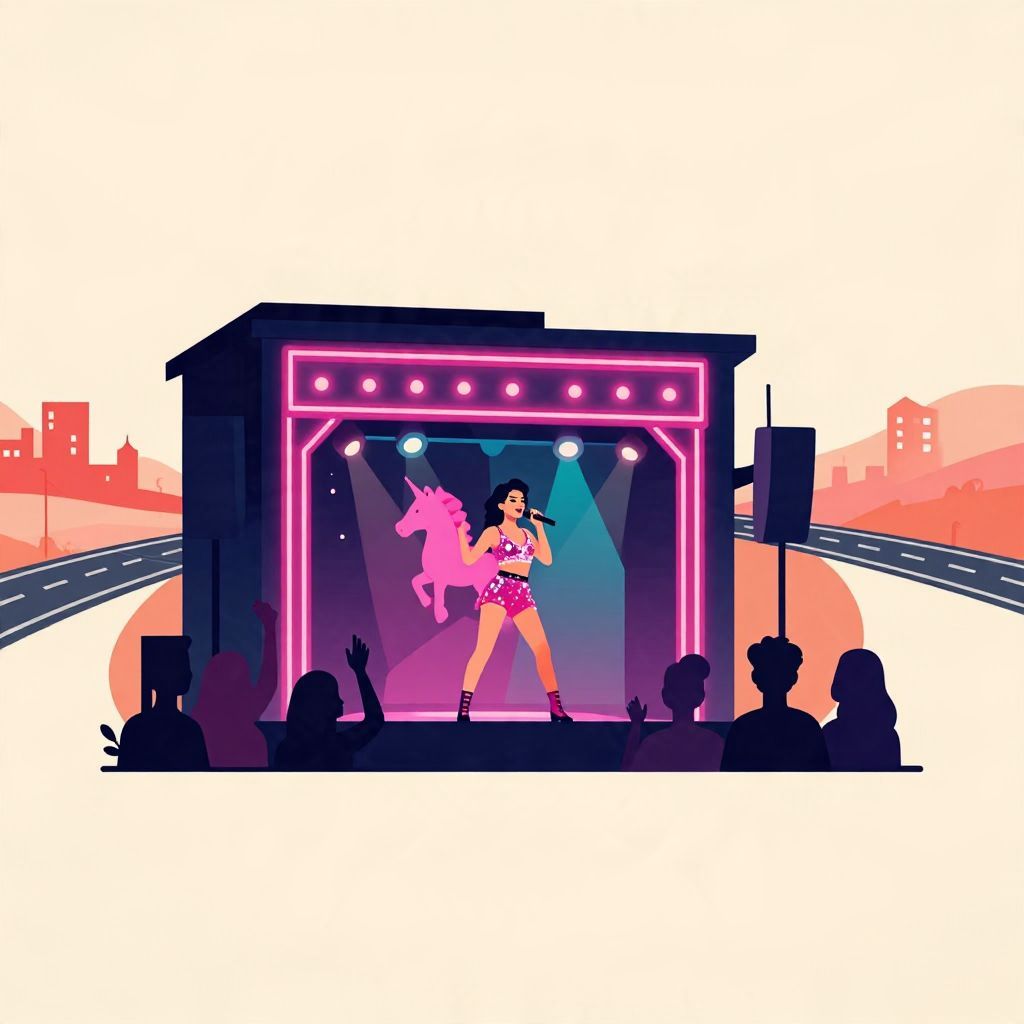
What does Pink Pony Club mean? The phrase is best known today as the title of Chappell Roan’s 2020 song, but its meaning is larger than the song itself. It evokes the tension between small-town expectations and the freedom of self-invention, especially through queer nightlife, performance, and chosen identity.
Historically, the phrase is not an old political slogan or a fixed cultural institution. Its importance comes from modern pop culture, where it has become a shorthand for escape, transformation, and belonging.
What Does Pink Pony Club Mean?
“Pink Pony Club” refers primarily to a symbolic place of liberation imagined in Chappell Roan’s song: a glamorous, queer-friendly space where someone can leave behind restrictive expectations and become their truest self. It is not a real historical club with a long documented past, but a modern cultural image shaped by nightlife, performance, and identity politics.
The meaning of Pink Pony Club in the song
In Chappell Roan’s song, the “Pink Pony Club” is a fantasy destination and emotional refuge. The narrator leaves a conservative environment and is drawn toward a world of dance, spectacle, and self-expression. The club symbolizes permission to live openly, especially for people whose identities do not fit traditional family or community norms.
A place, not just a party
The phrase works because it sounds playful and inviting, yet it carries real emotional weight. A “club” suggests membership and community; “pink” signals femininity, camp, and pop-art brightness; “pony” adds a sense of fantasy and performance. Together, the words create a space where identity can be performed, tested, and celebrated.
Why listeners connect with it
Many listeners interpret the song as a story about leaving home, choosing queer community, and accepting a life that may look unconventional to outsiders. That is why the phrase has resonated beyond the song itself. It speaks to a modern experience that has deep historical roots: the search for safe spaces where marginalized people can gather and be seen.
Is Pink Pony Club a real historical place?
No—there is no widely documented historical institution called the Pink Pony Club that explains the phrase’s meaning. The term is best understood as a creative, contemporary cultural invention. Its power comes from symbolism rather than from an older archive, organization, or event.
Why people sometimes search for a “real” origin
Because the phrase sounds like the name of an actual venue, many people assume it must refer to a specific club, bar, or social scene. In fact, the song uses the language of nightlife to build a metaphor. That metaphor draws on real historical experiences, but the phrase itself belongs to modern popular music.
The historical background behind the idea
Although Pink Pony Club is modern, the feelings it expresses have a long history. Throughout the 20th century, especially in cities, bars, cabarets, dance halls, and clubs often served as places where outsiders could find community. For queer people in particular, nightlife spaces became crucial for social life, self-expression, and survival.
Nightlife as a refuge
In many societies, public norms limited how people could dress, move, love, or speak. Nightlife offered temporary freedom from those rules. That history helps explain why a fictional club can feel so meaningful: it stands in for a real tradition of hidden or semi-hidden spaces where people experimented with identity away from family surveillance or social punishment.
Queer culture and chosen community
The phrase also connects to the history of queer chosen families. When people were rejected by relatives or communities, they often built new support systems through friends, performers, roommates, and nightlife networks. A “club” in this sense is not only a venue but a social world—one where belonging is earned through recognition rather than inherited status.
Why the words “pink,” “pony,” and “club” matter
Each part of the phrase contributes to its meaning. The title is memorable because it combines innocence, glamour, and social belonging in a single image. That combination is central to how modern pop music creates symbols that feel both personal and collective.
Pink
Historically, pink has carried shifting meanings. In some periods it was associated with childhood or femininity; in others it became a color of boldness, camp, and queer style. In the context of the song, pink suggests brightness, softness, and theatrical self-presentation rather than conventional respectability.
Pony
A pony suggests play, fantasy, and performance. It can also evoke something slightly surreal or exaggerated, which suits the song’s dreamlike quality. The word keeps the title from sounding purely glamorous; it adds a whimsical, almost costume-like element that fits the world of stage identity.
Club
The word “club” has a long social history. It can mean an exclusive social group, a private gathering place, or a nightlife venue. In this case, it implies both inclusion and selectivity: there is a community, but entry depends on shared values, not on mainstream approval.
How the phrase reflects a larger cultural moment
Pink Pony Club became popular in a period when many audiences were especially receptive to stories about authenticity, queer visibility, and reinvention. The song’s meaning fits into a broader history of pop culture in which artists use stylized imagery to express social change.
From hidden spaces to public celebration
For much of modern history, queer life was forced into secrecy. Over time, activism, art, and changing public attitudes made it possible to celebrate queer identity more openly in music, fashion, and performance. The phrase captures that shift: what was once hidden becomes something bright, named, and shared.
The role of performance
The song also reflects the history of performance as identity work. Cabaret, drag, burlesque, and pop stardom have long blurred the line between costume and selfhood. “Pink Pony Club” belongs to this tradition, where performance is not fake but a way of telling the truth differently.
Common interpretations of Pink Pony Club
Because the phrase is symbolic, listeners have read it in several ways. These interpretations are not mutually exclusive, and the song’s strength lies in allowing more than one meaning at once.
- A queer haven: a safe, joyful space for self-expression.
- A coming-of-age story: a young person leaving home to find independence.
- A performance fantasy: the allure of stage life and reinvention.
- A metaphor for belonging: a community built around acceptance rather than conformity.
Why ambiguity matters
The phrase does not need a single fixed definition to be meaningful. In cultural history, symbols often gain power precisely because they are open-ended. Different listeners can hear in it rebellion, glamour, vulnerability, or relief. That flexibility has helped the phrase travel widely.
What Pink Pony Club does not mean
It is also useful to be clear about what the phrase is not. It is not an ancient symbol, a documented secret society, or a historical club with a known founding date. It is not evidence of a specific political movement. And it is not a coded reference to one single real-world venue that historians can verify.
A modern cultural symbol, not a historical institution
When people ask “What does Pink Pony Club mean?” they are usually asking about the song’s emotional and cultural message. That is the correct historical frame. The phrase belongs to the history of contemporary music and identity expression, not to the history of formal organizations or political events.
Why the phrase became so memorable
Part of the phrase’s success lies in its sound. It is vivid, unusual, and easy to remember. But its staying power also comes from timing. Audiences have long responded to stories about leaving restrictive environments, especially when those stories speak to gender, sexuality, and personal freedom.
Pop music and social meaning
Pop songs often turn private feelings into public language. A phrase like “Pink Pony Club” can become a shared reference point because it condenses a whole emotional world into three words. That is one reason the title has spread so quickly in conversation and online culture.
The historical takeaway
Pink Pony Club means a symbolic space of freedom, self-invention, and queer belonging, made famous by Chappell Roan’s song rather than by any older historical institution. Its significance comes from the longer history of nightlife, performance, and marginalized communities creating places where they can live more openly. If you are interested in how modern music turns identity into cultural history, you may also enjoy related explorations of queer nightlife in the 20th century and the history of pop music as social expression.