
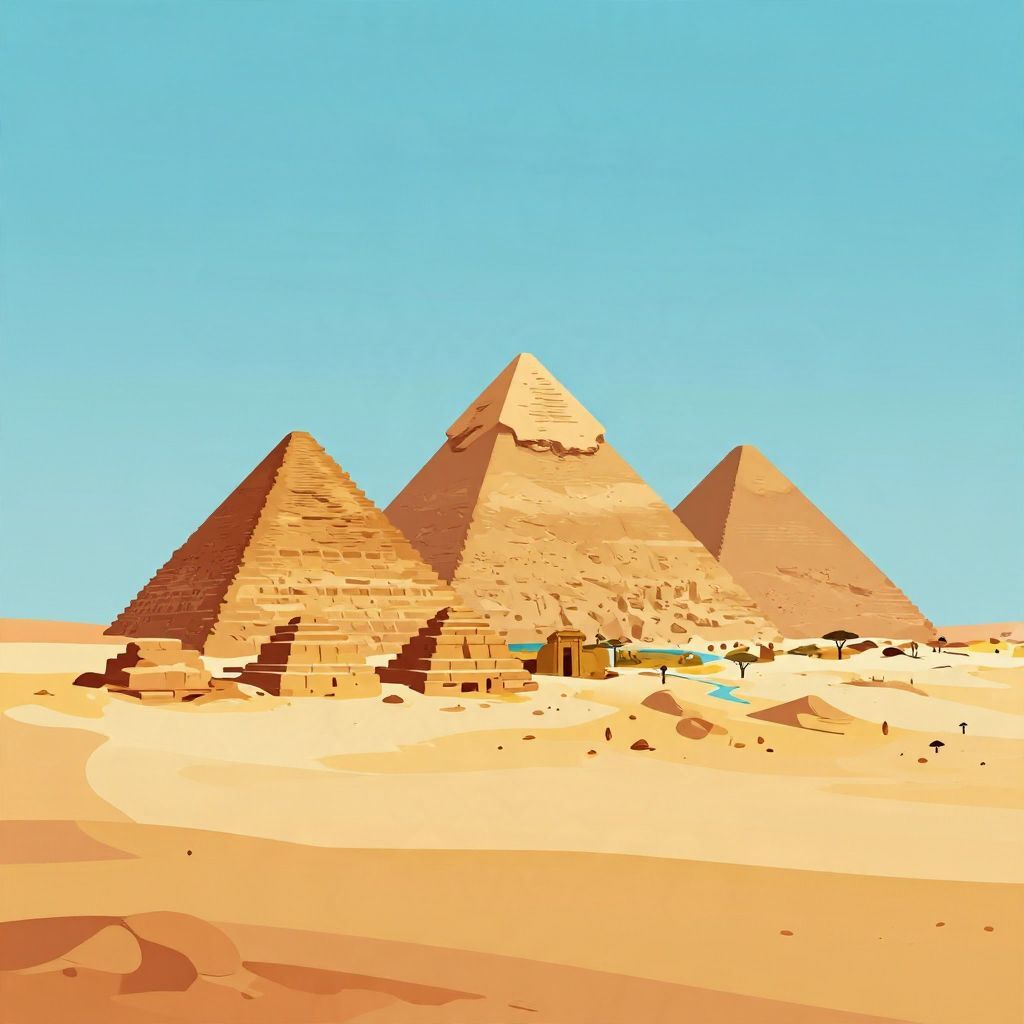
When people ask which country has the most pyramids, the answer is not Egypt. The country with the largest number of pyramids is Sudan, home to the ancient Kushite pyramids of Nubia. Most of these were built in the Kingdom of Kush, especially at sites such as El Kurru, Nuri, and Meroë, between roughly 800 BCE and 350 CE.
Egypt is far more famous, and its pyramids are larger and older in popular memory, but Sudan has more surviving pyramid structures overall. That surprising fact reflects a powerful African tradition of royal burial and a long history of interaction between the Nile Valley’s northern and southern kingdoms.
Which Country Has the Most Pyramids?
Sudan has the most pyramids in the world. Archaeologists generally count well over 200 pyramid structures in Sudan, compared with Egypt’s roughly 100 or so surviving pyramids. Most Sudanese pyramids are smaller, steeper, and later than the great pyramids of Egypt, but they are historically important monuments of the Kingdom of Kush.
Why Sudan Has More Pyramids Than Egypt
The reason is historical rather than architectural luck. The Kushite rulers of Nubia adopted pyramid building as a royal burial tradition after long contact with ancient Egypt. Over time, they developed their own distinctive style and used pyramids for kings, queens, and nobles across several royal cemeteries.
The Kingdom of Kush and Nubian Pyramid Building
The Kingdom of Kush rose in what is now northern Sudan and southern Egypt. Its rulers first ruled from Napata and later from Meroë. By the 8th century BCE, Kushite kings were powerful enough to conquer Egypt briefly and form the 25th Dynasty, sometimes called the “Black Pharaohs” in modern popular writing. Their burial customs blended local Nubian traditions with Egyptian royal ideas.
Pyramids became the most visible expression of that royal culture. Unlike the Old Kingdom pyramids of Egypt, which were built as massive state projects, Kushite pyramids were usually narrower and steeper, often with chapels attached to the east side. They served as tomb markers and ritual spaces rather than as giant internal burial complexes.
Major Sudanese Pyramid Sites
- El Kurru – one of the earliest royal burial grounds of Kushite rulers.
- Nuri – burial place of kings and queens, including the pyramid of Taharqa.
- Meroë – the largest concentration of pyramids in Sudan, with dozens of royal and elite tombs.
- Jebel Barkal – a major religious center linked to royal ideology, though not primarily a pyramid cemetery.
Meroë is especially important because it contains one of the densest pyramid fields in Africa. The site reflects the height of Kushite power from about the 3rd century BCE to the 4th century CE. Many of its pyramids were built for rulers, royal women, and high-ranking elites, showing that pyramid burial was not limited to a single dynasty’s kings.
How Sudanese Pyramids Differ from Egyptian Pyramids
Although both traditions used pyramid-shaped tombs, the two cultures built them differently and for different historical reasons. Egyptian pyramids are generally older, larger, and more famous, while Sudanese pyramids are smaller, steeper, and often more numerous at a single site.
Size and Shape
Egypt’s best-known pyramids, such as those at Giza, are enormous stone monuments with broad bases and shallow slopes. Sudanese pyramids are usually much smaller, with sharply angled sides and a taller, slimmer profile. Many stand only a fraction of the height of the Great Pyramid of Khufu.
Burial Tradition
Egyptian pyramids of the Old Kingdom were part of a highly centralized funerary system tied to divine kingship. Kushite pyramids came much later and were associated with a different political world. They were built in a period when the memory of Egypt’s pyramid age was already ancient, yet the symbol still carried royal prestige.
Architectural Features
Most Kushite pyramids include a small chapel or offering structure on the east side, where rituals could be performed. The burial chamber was usually underground, beneath the pyramid. This design shows both continuity with Egyptian funerary ideas and local adaptation in Nubia.
How Many Pyramids Are There in Sudan and Egypt?
Exact counts can vary because archaeologists revise inventories as sites are excavated, damaged, or reclassified. Still, the broad comparison is clear: Sudan has more pyramids than Egypt. Sudan is commonly credited with more than 200 surviving pyramids, while Egypt has around 100 surviving pyramids, depending on how fragmentary remains are counted.
These numbers should be treated as approximate rather than absolute. Some monuments are ruined to the point that scholars debate whether they should be counted as full pyramids, and some smaller structures may be overlooked or newly documented. Even with those uncertainties, Sudan remains the country with the largest total.
The Historical Meaning of the Pyramids in Sudan
Sudan’s pyramids are not just archaeological curiosities. They reveal a sophisticated African kingdom with its own political identity, religious beliefs, and artistic traditions. For a long time, the history of Nubia was overshadowed by attention to Egypt, but modern scholarship has made clear that Kush was a major civilization in its own right.
Royal Power and Legitimacy
Building pyramids helped Kushite rulers signal legitimacy. Tomb monuments linked the dead king or queen to divine order, ancestry, and dynastic continuity. In a region shaped by competition over the Nile corridor, such monuments were statements of authority as much as burial places.
Women in Kushite Royal Burials
One striking feature of the Nubian pyramid tradition is the prominence of royal women. Queens and royal mothers appear prominently in the burial record, especially at Meroë. This suggests that dynastic power in Kush was not expressed only through kings, but also through influential women in the royal family.
Why Egypt Still Dominates Popular Pyramid History
Even though Sudan has more pyramids, Egypt dominates popular imagination because of the scale and fame of its monuments. The Pyramids of Giza are among the most recognizable structures in the world and have been central to tourism, archaeology, and media for generations.
Egypt also has the oldest major pyramid tradition, beginning in the 27th century BCE with the Step Pyramid of Djoser at Saqqara. That earlier start, combined with the immense size of monuments like Khufu’s pyramid, means Egypt often gets the historical spotlight even if it does not have the highest count.
Fame Is Not the Same as Number
This is a useful historical distinction. A country can be more famous for a monument type without having the greatest number of examples. In the case of pyramids, Egypt is the most famous country, but Sudan is the country with the most surviving pyramids.
The Broader Pyramid Tradition in World History
Pyramids were not unique to one civilization. They appeared in different forms in ancient Egypt, Nubia, Mesoamerica, and parts of Mesopotamia. The shape often served practical and symbolic purposes: stability, visibility, and a sense of sacred ascent. But each region gave the form its own meaning.
In Africa, the Nile Valley pyramids of Egypt and Sudan show a long cultural conversation across centuries. Kushite rulers did not simply copy Egypt; they adapted an older royal symbol to their own political and religious world. That is why the Sudanese pyramids matter so much in the history of African civilizations.
What Happened to the Pyramids of Kush?
The Kushite kingdom eventually declined under pressure from changing trade routes, internal shifts, and regional political transformations. By late antiquity, the great royal pyramid-building tradition had ended. Many pyramids were damaged by time, looting, and earlier excavation methods that were often destructive by modern standards.
Today, the surviving pyramids of Sudan are invaluable historical evidence. They help scholars reconstruct royal succession, burial customs, religious practices, and artistic exchange in a civilization that once rivaled Egypt in power and prestige.
So, Which Country Has the Most Pyramids?
Sudan has the most pyramids, and that answer changes the way many people think about ancient history. Egypt remains the most famous pyramid country, but Sudan preserves the largest concentration of pyramid monuments in the world, mostly from the Kingdom of Kush. Together, the two countries show how pyramid building became one of the Nile Valley’s most enduring royal traditions. If you want to explore more, you can also read about when the Pyramids of Giza were built or why there is a pyramid on the dollar bill.