
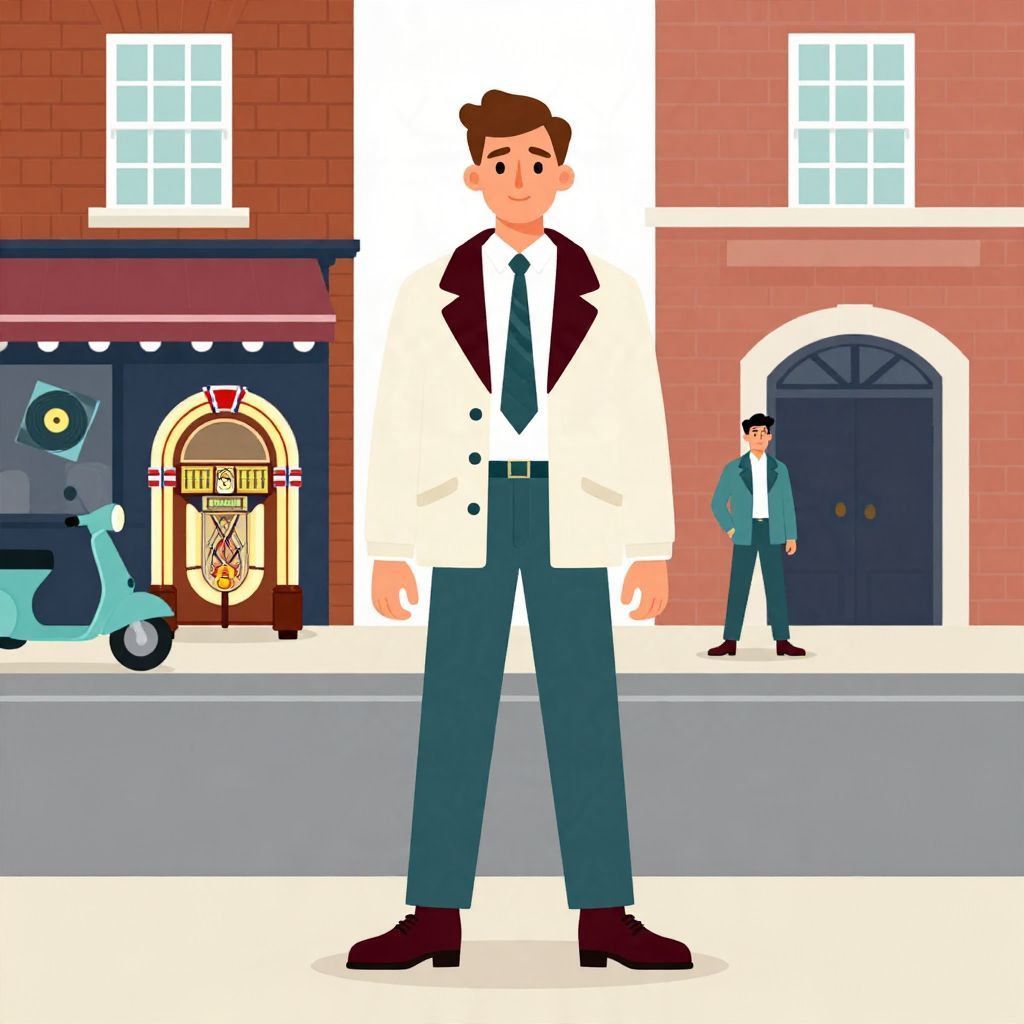
What is a Teddy Boy? The short answer is that a Teddy Boy was a young person, usually a working-class teenage or young adult male in Britain, who embraced a distinctive style in the 1950s. The look borrowed from Edwardian fashion, but the culture was modern: rock and roll, youth identity, and a visible break with older social norms.
Teddy Boys were not just about clothes. They became one of the first widely recognized British youth subcultures, and they helped define the idea of teenagers as a separate social group. Their history reveals changing attitudes to class, leisure, music, and generational conflict in postwar Britain.
What Is A Teddy Boy?
A Teddy Boy was a member of a British youth subculture that emerged in the early 1950s, known for Edwardian-inspired dress, rock and roll tastes, and a rebellious public image. The term “Teddy” came from “Edwardian,” referring to King Edward VII’s era, though the style was a modern reworking rather than a direct revival.
Where Did Teddy Boys Come From?
Teddy Boys appeared in Britain after the Second World War, especially in London and other urban areas. Their rise was tied to a new postwar youth market, rising teenage spending power, and the growth of popular music and cinema. They were among the first British teenagers to be treated as a distinct consumer and cultural group.
Postwar Britain and the rise of youth culture
After 1945, Britain changed quickly. Wartime austerity gradually gave way to a consumer society, and young people had more money to spend than earlier generations. Many left school earlier than before and entered work as teenagers. This created time, income, and social space for youth fashions and leisure habits that older adults often viewed with suspicion.
Why Edwardian style?
The Teddy Boy look was inspired by Edwardian tailoring, but it was filtered through 1950s fashion and street style. The style was chosen partly because it was striking and expensive-looking. It signaled individuality, confidence, and a refusal to blend in. In that sense, the clothing was as important as the music.
What Did Teddy Boys Wear?
Teddy Boy clothing was highly distinctive. The style usually included long drape jackets, narrow trousers, velvet collars, waistcoats, patterned socks, and shoes such as brothel creepers or suede shoes with thick soles. Hair was often worn in a carefully styled quiff or DA (“duck’s arse”) shape, using grease or brilliantine.
Key elements of the Teddy Boy look
- Drape jacket with a long, fitted shape and often velvet trim
- Tight trousers, sometimes with drainpipe legs
- Bold ties or string ties
- Conspicuous shoes, including thick-soled styles
- Styled hair, usually carefully combed and greased
The clothing was not simply decorative. It was a visual statement of belonging. Because the style was expensive and carefully assembled, it could also suggest aspiration and swagger. For some young men, it offered a way to challenge class expectations without abandoning working-class identity.
Why Were They Called “Teddy Boys”?
The name “Teddy Boy” came from “Edwardian,” shortened in a way that sounded casual and slightly mocking. The label was popularized in the press and then adopted more broadly. Like many youth labels, it began as an outsider description before becoming a self-conscious identity.
It is worth noting that “Teddy Boy” was never a single formal organization. It was a loose subculture, not a club with membership cards or a central leadership. Different groups and local scenes could vary in style and behavior, and not every young man in Edwardian-inspired dress shared the same values or habits.
What Music Did Teddy Boys Listen To?
Teddy Boys became strongly associated with rock and roll, especially after the music reached Britain in the mid-1950s. Artists such as Elvis Presley, Bill Haley, and Little Richard influenced the scene, though British teenagers also mixed these sounds with local dance halls, cinemas, and record culture. Music gave the style energy and a sense of modernity.
Rock and roll and youth identity
Rock and roll mattered because it sounded new, energetic, and sometimes unruly. Adults often criticized it as noisy or morally suspect, which only made it more attractive to many teenagers. Teddy Boys were among the first British groups to turn musical taste into a visible identity in public space.
Were Teddy Boys Violent?
Some Teddy Boy groups were linked to street fights, vandalism, and public disorder, but it would be misleading to define the whole subculture by violence. As with many youth movements, press coverage often magnified the most sensational incidents. Many Teddy Boys were mainly interested in fashion, music, dancing, and socializing.
How the public saw them
Middle-class commentators and newspapers frequently portrayed Teddy Boys as threatening or delinquent. This image was shaped by fears about youth independence, changing morals, and postwar social instability. In reality, the subculture included a spectrum of behavior, from stylish self-expression to genuine troublemaking.
One reason Teddy Boys attracted attention was that they made youth visible. Their clothing was hard to ignore, and their public presence in cinemas, dance halls, cafés, and streets challenged older ideas about how young people should behave.
How Did Teddy Boys Fit Into British History?
Teddy Boys are historically important because they helped establish the modern idea of a youth subculture. They showed that teenagers could have their own tastes, fashions, and social codes. This was a major cultural shift in the 20th century, linked to mass media, consumerism, and postwar social change.
Class and identity
The Teddy Boy phenomenon was closely tied to class. Many Teddy Boys came from working-class backgrounds, and the style could be read as both aspiration and defiance. It borrowed from expensive tailoring while being worn by young people who were not part of the traditional elite. That tension helped make the style so powerful.
Generational conflict
Adults often interpreted Teddy Boys as evidence that younger people were becoming disrespectful or undisciplined. But the subculture also reflected a broader generational change. After the war, young people had more cultural visibility than before, and their tastes increasingly shaped music, fashion, and entertainment markets.
Did Teddy Boys Disappear?
The original Teddy Boy wave faded by the late 1950s as fashions changed and new youth cultures emerged, including mods and rockers. However, the style did not vanish completely. It was revived in later decades, especially in the 1970s, when some young people rediscovered the look and adapted it for new musical scenes.
Revival and legacy
The later Teddy Boy revival was not identical to the original movement. It drew on nostalgia, retro style, and renewed interest in rock and roll. By then, Teddy Boy imagery had become part of a larger history of British youth culture, influencing how later generations understood style-based identity.
Key Facts About Teddy Boys
- Period: Mainly early to late 1950s, with later revivals
- Place: Britain, especially urban areas
- Core identity: Youth style, rock and roll, and rebellion
- Fashion source: Edwardian-inspired tailoring adapted for modern street wear
- Historical importance: One of Britain’s first major youth subcultures
Why Teddy Boys Still Matter
Teddy Boys matter because they mark a turning point in modern social history. They were not just a fashion trend but a sign that young people had become a distinct cultural force. Their story connects clothing, music, class, and the changing meaning of adolescence in postwar Britain.
In the end, a Teddy Boy was a young Briton who used style and music to assert identity in a changing society. The subculture was sometimes exaggerated by critics, but its historical significance is clear: it helped create the modern language of youth culture. For related background, see broader historical context at My Life Is History and the idea of cultural difference in history at What Is Cultural Divergence?