
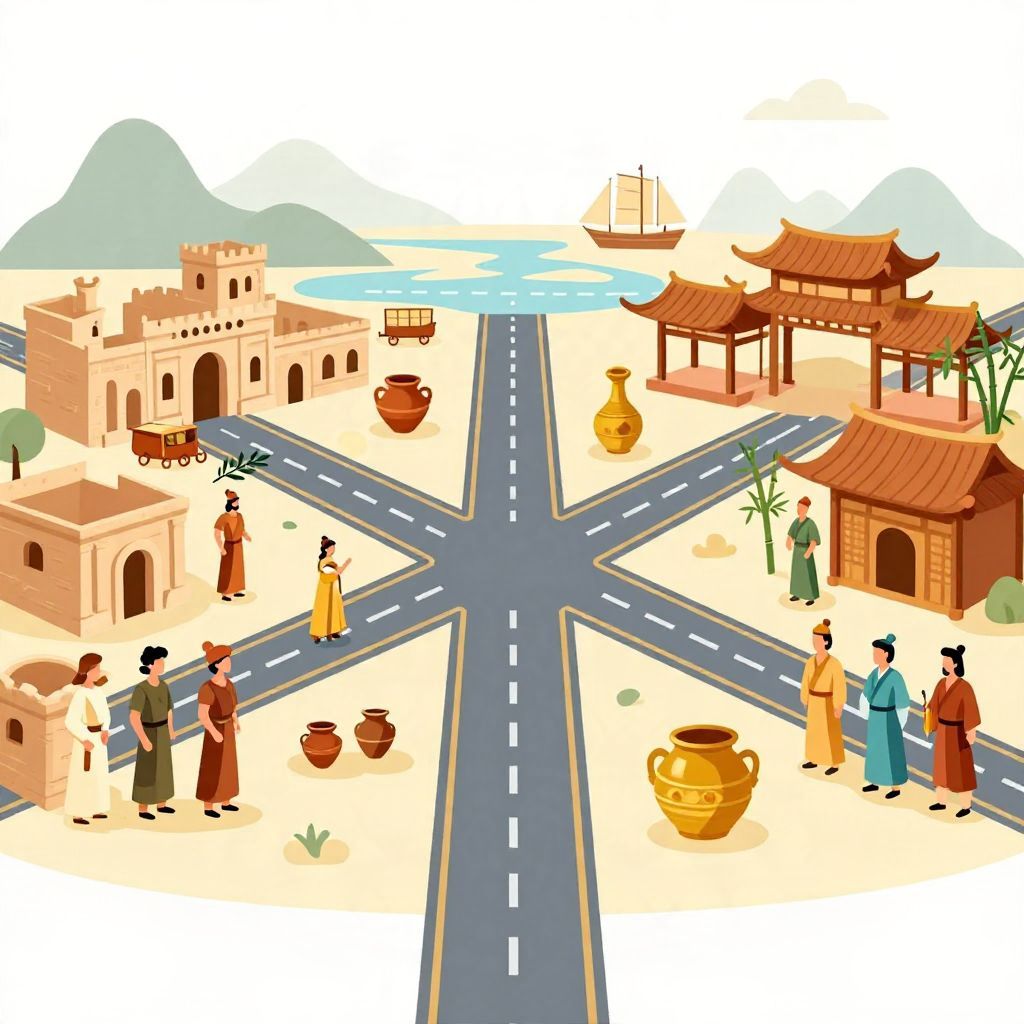
What is cultural divergence, and why do historians and anthropologists use the term? In simple terms, cultural divergence is the process by which groups that once shared a common culture gradually become more different over time. It helps explain how languages split, customs change, and societies develop distinct identities.
The concept matters because human history is full of movement, separation, adaptation, and exchange. Cultural divergence can happen across empires, islands, mountain ranges, borders, and even within the same city when communities follow different paths for long periods.
What Is Cultural Divergence?
Cultural divergence is the gradual development of differences between cultures that were once similar or connected. These differences may appear in language, religion, dress, food, political institutions, art, or social values. Historians use the idea to describe long-term separation caused by geography, migration, conflict, or changing social conditions.
How Cultural Divergence Works in History
Cultural divergence usually begins when people who share a common background become separated or start facing different pressures. Over generations, small changes accumulate. A group may adapt to a new environment, adopt different beliefs, or borrow from different neighbors. Eventually, the original cultural resemblance becomes less visible.
Common causes of divergence
- Geographic separation: mountains, seas, deserts, and distance can limit contact.
- Political division: rival states or empires may encourage different identities.
- Migration: people moving into new regions often adapt to local conditions.
- Religion and ideology: different beliefs can shape law, ritual, and daily life.
- Economic change: trade routes, farming systems, and labor patterns influence culture.
- Conflict: war and conquest can push communities apart or harden boundaries.
Historical Background and Origins of the Idea
The phrase “cultural divergence” is a modern analytical term, but the phenomenon itself is ancient. Long before scholars named it, people observed that communities could begin from similar roots and later look very different. Modern historians, anthropologists, and linguists use the concept to study how cultures branch apart over time.
The idea became especially useful in the 19th and 20th centuries, when scholars compared languages, religions, and customs across regions and tried to explain why related peoples did not remain culturally identical. It is closely connected to the study of migration, colonialism, nationalism, and social change.
Examples of Cultural Divergence in World History
Cultural divergence can be seen across many periods and regions. The best examples are not isolated events but long historical processes that unfolded over centuries.
Language families splitting apart
One of the clearest examples is language change. Latin spread across the Roman Empire, but after the empire weakened in the West, regional speech communities developed separately. Over time, Latin evolved into distinct Romance languages such as French, Spanish, Portuguese, Italian, and Romanian. These languages share a common origin, yet centuries of separation made them different enough to be mutually unintelligible in many cases.
Separated communities and island cultures
Island settings often encourage divergence because contact with outsiders is limited. Distinct local traditions can develop in religion, architecture, foodways, and social organization. The same pattern can appear in remote valleys, frontier zones, or mountain regions where travel is difficult and communities remain relatively isolated.
Religious and political divergence after a split
When a society divides politically or religiously, cultural differences often deepen. The division of Christianity into different traditions after the early medieval period, and later the Protestant Reformation in the 16th century, helped produce distinct forms of worship, education, and social life across Europe. These changes were not caused by religion alone, but religion became one of the most visible markers of difference.
Colonialism and new cultural paths
Colonial expansion created many cases of divergence. Indigenous communities, enslaved populations, settlers, and mixed societies often developed in separate directions under unequal conditions. Some groups preserved older practices more strongly; others adapted by blending traditions or creating new ones. In the Americas, Africa, and Asia, colonial rule often reshaped language, dress, law, and identity in uneven ways.
Cultural Divergence vs. Cultural Diffusion and Convergence
Cultural divergence is often discussed alongside two related ideas: cultural diffusion and cultural convergence. These terms describe different patterns of cultural change, and they are not opposites in a simple sense. In real history, all three can happen at once.
Diffusion
Cultural diffusion is the spread of ideas, technologies, beliefs, or customs from one group to another. Trade networks, conquest, migration, and media all encourage diffusion. For example, paper-making, gunpowder, and religious practices spread across large regions through contact.
Convergence
Cultural convergence happens when different groups become more alike, often because of trade, empire, globalization, or shared institutions. Urban life, mass communication, and consumer culture can push societies toward similar habits and tastes.
Why divergence still matters
Even when diffusion and convergence are strong, divergence does not disappear. Groups may borrow the same technology but use it differently, or adopt a shared religion while keeping local customs. Cultural divergence helps historians explain why contact does not always produce uniformity.
How Historians Study Cultural Divergence
Historians do not usually measure cultural divergence with a single number. Instead, they study evidence such as texts, artifacts, architecture, oral traditions, legal codes, and language patterns. They look for signs of long-term change and ask what caused communities to move in different directions.
Common evidence used by scholars
- Language comparison: changes in vocabulary, grammar, and pronunciation.
- Material culture: tools, pottery, clothing, buildings, and burial practices.
- Written records: laws, chronicles, letters, religious texts, and administrative documents.
- Oral traditions: stories and memories passed across generations.
- Archaeology: settlement patterns, diet, trade goods, and ritual objects.
Scholars are careful not to assume that every difference means a total break. Cultures can diverge in some areas while remaining closely connected in others. For example, two neighboring societies may share trade goods and political ideas but differ sharply in ritual or family structure.
Why Cultural Divergence Happens
Cultural divergence is rarely the result of a single cause. More often, it develops through a combination of separation, adaptation, and historical accident. A community may adopt new practices because of climate, local resources, or political pressure. Over time, these practical choices become traditions.
Geography and environment
Physical landscapes strongly influence divergence. A farming society in a river valley may develop different customs from a pastoral society on open grasslands. Climate affects food, clothing, housing, and seasonal labor, all of which shape culture.
Power and identity
When states, kingdoms, or empires try to unify populations, some groups respond by emphasizing local language, religion, or custom. In this way, political pressure can intensify divergence rather than erase it. Nationalism in the modern era often turned cultural difference into a marker of political identity.
Time and memory
Over long periods, communities preserve some traditions and forget others. What survives is not always the oldest practice, but the one that remains useful, meaningful, or symbolically important. This selective memory is one reason cultural divergence can be uneven and difficult to trace.
Is Cultural Divergence Always a Separation?
Not necessarily. Cultural divergence does not always mean total isolation or hostility. Two groups may remain in contact while still becoming more different. In fact, frequent interaction can sometimes sharpen differences as each group defines itself in contrast to the other.
For example, borderlands often produce both exchange and divergence. Merchants, soldiers, and migrants move across boundaries, but local communities may still develop distinct dialects, dress, or political loyalties. Shared contact does not guarantee shared identity.
Modern Relevance of Cultural Divergence
The concept remains useful today because cultural change is still happening on a global scale. Migration, digital media, education, and economic integration create new forms of shared culture, but they can also produce divergence as communities respond differently to the same forces. Some groups embrace global styles; others strengthen local traditions or revive older identities.
Modern historians use the term carefully because it can oversimplify. Cultures are not fixed objects that move in a straight line. They are dynamic and constantly changing. Still, cultural divergence remains a helpful way to describe how common origins can lead to distinct historical paths.
Key Facts About Cultural Divergence
- It describes the growing difference between cultures that were once similar or connected.
- It often develops over long periods, sometimes centuries.
- Major causes include geography, migration, politics, religion, and conflict.
- It can be seen in language, customs, institutions, and material culture.
- It is related to, but distinct from, cultural diffusion and cultural convergence.
Conclusion
Cultural divergence is the historical process by which shared cultural roots branch into distinct traditions, languages, and identities. It helps explain why societies that began with common origins can develop in very different ways. For a fuller picture of cultural change, see also what is cultural diffusion and what is cultural convergence.