
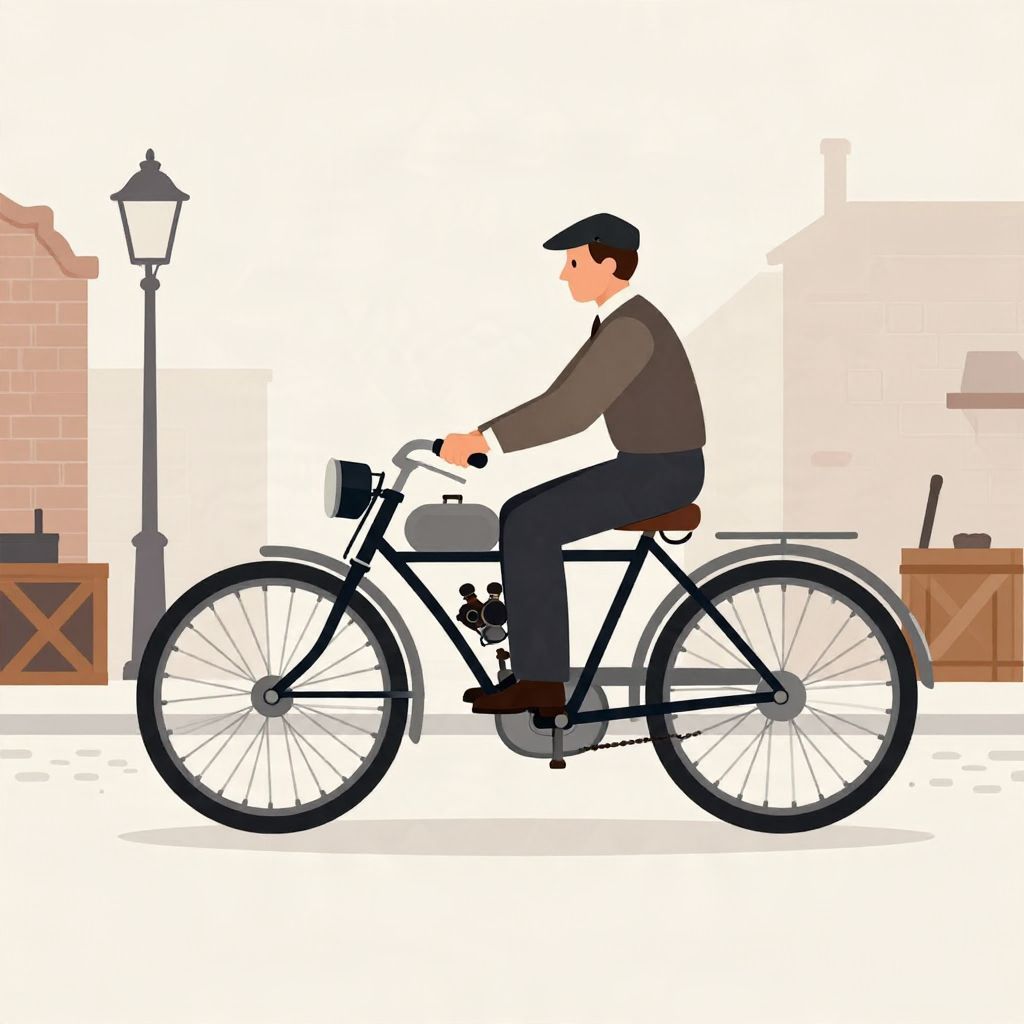
When was the first motorcycle made? The short answer is that the first machine widely recognized as a motorcycle was built in 1885, when German inventors Gottlieb Daimler and Wilhelm Maybach created the Reitwagen. It was a two-wheeled, gasoline-powered experimental vehicle that marked a major step toward the modern motorcycle.
The story is a little more complicated than a single “first,” though. Earlier steam-powered machines and later improved designs also claim places in motorcycle history, so the answer depends on how strictly you define a motorcycle.
When Was the First Motorcycle Made?
The first motorcycle is usually dated to 1885, when Daimler and Maybach built the Reitwagen in Germany. It is considered the first gasoline-powered two-wheeled vehicle that led directly to the motorcycle as we know it today, although it was more of an experimental test rig than a practical road machine.
Why 1885 Is the Usual Answer
Historians often use 1885 because the Reitwagen combined two features that mattered enormously for later motorcycle development: an internal combustion engine and a two-wheeled frame. Earlier vehicles had engines, but they were not motorcycles in the modern sense, and later inventors refined the idea into something usable and repeatable.
The Reitwagen and Its Purpose
The Reitwagen, meaning “riding car” or “riding wagon,” was not built as a consumer product. Daimler and Maybach were experimenting with a small, high-speed gasoline engine that could be mounted on different kinds of transport. Their goal was broader than inventing a motorcycle; they wanted to prove that a compact engine could power a vehicle.
The machine used a wooden frame and had two main wheels, but it also had small outrigger wheels for balance. That detail matters because it shows how experimental the design was. It looked like a motorcycle ancestor, but it was not yet a fully mature motorcycle in the modern sense of a stable, practical, mass-producible vehicle.
What Made It Revolutionary
The Reitwagen helped establish the basic path for motorcycle history: lightweight frame, compact engine, and personal mobility. Before this, transportation innovations were moving through steam power, horse power, and larger mechanical vehicles. Daimler and Maybach’s work helped shift the future toward small internal combustion engines for individual transport.
Were There Motorcycles Before 1885?
Yes, if you use a broader definition. Steam-powered two-wheelers appeared before 1885, and some historians and enthusiasts point to them as early motorcycles. But most historians still reserve the title “first motorcycle” for the 1885 Reitwagen because it was gasoline-powered and more directly connected to the later motorcycle industry.
Steam-Powered Precursors
In the 1860s and 1870s, inventors in Europe and the United States experimented with steam-powered bicycles and tricycles. These machines were important stepping stones, but they relied on bulky boilers and were often awkward, heavy, and difficult to operate. They were impressive engineering experiments, yet they did not lead as directly to the modern motorcycle as the gasoline engine did.
One famous example is the steam-powered machine associated with Sylvester Roper in the United States, which some people call an early motorcycle. It was real and significant, but because it used steam rather than gasoline, it usually sits in a separate category in historical discussions.
Why Definitions Matter
The question “when was the first motorcycle made?” depends on what counts as a motorcycle. If you mean the first two-wheeled motorized vehicle of any kind, steam prototypes may enter the conversation. If you mean the first gasoline-powered machine that points toward the modern motorcycle, 1885 is the strongest answer.
The Story of the Reitwagen in 1885
In 1885, Daimler and Maybach were working in Germany on a compact high-speed engine. They mounted it onto a wooden frame with two wheels, creating a test vehicle that could demonstrate the engine’s usefulness. This machine was more a proof of concept than a finished product, but it became a landmark in transport history.
Who Built It?
Gottlieb Daimler was a German engineer and industrialist, and Wilhelm Maybach was his gifted technical collaborator. Their partnership was central to the development of early gasoline engines. Maybach, in particular, has often been recognized as one of the great engineering minds of the era, though Daimler’s name became more widely associated with the broader automotive legacy.
How It Was Built
The Reitwagen used a small gasoline engine that was mounted in the frame. It was not elegant by later standards, but it demonstrated that an internal combustion engine could move a lightweight vehicle on two wheels. Because the design was still unstable, the inventors added side wheels to help keep it upright during testing.
That makes the Reitwagen a fascinating historical object: it was both a motorcycle ancestor and a reminder that invention is usually a process, not a single moment. The machine was not the end of the story; it was the beginning of one.
What Happened Next
After 1885, inventors in Europe and North America continued refining motorized two-wheelers. Engines became smaller and more reliable, frames became stronger, and controls improved. By the 1890s and early 1900s, motorcycles were moving from experimental novelty to practical transportation and sport.
How Motorcycles Evolved After the First One
The first motorcycle did not immediately create the motorcycle industry. It took years of engineering progress before motorcycles became useful, affordable, and popular. The history of the motorcycle is really the history of solving several problems at once: balance, engine reliability, speed control, braking, and rider safety.
From Experiment to Practical Vehicle
Early motorcycles were often fragile and difficult to ride. As manufacturers improved engines and frames, motorcycles became more dependable. Chain drives, better tires, and more effective steering helped transform them into real transportation rather than laboratory curiosities.
By the early 20th century, motorcycles were being used for commuting, racing, military dispatch, and recreation. Their appeal grew because they were cheaper and more maneuverable than many early cars. In that sense, the first motorcycle did not just begin a machine type; it helped open a new era of personal mobility.
The Rise of Motorcycle Culture
Motorcycles quickly developed a cultural identity of their own. They became associated with speed, independence, engineering skill, and sometimes rebellion. That cultural history came much later than the first machine, but it traces back to the same invention: a compact motorized vehicle that gave individuals a new kind of freedom.
Why the First Motorcycle Still Matters
The first motorcycle matters because it marked a turning point in transportation history. The Reitwagen showed that a lightweight internal combustion engine could power a personal vehicle. That idea helped shape not only motorcycles, but also the broader development of automobiles and modern engine design.
It also illustrates a common pattern in invention history. Breakthroughs rarely appear fully formed. They emerge from experiments, prototypes, failures, and improvements by multiple inventors. The motorcycle did not arrive all at once; it evolved through a series of technical steps, with 1885 standing out as the most important early milestone.
Motorcycle vs. Bicycle vs. Car
The first motorcycle sits at the intersection of several transport histories. It borrowed the two-wheel form of the bicycle, the engine technology that would later power cars, and the personal mobility that made both vehicles so transformative. That is why motorcycle history is also part of the broader story of modern transportation.
So, What Is the Best Historical Answer?
If you want the clearest and most widely accepted answer, the first motorcycle was made in 1885 by Gottlieb Daimler and Wilhelm Maybach in Germany. The machine was the Reitwagen, and although it was experimental and not yet fully practical, it is generally recognized as the first gasoline-powered motorcycle ancestor.
At the same time, earlier steam-powered two-wheelers and later improved motorbikes show that the “first motorcycle” is partly a matter of definition. Still, for most historical purposes, 1885 is the date that matters most.
The first motorcycle was not just a machine; it was the beginning of a new way to move through the world. If you are interested in how other vehicles changed history, you may also enjoy reading about when the first car was made in America and other milestones in modern transport history.