
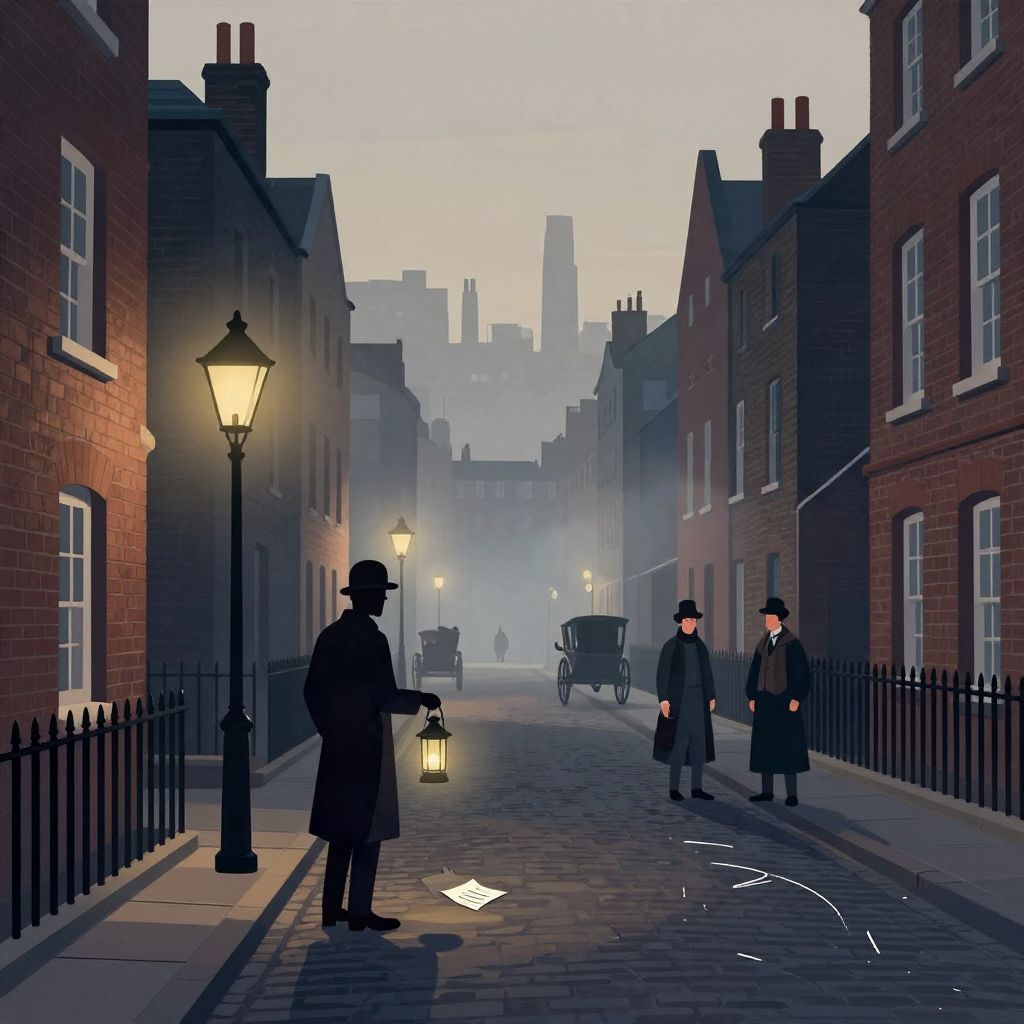
Was Jack the Ripper real? Yes—if by “real” we mean the series of brutal murders in Whitechapel, London, in 1888 that created the legend. The killer’s identity was never proven, but the crimes themselves were documented by police, newspapers, and later historians.
The mystery endures because the case sits at the intersection of crime, media, and urban poverty in late Victorian Britain. What is real is the historical event; what remains uncertain is who committed it.
Is Jack the Ripper real?
Yes. Jack the Ripper was the name given to an unidentified serial killer who murdered at least five women in Whitechapel, in the East End of London, during 1888. The murders are historically real and well documented, but the killer’s true identity was never established with certainty.
What historians know about the Whitechapel murders
The core evidence comes from police records, witness statements, inquest reports, and contemporary newspaper coverage. The best-known victims are usually called the “canonical five”: Mary Ann Nichols, Annie Chapman, Elizabeth Stride, Catherine Eddowes, and Mary Jane Kelly. These murders were linked by location, timing, and method, though not every contemporaneous killing in Whitechapel was necessarily the work of the same person.
The usual chronology
- 31 August 1888: Mary Ann Nichols was murdered in Whitechapel.
- 8 September 1888: Annie Chapman was killed.
- 30 September 1888: Elizabeth Stride and Catherine Eddowes were murdered on the same night.
- 9 November 1888: Mary Jane Kelly was killed.
These murders took place in a densely populated district marked by overcrowding, poverty, casual labor, and limited policing resources. That setting mattered: it shaped how quickly the crimes were discovered, how witnesses interpreted events, and how the public imagined the killer.
Why the name “Jack the Ripper” became famous
The name did not come from the police. It emerged from press culture during the investigation, when letters claiming to be from the killer were circulated. Most historians treat the famous nickname as part of the case’s media history rather than as reliable evidence about the murderer’s identity. The Whitechapel murders became one of the first modern crime stories to be amplified by mass journalism.
Crime, newspapers, and public fear
Victorian London had a lively and competitive press. Sensational reporting helped turn a local series of murders into an international obsession. Newspapers repeated rumors, published speculative theories, and sometimes blurred the line between fact and conjecture. This did not invent the murders, but it did shape how the public remembers them.
What evidence is solid, and what is uncertain?
The murders are solidly historical. The uncertainty lies in the killer’s identity, motive, and exact number of victims. There is no universally accepted suspect because the surviving evidence is fragmentary, often contradictory, and filtered through the limits of 19th-century policing. That is why the case remains open in historical debate, even though the crimes themselves are not in doubt.
Established evidence
- The murders occurred in Whitechapel in 1888.
- At least five women were killed in a pattern that suggests a serial offender.
- Police investigated extensively, but no arrest produced a conclusive identification.
- Contemporary newspapers and public anxiety turned the case into a lasting cultural phenomenon.
What cannot be proven
- The killer’s true name.
- Whether all attributed murders were committed by one person.
- Whether the letters signed “Jack the Ripper” were genuinely written by the murderer.
- The precise motive, beyond broad possibilities such as misogyny, sexual violence, or opportunistic predation.
Why the case still attracts theories
Part of the fascination comes from the gap between evidence and certainty. The case has generated theories involving doctors, butchers, aristocrats, local residents, and even foreign conspirators. Most of these claims rely on speculation, selective reading of evidence, or later mythmaking. A responsible historical approach separates plausible suspects from proof.
Why so many suspects?
The surviving record is incomplete, and late 19th-century forensic science was limited. Police did not have modern DNA analysis, standardized crime-scene procedures, or reliable methods for linking a suspect to a murder weapon with certainty. As a result, many people could be imagined as the killer, especially those who fit social anxieties about class, immigration, medicine, or deviance.
How the historical context shaped the murders
Whitechapel in 1888 was a place of intense inequality. Many residents lived in unstable housing and worked in precarious jobs. Women in the area, especially those struggling with poverty, were vulnerable to violence and social stigma. The Ripper case exposed how urban growth, poverty, and weak social support could combine to create dangerous conditions.
Victorian London and the East End
London was the capital of a global empire, but its prosperity was unevenly distributed. The East End often appeared in middle-class writing as a space of danger and moral decline. The murders intensified those fears, and the press frequently treated Whitechapel as a symbol of urban disorder. In that sense, the case became more than a crime story: it became a lens through which Victorians debated poverty, policing, and social responsibility.
Did the police know who Jack the Ripper was?
No conclusive identification was ever made. The Metropolitan Police and other investigators pursued numerous leads, but none produced a proven culprit. Over time, many names have been proposed, including local residents, medical professionals, and men with criminal records. Yet the historical record does not allow a definitive answer, and many later claims overstate the strength of the evidence.
Why modern certainty is hard to reach
Some researchers have tried to use later techniques, including handwriting analysis, forensic interpretation, and retrospective profiling. These efforts can be interesting, but they rarely settle the case. Evidence from 1888 is too limited, and many supposed breakthroughs depend on assumptions that cannot be verified. Historians therefore tend to be cautious: the murders are real, the suspect list is long, and the identity remains unresolved.
Was Jack the Ripper a myth, then?
No. The killer is not a myth in the sense of being fictional. The myth lies in the layers built around the case: the dramatic nickname, the sensational press coverage, the endless suspect theories, and the cultural image of a shadowy genius criminal. The historical reality is more ordinary and more disturbing: a series of unsolved murders in a poor district of London.
Real crimes, legendary outcome
Many famous historical figures or events acquire legend-like qualities over time. Jack the Ripper is a good example of how a real event can become larger than the evidence. The murders were concrete acts of violence, but the story that later generations tell about them often reflects fear, imagination, and entertainment as much as history.
Why the case matters historically
The significance of Jack the Ripper goes beyond the mystery itself. The case helped shape modern understandings of serial murder, investigative policing, and tabloid journalism. It also exposed how vulnerable women could be ignored or sensationalized in public discourse. For historians, the case is valuable not because it is solved, but because it reveals the social world that produced it.
Lasting consequences
- It influenced public expectations of police investigation.
- It showed the power of mass media to create a national panic.
- It left a lasting mark on the cultural image of Victorian London.
- It remains a case study in the limits of historical certainty.
The bottom line
Jack the Ripper was real in the sense that the Whitechapel murders were real historical crimes, not a later invention. What is not real is the idea that the killer’s identity has been proven beyond doubt. The case remains one of history’s most famous unsolved murders, and its enduring power comes from that combination of evidence, uncertainty, and legend. For more on how historical ideas and institutions spread through the past, see what mercantilism was and why the Geneva Bible was banned.