
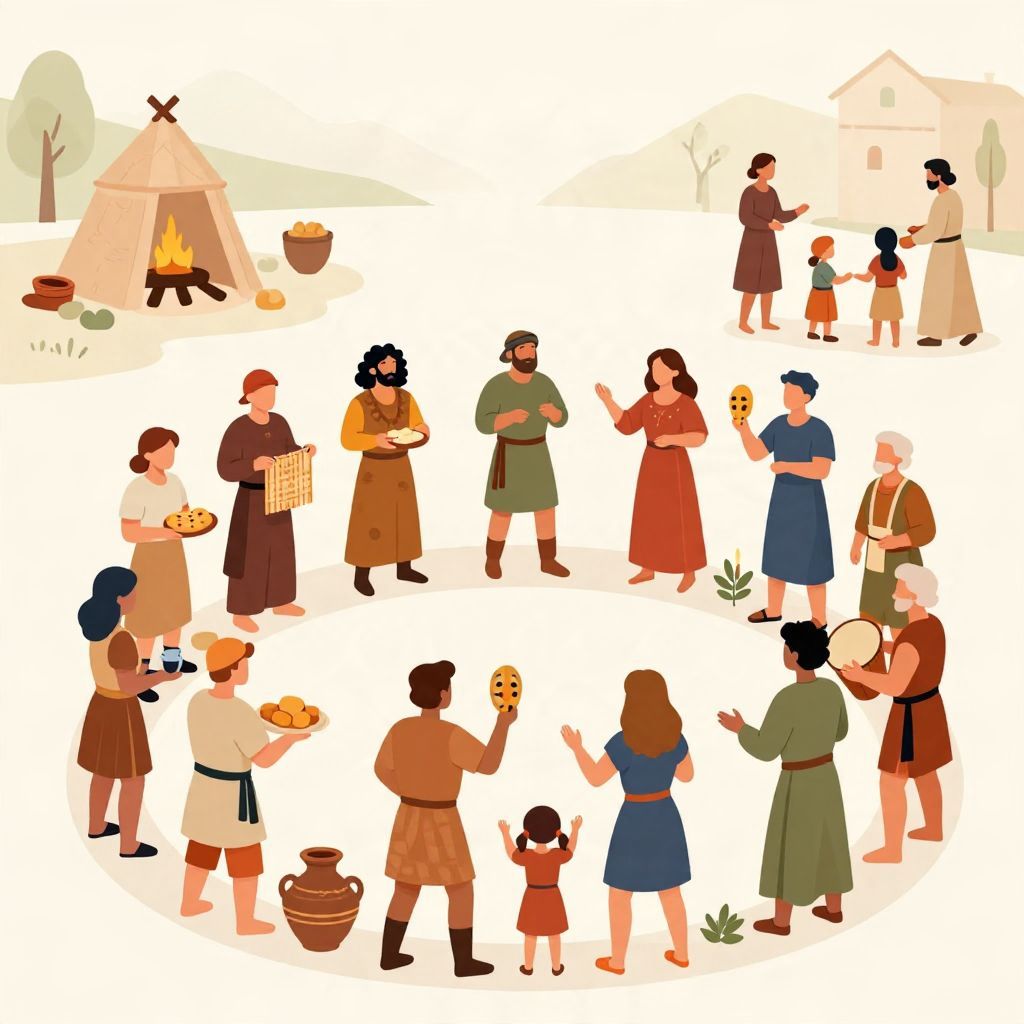
What are traditions, and why do they matter in history? Traditions are the customs, beliefs, practices, stories, and rituals that people pass from one generation to the next. They can be religious, family-based, national, or local, and they often help communities remember who they are, what they value, and how they belong together.
Historically, traditions are not fixed relics from the past. They change over time, adapt to new conditions, and are sometimes deliberately created or revived to serve social, political, or religious purposes. Understanding traditions means looking at both continuity and change.
What Are Traditions?
Traditions are inherited patterns of behavior and meaning passed through time. They may include festivals, foodways, dress, ceremonies, oral stories, greetings, songs, or rules of conduct. In history, traditions help societies preserve memory, shape identity, and create a sense of order, even as they evolve with each generation.
Tradition as a living process
A tradition is rarely unchanged. People repeat it, interpret it, and adjust it to new circumstances. A wedding custom, for example, may preserve an old symbol while the clothing, music, or setting changes. This is why historians often describe traditions as “living” rather than frozen in time.
Tradition and custom are related, but not identical
Everyday custom refers to a repeated habit or social practice. Tradition usually implies a stronger link to the past and a sense of inherited meaning. A custom can become a tradition when people begin to treat it as something worth preserving and passing on.
Where Did Traditions Come From Historically?
Traditions likely began as soon as human communities developed shared memory, language, and repeated social behavior. Long before writing, people used oral storytelling, ritual, and imitation to transmit knowledge. Because these practices were repeated across generations, they became the earliest traditions.
Prehistoric and oral traditions
In prehistoric societies, traditions were preserved through memory rather than documents. Myths, songs, burial practices, and seasonal rituals helped groups explain the world and maintain social cohesion. Archaeology can sometimes reveal repeated patterns, but the meanings behind them are often inferred rather than directly known.
Ancient civilizations and formalized tradition
With the rise of states and writing in places such as Mesopotamia, Egypt, China, and the Mediterranean world, traditions became more visible and more formal. Rulers, priests, and scribes recorded laws, rituals, genealogies, and ceremonies. Writing did not create tradition, but it made some traditions more durable and easier to standardize.
Why Did Traditions Matter in the Past?
Traditions mattered because they gave people continuity in changing times. They linked the living to ancestors, reinforced authority, and provided shared rules for major life events. In many societies, traditions also helped define who belonged inside a group and who stood outside it.
Traditions created social order
Repeated ceremonies and social expectations made communities more predictable. Birth rituals, coming-of-age ceremonies, marriages, funerals, and seasonal festivals marked important stages of life. These practices often carried moral lessons and reinforced family or community roles.
Traditions supported political power
Rulers frequently used tradition to legitimize authority. Kings, emperors, and governments often presented themselves as guardians of ancient customs, even when they were introducing new policies. By claiming continuity with the past, leaders could make change seem natural or inevitable.
Traditions preserved memory
Before mass literacy and modern archives, traditions were one of the main ways societies remembered their histories. Oral epics, religious recitations, commemorations, and annual festivals preserved collective memory. Even when details shifted, the act of repetition kept the past present.
How Traditions Change Over Time
Traditions change because societies change. Migration, conquest, trade, religion, technology, and political upheaval all reshape what people do and what they believe they are preserving. A tradition may survive, but its form, meaning, or audience can alter dramatically.
Blending and borrowing
Many traditions are the result of cultural exchange. As people moved across regions through trade, empire, or migration, they carried customs with them and adapted them to new settings. This is why many festivals, foods, and rituals have mixed origins rather than a single pure source.
Revival and reinvention
Some traditions are older than they look; others are intentionally revived or reconstructed. In the 19th and 20th centuries especially, many nations and communities promoted “ancient” customs to strengthen identity. Historians often note that a tradition may be genuine in its social importance even if its current form is relatively recent.
Invented traditions
Scholars sometimes use the phrase “invented traditions” for practices that are presented as old but were created or standardized in modern times. This does not mean they are fake or meaningless. It means that societies often build continuity by creating rituals that feel ancient and stable, especially during periods of rapid change.
Examples of Traditions Across History
Traditions appear in nearly every aspect of human life. Some are local and small-scale; others spread across continents. The following examples show how varied traditions can be and how they have developed historically.
Religious traditions
Religious traditions include worship practices, sacred texts, pilgrimages, holy days, and ritual observance. Judaism, Christianity, Islam, Hinduism, Buddhism, and many other faiths each developed long traditions shaped by theology, community life, and historical experience. These traditions often changed as religions spread into new regions.
Family traditions
Family traditions include holiday meals, naming patterns, storytelling, and annual gatherings. These customs may seem private, but they often reflect broader historical influences such as migration, class, religion, and local culture. A family recipe, for instance, may preserve the memory of a region or homeland.
National traditions
Nations often build traditions around flags, anthems, public holidays, military ceremonies, and commemorations of historical events. Many of these practices became especially important in the modern era, when states sought to create shared identities among large populations.
Seasonal and agricultural traditions
Before industrialization, many traditions followed the agricultural calendar. Harvest festivals, planting rituals, and winter celebrations helped communities mark the rhythms of work and survival. Even in urban societies, these traditions often remained important because they connected people to older ways of life.
The Historical Origins of Some Well-Known Traditions
Many familiar traditions have complex origins. Some began in religion, some in folk custom, and some in political or commercial settings. Their histories are often layered, which is why historians are careful about simple origin stories.
Holiday traditions
Holiday traditions often combine older seasonal customs with religious meaning and later social habits. For example, winter celebrations in Europe and elsewhere drew on a mixture of pre-Christian seasonal practices, Christian observance, and modern family customs. Over time, these layers became difficult to separate.
Wedding traditions
Wedding customs vary widely by place and period, but many share common themes: public recognition, exchange, blessing, and the joining of families. Some elements, such as rings, processions, or ceremonial dress, have ancient roots; others became popular through changing social norms and media influence.
Food traditions
Food traditions often arise from local agriculture, trade routes, religious rules, and family memory. A dish may be associated with a region for centuries, yet its ingredients or preparation may have changed as new crops, spices, and technologies became available.
How Historians Study Traditions
Historians study traditions by comparing written records, oral histories, material culture, art, and ritual practice. They ask not only when a tradition appeared, but also who practiced it, what it meant, and how it changed. This approach helps distinguish long continuity from later reinvention.
Sources historians use
- Written sources: laws, diaries, religious texts, newspapers, and official records
- Oral sources: stories, songs, family memory, and community testimony
- Material evidence: clothing, tools, architecture, decorations, and burial remains
- Visual evidence: paintings, photographs, films, and illustrations
Why interpretation matters
Traditions are often described as ancient even when their present form is recent. Historians therefore ask whether a practice is truly old, whether it was once common but later revived, or whether it was created to meet a modern need. The answer may differ depending on how tradition is defined.
Traditions in the Modern World
Modern life has not ended tradition; it has multiplied it. Mass media, migration, tourism, education, and the internet have helped traditions spread faster and reach wider audiences. At the same time, modern societies often debate which traditions should be preserved, changed, or abandoned.
Tradition and identity
For many people, traditions remain a powerful source of identity. They can connect immigrants to their homelands, link children to ancestors, and help communities maintain a sense of belonging. In multicultural societies, traditions may coexist, overlap, or influence one another.
Tradition and change
Traditions can be celebrated as a source of stability, but they can also be challenged when they conflict with new values or social realities. Historical change often involves negotiation between preserving inherited practices and adapting them to new beliefs about equality, rights, and community life.
Why the Question “What Are Traditions?” Matters
Asking what traditions are is really asking how societies remember themselves. Traditions show that history is not only about rulers, wars, and dates. It is also about the repeated actions through which people make meaning, preserve identity, and pass knowledge forward.
Traditions are therefore both historical and living. They carry the past into the present, but they never remain exactly the same. If you want to explore related topics, see what is a tradition and how people celebrate Christmas.