
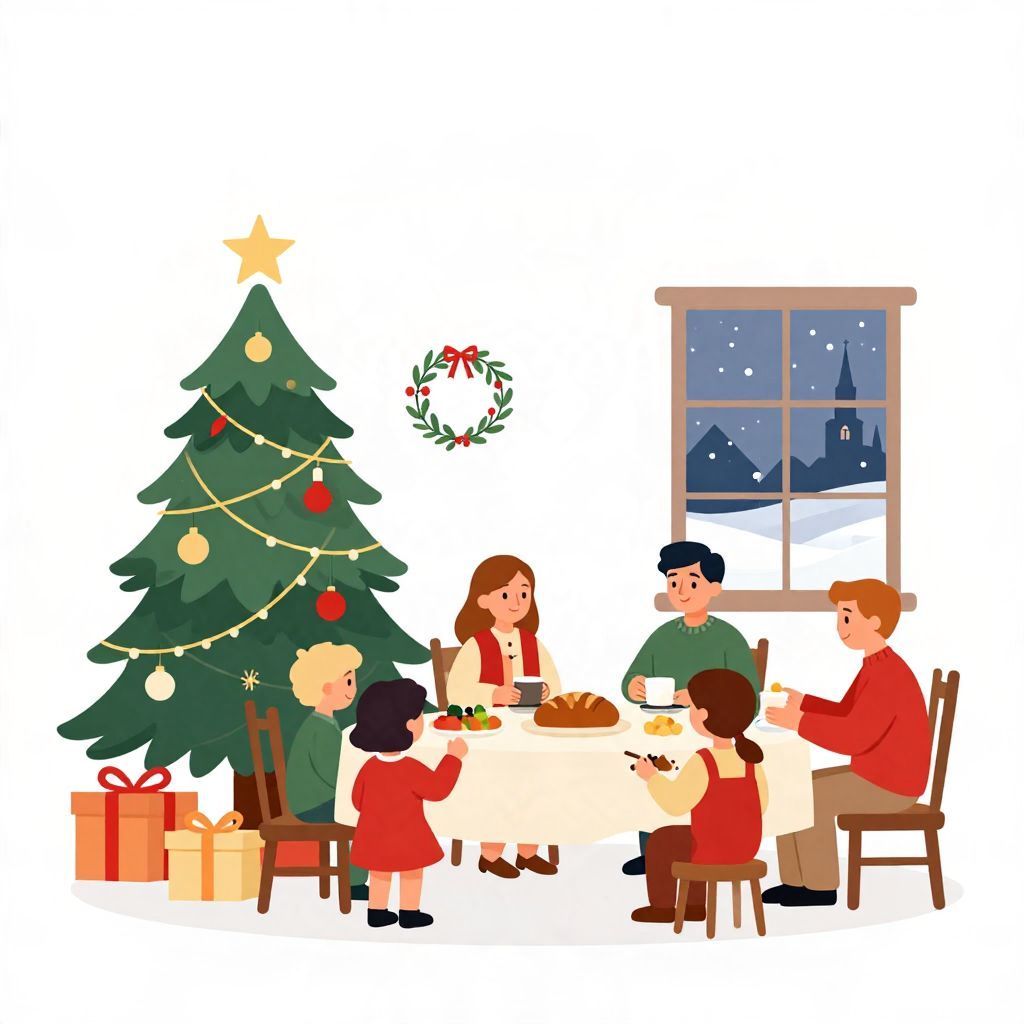
How do people celebrate Christmas? The short answer is that Christmas is celebrated through a mix of religious worship, family gatherings, gift-giving, festive meals, music, decorations, and public traditions that vary widely by country and culture. Its meaning has changed over time, but the holiday has long centered on marking the birth of Jesus Christ in Christian tradition.
At the same time, many Christmas customs are older than Christianity or developed alongside it. That is why Christmas can look different in Rome, Mexico, the United States, Germany, Ethiopia, the Philippines, or Australia, even though the holiday shares a common historical core.
How do people celebrate Christmas?
People celebrate Christmas by combining Christian worship with seasonal customs such as decorating homes, exchanging gifts, sharing special meals, singing carols, attending church services, and spending time with family and friends. The exact traditions differ by region, but the holiday usually blends religious observance, community ritual, and winter festivity.
The historical roots of Christmas celebrations
Christmas developed gradually rather than appearing all at once. The earliest Christians did not initially celebrate Jesus’ birth as a major feast. By the 4th century, however, churches in the Roman world were observing December 25 as Christmas, though the precise reasons for choosing that date are still debated by historians.
Why December 25?
Scholars usually point to a mix of theological and cultural factors. Some early Christians linked the date to calculations about the conception and death of Jesus. Others note that December already contained Roman winter festivals, including Saturnalia and celebrations associated with the unconquered sun. Christmas did not simply replace these festivals, but it emerged in a world where winter celebration was already familiar.
From church feast to popular holiday
In the medieval period, Christmas became one of the most important Christian feasts in Europe. Church services, processions, feasting, and charitable giving were central. Over time, local customs joined the religious calendar, including special foods, gift exchanges, and dramatic performances about the Nativity. By the early modern period, Christmas was both a sacred feast and a social holiday.
Religious observance at Christmas
For Christians, the heart of Christmas remains the commemoration of Jesus’ birth. Many people celebrate by attending church services on Christmas Eve or Christmas Day, praying, reading the Nativity story from the Gospels, and singing hymns or carols. In some traditions, Christmas is preceded by Advent, a period of preparation and reflection.
Church services and Nativity scenes
Midnight Mass or late-night services are especially important in Roman Catholic, Anglican, and some Lutheran communities. Nativity scenes, sometimes called crèches or manger scenes, visually represent the birth of Jesus with figures of Mary, Joseph, the infant Christ, shepherds, angels, and animals. These displays became especially popular in Europe after the Middle Ages and later spread worldwide.
Advent and preparation
In many Christian homes, Christmas begins weeks earlier with Advent wreaths, calendars, candles, and devotional practices. Advent marks a season of waiting and anticipation, reminding believers that Christmas is not only a day of celebration but also part of a longer religious rhythm.
Family traditions and gift-giving
One of the most recognizable ways people celebrate Christmas is by giving gifts. This custom has multiple historical roots. Christian traditions often connect gift-giving to the gifts brought by the Magi to the infant Jesus, while European folklore and later commercial culture helped shape the modern exchange of presents. Saint Nicholas traditions also strongly influenced the holiday.
Saint Nicholas, Santa Claus, and related figures
Saint Nicholas was a historical bishop of Myra, in present-day Turkey, who became associated with generosity and gift-giving. Over centuries, his legend spread through Europe and evolved into figures such as Sinterklaas in the Netherlands and Santa Claus in the United States. The modern Santa image was shaped in the 19th century by literature, illustration, and advertising, rather than by a single ancient tradition.
Why gifts matter at Christmas
Gift-giving reflects both religious symbolism and social custom. In many households, presents express love, generosity, and family connection. In historical terms, this practice also helped turn Christmas into a holiday centered on children and domestic life, especially in the 18th and 19th centuries.
Food, feasting, and seasonal meals
Christmas has long been associated with special food. In earlier centuries, the feast marked the end of fasting periods and the beginning of winter abundance. Today, Christmas meals vary greatly, but they still serve the same social purpose: bringing people together around a distinctive holiday table.
Traditional foods around the world
- Britain and Ireland: roast turkey or goose, mince pies, puddings, and rich sauces.
- Germany and Central Europe: roast meats, stollen, gingerbread, and spiced sweets.
- Italy: fish-based meals on Christmas Eve in many families, followed by festive dishes on Christmas Day.
- Mexico and parts of Latin America: tamales, ponche, bacalao, and regional holiday foods.
- Philippines: lechon, rice cakes, and late-night celebrations after church.
These foods are not just recipes; they are historical markers of climate, religion, trade, and local agriculture. Christmas cuisine often preserves older winter habits while adapting to modern tastes and available ingredients.
Music, carols, and public celebration
Music has been central to Christmas for centuries. Carols began as songs linked to religious festivals and seasonal community life. Over time, they became closely tied to the Nativity story and to public Christmas performance. Today, choirs, school concerts, street singing, and popular holiday music help create the season’s atmosphere.
The rise of caroling
Caroling developed in medieval Europe, where groups sang in homes, churches, and public spaces. In some places, caroling also carried charitable meaning, with singers receiving food or money. The tradition survives in many forms, from formal church choirs to neighborhood singing.
Modern holiday music
In the 19th and 20th centuries, printed songbooks, radio, records, and later television helped spread Christmas music across national boundaries. This made the holiday more standardized in some countries while still allowing local styles to remain distinct.
Decorations, trees, and lights
Decorating homes is another major part of Christmas. The evergreen tree is one of the best-known symbols, but it is only one of several decorative traditions. Wreaths, candles, garlands, nativity displays, and lights all contribute to the visual culture of the holiday.
The Christmas tree
The modern Christmas tree is often traced to German-speaking regions, where decorated evergreens were used by the 16th and 17th centuries. The custom spread more widely in the 19th century, especially after royal and middle-class households in Britain and elsewhere adopted it. Today, the tree is one of the most recognizable Christmas symbols in the world.
Lights and winter symbolism
Christmas lights have both practical and symbolic meanings. Historically, candles and lamps helped brighten the dark winter season. In the modern era, electric lights transformed Christmas into a spectacular public display, especially in cities, shopping districts, and private homes.
How Christmas is celebrated in different places
Although Christmas has shared themes, local history shapes the holiday in powerful ways. National customs often reflect religion, colonial history, migration, climate, and family patterns. In many countries, Christmas Eve is more important than Christmas Day; in others, the season extends for days or even weeks.
Latin America
In many Latin American countries, Christmas is deeply shaped by Catholic tradition. Celebrations may include Las Posadas, processions that reenact Mary and Joseph’s search for shelter, as well as midnight Mass, fireworks, and extended family meals. In Mexico, for example, Christmas customs often emphasize Christmas Eve more than Christmas Day itself.
Europe
European Christmas traditions vary widely. In Spain and parts of Latin Europe, Epiphany on January 6 can be as important as Christmas. In northern Europe, St. Lucia Day, Advent customs, and winter markets often play a major role. In many places, the holiday season is tied to both church life and public civic ritual.
North America
In the United States and Canada, Christmas became increasingly commercialized in the 19th century while retaining religious and family-centered meanings. Department stores, greeting cards, and mass media helped shape a modern holiday culture built around shopping, decoration, and home celebration.
Africa, Asia, and Oceania
Christmas in Africa and Asia often reflects local Christian communities within broader religious landscapes. In Ethiopia, Christmas is celebrated on January 7 in the Gregorian calendar tradition used by many Orthodox Christians. In the Philippines, one of the longest Christmas seasons in the world begins well before December 25. In Australia, Christmas falls during summer, so meals, beach outings, and outdoor gatherings are common.
How Christmas changed in the modern world
The modern Christmas holiday took shape in the 18th and 19th centuries. Urbanization, industrialization, and the rise of consumer culture changed how people marked the season. Christmas became more family-centered, more child-focused, and more commercialized, especially in English-speaking countries.
From public festivity to domestic holiday
In earlier centuries, Christmas could include rough public revelry, drinking, and social inversion. By the Victorian era, reformers and middle-class culture encouraged a more orderly, sentimental, and domestic holiday. This shift helped define the modern image of Christmas as a warm, peaceful family occasion.
Commerce and mass culture
Stores, advertisements, postcards, films, and later television made Christmas more visible and more standardized. While many people worry that commerce has overshadowed religion, historians usually see the modern holiday as a blend of sacred, social, and commercial meanings rather than a simple replacement of one by another.
What Christmas means historically
Historically, Christmas has never had only one meaning. It is a Christian feast, a family holiday, a winter festival, and a cultural tradition shaped by centuries of change. Its endurance comes from this flexibility: people have adapted Christmas to local customs while preserving its central themes of birth, generosity, hope, and gathering.
So, how do people celebrate Christmas? They do so through worship, meals, gifts, music, decorations, and time with loved ones, but the exact form depends on place and history. If you want to explore regional customs further, see how Christmas is celebrated in Mexico and why Mexicans celebrate Christmas on the 24th.