
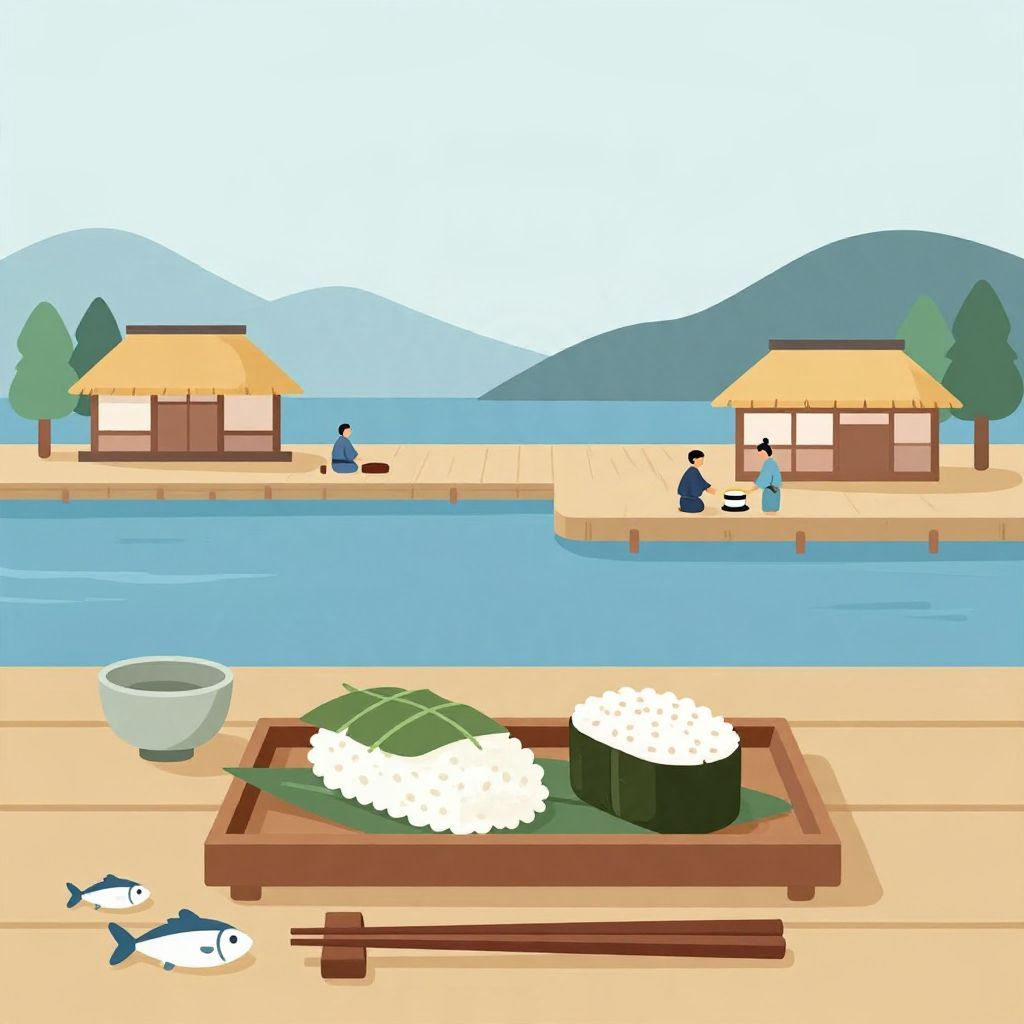
People often ask where sushi originated because it feels so closely tied to Japan. The short answer is that sushi, as we know it today, developed in Japan, but its deeper roots lie in older preservation methods from Southeast Asia and China.
Over centuries, a practical way of fermenting fish with rice evolved into a faster, more refined Japanese food culture. That long transformation is the real history behind sushi.
Where Did Sushi Originate?
Sushi originated in Japan in its recognizable culinary form, but its earliest ancestor came from fermented fish preservation practices in Southeast Asia, later spread through China and adapted in Japan. The modern idea of sushi—seasoned rice paired with fish or other ingredients—emerged in Japan over many centuries, especially from the medieval period onward.
The Earliest Roots: Preservation Before Cuisine
From Fermented Fish to Food Tradition
The story of sushi begins not as a delicacy, but as a method of preserving fish. In ancient river and lake regions of Southeast Asia, people used rice to ferment fish, keeping it edible for longer periods. The rice was usually discarded, and the fish was the main food value. This technique is often associated with a broader family of preserved fish dishes that eventually influenced East Asian foodways.
Historians generally trace these early preservation methods to regions south of China, though the exact path is difficult to reconstruct with certainty. What is clear is that by the time the practice reached Japan, it had already become a useful way to store fish in a pre-refrigeration world.
How the Idea Reached Japan
By roughly the early centuries of the first millennium, fermented fish-and-rice preservation had entered Japan, likely through cultural exchange with the Asian mainland. In Japan, this became known in forms such as narezushi, in which fish was packed in cooked rice and left to ferment for months or even years. The rice was not eaten at first; it served mainly as a fermentation medium.
This early sushi was therefore very different from the sushi served today. It was sour, pungent, and intensely preserved rather than fresh and lightly seasoned. Still, it established the essential connection between fish and rice that would define later sushi traditions.
How Sushi Developed in Japan
From Preservation to a Distinct Japanese Dish
Japan did not merely borrow a foreign preservation method; it transformed it. Over time, Japanese cooks shortened fermentation periods and began eating the rice along with the fish. This shift was crucial. Once the rice became part of the meal rather than a disposable preservation tool, sushi began to move from a storage technique toward a culinary tradition.
By the medieval period, regional variations of sushi had developed across Japan. Some versions still relied on fermentation, while others used vinegar to create a sour flavor more quickly. Vinegar allowed cooks to mimic the taste of fermented rice without waiting months for the process to finish.
The Rise of Edo-Style Sushi
The form most people think of today—fresh fish placed on vinegared rice—emerged in Japan during the Edo period (1603–1868). In the growing city of Edo, now Tokyo, urban life encouraged fast, portable food. Cooks created nigiri-zushi, hand-pressed rice topped with fish, shellfish, or other ingredients.
This was a major turning point. Edo-style sushi was quick to prepare, easy to eat, and suited to city markets and street stalls. It was no longer a preserved food for survival; it had become a convenient, stylish urban meal. In this sense, the sushi most familiar around the world is a distinctly Japanese invention of the early modern era.
Was Sushi Originally Chinese or Japanese?
Why the Answer Depends on Definition
The answer depends on what you mean by “sushi.” If you mean the ancient idea of fermenting fish with rice, then the roots are broader than Japan and likely connect to Southeast Asia and mainland East Asia, including areas that are now part of China’s historical sphere of influence. If you mean sushi as a Japanese dish with vinegared rice, then the origin is Japan.
That distinction matters because food history often involves borrowing, adaptation, and reinvention. A technique can travel across borders and become something new in the hands of another culture. Sushi is a classic example of that process.
What Japan Added
Japan’s contribution was not minor. Japanese cooks changed the timing, texture, seasoning, and social meaning of the dish. They moved from long fermentation to shorter preparation, from preservation to freshness, and from a regional technique to a national cuisine. The result was not simply imported food, but an evolved Japanese culinary identity.
Key Stages in Sushi’s History
The development of sushi can be understood as a sequence of transformations rather than a single invention:
- Early preservation: Fish was fermented with rice in Southeast Asia and related regions.
- Adoption in Japan: The method arrived in Japan and became narezushi.
- Shortened fermentation: Japanese cooks began eating the rice and reducing fermentation time.
- Vinegar seasoning: Vinegar replaced long natural fermentation in many preparations.
- Edo innovation: Fast, fresh nigiri-zushi appeared in urban Japan.
- Global spread: In the modern era, sushi became an international cuisine.
What Did Early Sushi Taste Like?
Not the Sushi Most People Know Today
Early sushi would have tasted very different from modern sushi. Fermented versions were sour, strong-smelling, and dense. The rice could be soft or even mushy after long fermentation. For many people, the appeal was practical rather than culinary: it allowed fish to be stored safely and eaten later.
Modern sushi, by contrast, emphasizes balance, freshness, and visual presentation. The transition from preserved fish to elegant bite-sized food reflects changing tastes, technology, and urban life in Japan.
Why Sushi Became Associated with Japan
Japan Turned a Preservation Method into a Culinary Art
Sushi became associated with Japan because Japan preserved, refined, and popularized it over many centuries. Japanese regional traditions gave sushi its variety, while Edo-period urban culture made it fashionable and efficient. Later, Japan’s global cultural influence helped spread sushi internationally in the 20th century.
As sushi traveled abroad, it often changed again. Rolls, fusion ingredients, and restaurant adaptations developed outside Japan, especially in the United States and other global cities. These newer forms are part of sushi’s modern history, but they are far removed from its earliest origins.
Traditional and Modern Forms
It is useful to distinguish between traditional Japanese sushi and contemporary international sushi. Traditional forms include:
- Narezushi – long-fermented fish and rice
- Oshizushi – pressed sushi, often regional and molded
- Nigiri-zushi – hand-pressed rice topped with fish
Modern global sushi includes many variations that would not have been recognized in premodern Japan, but they still descend from the Japanese culinary tradition that shaped sushi into its present form.
Historical Significance of Sushi’s Origin
A Story of Cultural Exchange
Sushi’s origin shows how food travels and changes across borders. It began as a preservation technique, moved through different Asian regions, and took on a new identity in Japan. That history reflects broader patterns in East Asian exchange: trade, migration, adaptation, and local innovation.
It also shows that national cuisines are rarely “pure” or isolated. What people think of as a classic national dish may have older, shared roots. Sushi is Japanese in its mature form, but its deeper background is international and ancient.
From Necessity to Identity
Over time, sushi shifted from necessity to identity. What started as a practical way to keep fish edible became a symbol of Japanese refinement, seasonal taste, and culinary craftsmanship. That evolution is one reason sushi is such a powerful example of history on the plate: it preserves the memory of older food systems while representing a later Japanese innovation.
So, Where Did Sushi Originate?
Sushi originated in Japan as the dish people now recognize, especially through centuries of development that culminated in Edo-period sushi. However, its earliest ancestor was a fish-preservation method from Southeast Asia that spread through East Asia before being transformed in Japan. In historical terms, sushi is both a borrowed technique and a distinctly Japanese creation.
For readers interested in the broader background, you may also want to explore where sushi is from and whether sushi is Chinese or Japanese. The takeaway is simple: sushi’s deepest roots are regional, but its recognizable identity was formed in Japan.