
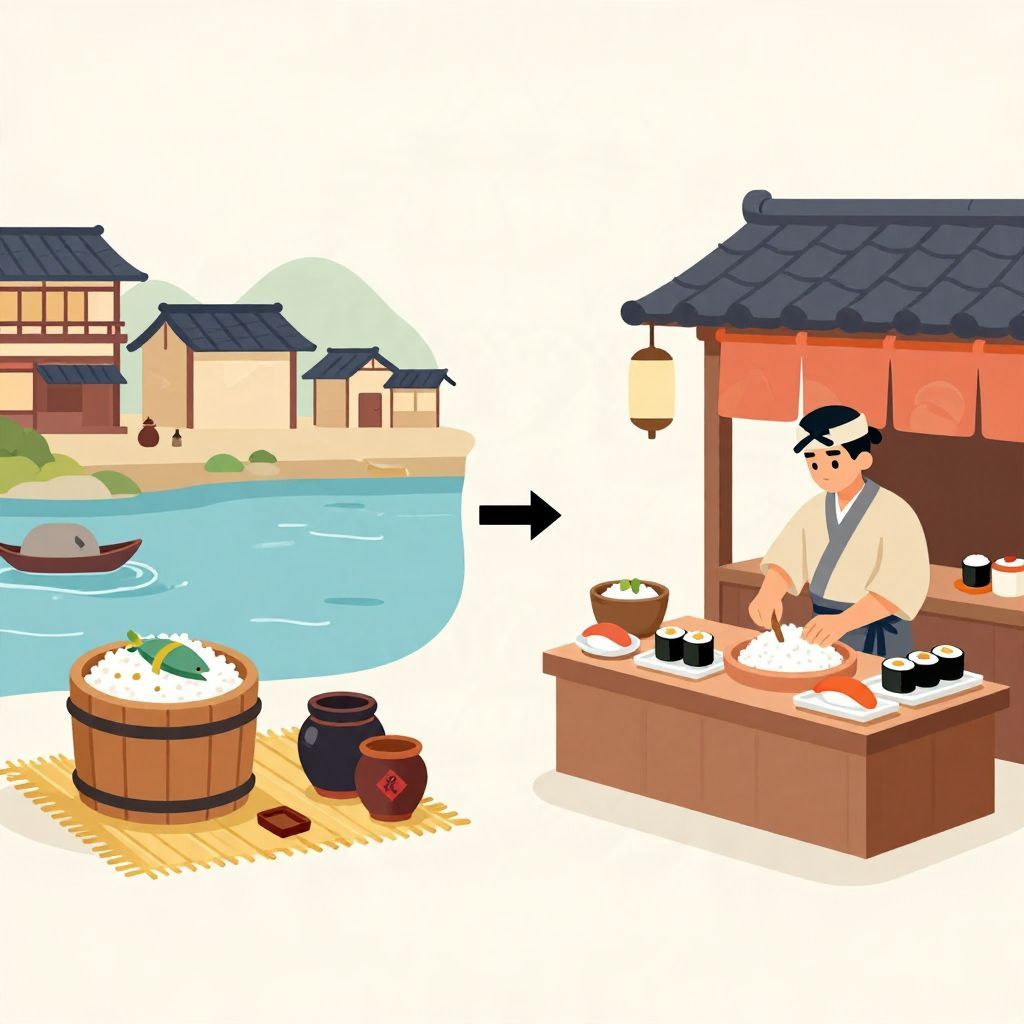
Is sushi Chinese or Japanese? The short historical answer is: sushi as we know it today is Japanese, but its earliest ancestor came from a broader East Asian tradition of preserving fish with fermented rice that was practiced in parts of China and Southeast Asia long before modern sushi appeared in Japan.
That means the question is not a simple either-or. Sushi’s deep roots are regional, while its modern identity, styles, and global fame are overwhelmingly Japanese.
Is Sushi Chinese Or Japanese?
Sushi is generally considered Japanese because the word, the culinary tradition, and the modern forms all developed in Japan. However, the earliest preserved-fish method behind sushi likely came from an older fermentation practice found in East and Southeast Asia, including areas of China. So sushi is Japanese in its mature form, with older pan-Asian origins.
Where Sushi Came From Historically
The earliest ancestor of sushi was not the colorful rice-and-fish dish people eat today. It began as a preservation technique: fish was packed in rice and left to ferment so it could be stored for months. The rice was often discarded and only the fish was eaten. This method is usually associated with narezushi, an early form that became established in Japan after the technique spread from continental Asia.
Fermented fish before modern sushi
Long before nigiri sushi and maki rolls, people in humid agricultural societies needed ways to preserve protein. Fermentation solved that problem. Similar fish-preservation methods existed across Asia, and scholars generally agree that the broader idea was not invented in one single place. What matters historically is that Japan adapted the method and eventually transformed it into a distinct cuisine.
The Japanese development of sushi
In Japan, the preserved-fish tradition gradually changed. By the medieval period, the rice was no longer just a storage medium; it became part of the food. Over time, the fermentation period shortened, vinegar replaced long fermentation in many preparations, and sushi became fresher, faster, and more varied. This evolution happened over centuries, not overnight.
Why Sushi Is Considered Japanese Today
Sushi is considered Japanese because Japan gave it its modern culinary identity. The dish’s name is Japanese, its major styles were developed there, and the version now recognized worldwide—vinegared rice paired with fish, seafood, vegetables, or other toppings—emerged in Japanese food culture, especially in the early modern and modern periods.
The shift from preservation to cuisine
One of the biggest turning points came in the Edo period (1603–1868). Urban life in cities like Edo, now Tokyo, encouraged quick food that could be sold and eaten easily. Sushi became faster to prepare and less dependent on long fermentation. This was a major culinary innovation: sushi changed from a preservation method into a convenient street food and then into a refined cuisine.
Nigiri sushi and modern Japanese sushi
The familiar hand-pressed style called nigiri is especially associated with 19th-century Japan. It helped define sushi as a fresh, portable meal rather than a preserved one. From there, sushi spread across Japan and later around the world, becoming one of the most recognizable symbols of Japanese food.
Did Sushi Come From China?
Partly, but not in the simple sense many people assume. There is evidence that fish-preservation techniques existed in ancient China and neighboring regions, and these techniques influenced or paralleled early Japanese practices. Still, the specific food called sushi, and especially the forms people eat today, are Japanese developments. China contributed to the broader historical background, not the modern dish itself.
What historians can say with confidence
- Fermented fish preservation was known in multiple parts of Asia.
- Japan adopted and adapted these techniques over time.
- The term and culinary identity of sushi are Japanese.
- Modern sushi styles were created in Japan, especially during the Edo period.
What remains uncertain
Pinning down a single “inventor” or exact birthplace is difficult because early food traditions rarely leave clear written records. Also, culinary practices often spread through trade, migration, and cultural exchange. For that reason, historians usually avoid saying sushi was simply “invented in China” or “invented in Japan” without qualification. The more accurate answer is that sushi has a multi-stage history.
How Sushi Changed Over Time
The history of sushi is a story of adaptation. A practical preservation method became a regional food tradition, then a fast urban meal, and finally a global cuisine. Each stage reflected changing social needs, technology, and tastes.
A simple timeline
- Early fermented fish traditions develop in East and Southeast Asia.
- Japan adopts narezushi, a form of preserved fish with rice.
- Medieval and early modern Japan shortens fermentation and begins eating rice with the fish.
- Edo-period Japan popularizes quicker, vinegar-based sushi.
- 19th century sees the rise of nigiri sushi in urban Japan.
- 20th century onward sushi becomes international, with many regional variations.
From preservation to flavor
As refrigeration and transportation improved, the original need for heavy fermentation declined. Japanese cooks preserved the idea of combining rice and fish but reimagined it for taste, convenience, and presentation. Vinegared rice became central, and fresh ingredients took precedence. This is why modern sushi tastes nothing like the earliest preserved versions.
Why People Confuse Sushi’s Origins
The confusion comes from mixing up three different questions: where the earliest preservation method came from, where sushi as a dish developed, and which country made sushi famous. The answer changes depending on which question you ask. China belongs to the broader historical background, but Japan is where sushi became sushi.
Global food history is rarely one-country-only
Many famous dishes have layered origins. Foods travel, change, and absorb local customs. Sushi is a good example of how a technique can migrate and then be transformed into something new. That does not erase earlier influences; it shows how cuisines evolve through contact and innovation.
Sushi’s Place in Japanese Culture
Over time, sushi became more than food. It came to represent craftsmanship, seasonality, and attention to detail in Japanese cuisine. Sushi chefs trained for years to master rice preparation, knife work, fish selection, and presentation. In modern Japan, sushi is both everyday food and a highly respected culinary art.
From local food to world cuisine
In the 20th century, sushi spread internationally, especially after Japanese migration and the growth of global dining culture. Outside Japan, new forms appeared, including rolls adapted to local tastes. Some of these are not traditional in the strict historical sense, but they show how a Japanese dish can continue evolving abroad.
The Best Historical Answer
If you are asking whether sushi is Chinese or Japanese, the best evidence-based answer is Japanese. Yet its origins are older and more regional than a single national label suggests. The preserved-fish ancestor of sushi likely emerged from broader East Asian food traditions, and Japan later refined it into the sushi known today.
So sushi is best understood as a Japanese dish with older Asian roots. If you want to explore more food-history questions, see where sushi is from and whether hibachi is Chinese or Japanese.