
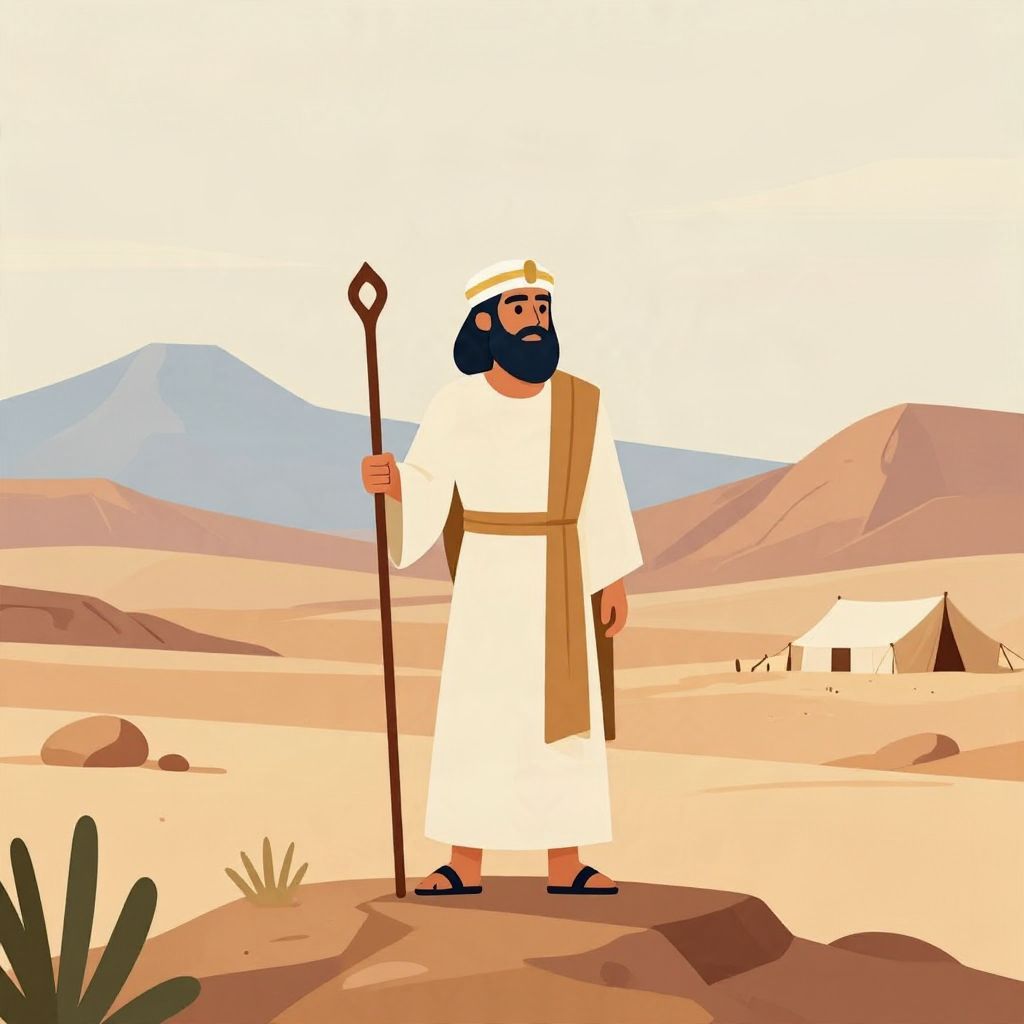
How old was Moses? The short answer is that the Bible says Moses lived to be 120 years old. That figure is central to the biblical timeline, but historians treat it as a religious tradition rather than a verifiable biographical fact. The age matters because it frames Moses’ life in three major stages: his upbringing in Egypt, his years in exile, and his leadership of the Israelites.
Because Moses belongs to the world of ancient Israelite memory and scripture, the question is best answered by combining the biblical account with historical caution. The result is a clearer picture of what the tradition says, what it likely means, and where certainty ends.
How old was Moses?
According to the Hebrew Bible, Moses was 120 years old when he died. The tradition also divides his life into three 40-year periods: 40 years in Egypt, 40 years in Midian, and 40 years leading the Israelites in the wilderness. This is a theological chronology, not an independently confirmed historical record.
The biblical age of Moses
The most direct answer comes from the book of Deuteronomy, which states that Moses was 120 years old at his death and that his eyesight had not failed. In biblical literature, 120 is more than a lifespan figure; it signals completeness and fulfilled purpose. The number 40, repeated throughout the story, is also symbolic and often marks a generation, a period of testing, or a full season of change.
So when people ask “How old was Moses?” they usually mean one of three things:
- At death: 120 years old, according to the Bible.
- When he left Egypt: usually understood as about 40 years old, based on the traditional life division.
- Historically: impossible to verify with certainty, because Moses is a figure known through religious texts rather than external contemporary records.
What is the historical timeline of Moses’ life?
The biblical narrative presents Moses’ life as a sequence of major turning points rather than a precisely dated biography. The story begins with his birth in Egypt, continues through his flight to Midian, and culminates in the Exodus and wilderness journey. Each stage serves a larger purpose in the tradition: liberation, covenant, and leadership.
1. Birth and early life in Egypt
Moses is said to have been born to Hebrew parents during a time when the Egyptians feared the growth of the Israelite population. The story of his rescue from the Nile, his adoption by Pharaoh’s daughter, and his upbringing in the royal household is one of the most famous episodes in biblical history. Historically, this part of the account is best understood as tradition shaped by later religious memory, not as a documented court biography.
The narrative places Moses close to Egyptian power while also identifying him with the oppressed Israelites. That dual identity becomes essential to the story: he can move between worlds, understand both sides, and eventually become the mediator of liberation.
2. The flight to Midian
After killing an Egyptian who was beating a Hebrew, Moses fled Egypt and settled in Midian. There he married Zipporah, the daughter of Jethro, and lived as a shepherd. This period is usually described as lasting 40 years in traditional chronology, though that number should be read as symbolic rather than exact.
Midian represents a long season of preparation. In the biblical account, Moses does not become a leader immediately. He first spends years away from court life, learning a different kind of existence in the wilderness. That setting matters because the wilderness later becomes the place where the Israelites are formed as a people.
3. The return to Egypt and the Exodus
God calls Moses from the burning bush and sends him back to Egypt to demand the release of the Israelites. This is the turning point of the narrative. Moses returns not as a prince, but as a reluctant prophet and spokesman. The confrontation with Pharaoh leads to the plagues, the Passover tradition, and the departure from Egypt.
If the traditional age structure is followed, Moses would have been about 80 years old when he returned to Egypt to confront Pharaoh. That number comes from the biblical statement that he was 80 at the time of the Exodus and 120 at death. Again, this is a scriptural chronology, not a confirmed historical age.
4. Leadership in the wilderness
After the Exodus, Moses leads the Israelites through the wilderness toward the promised land. This is the longest and most difficult part of the story. The people complain, laws are given, covenants are renewed, and the community is shaped through hardship. Moses serves as judge, prophet, intercessor, and lawgiver.
The wilderness years explain why Moses is remembered not just as a liberator, but as a founder of Israelite identity. He is associated with the giving of the law at Sinai, the organization of the people, and the moral framework that later Jewish, Christian, and Islamic traditions would continue to interpret.
Why does the Bible say Moses lived 120 years?
The number 120 is important in biblical literature because it suggests a full, complete life. It also fits the pattern of sacred chronology. The division into three 40-year periods is likely literary and symbolic, helping readers understand Moses’ life as a sequence of preparation, mission, and fulfillment.
40 years as a symbolic number
In the ancient Near Eastern and biblical world, numbers often carried theological meaning. Forty frequently appears in stories of flood, wandering, testing, and transformation. It does not always mean a literal count of exactly 40 years. Instead, it can indicate a long, complete period.
For Moses, the three 40-year blocks create a balanced life story:
- First 40 years: formation in Egypt.
- Second 40 years: exile and preparation in Midian.
- Third 40 years: leadership of the Israelites.
This structure is powerful because it turns Moses’ life into a narrative of growth. He is not simply born a leader; he becomes one through experience, suffering, and calling.
120 as a sign of completeness
In the biblical imagination, 120 years can symbolize a life that has reached its ordained limit. The text emphasizes that Moses’ strength remained undiminished at the end, reinforcing the idea that his death came at the proper time, not through decline or failure. This literary emphasis is part of why the age is remembered so clearly.
Can historians verify Moses’ exact age?
No exact historical age for Moses can be verified from independent evidence. Moses is one of the foundational figures of biblical tradition, but there is no contemporary inscription, administrative record, or archaeological document that confirms his birth year, death year, or precise lifespan. The biblical account is the main source, and it is shaped by theology as well as memory.
What historians can and cannot say
Historians can say that the Moses story reflects ancient traditions about origins, liberation, law, and identity. They can also say that the Exodus narrative developed within the religious memory of Israel and was later preserved in scripture. What they cannot say with confidence is exactly when Moses lived or whether every detail of the chronology should be read literally.
Scholars have proposed many possible historical settings for the Exodus tradition, often placing it somewhere in the late Bronze Age, but these proposals remain debated. The lack of direct evidence means that Moses’ age belongs primarily to the realm of biblical chronology, not modern biography.
Legend, memory, and history
It is important not to confuse the value of a tradition with modern factual certainty. The Moses narrative is historically significant because it shaped religious and cultural identity for centuries. Even if the precise age is not recoverable, the tradition of 120 years has itself become part of history: it influenced how later communities understood leadership, law, and divine purpose.
How old was Moses when he left Egypt?
In the traditional biblical timeline, Moses was about 80 years old when he returned to Egypt to confront Pharaoh and lead the Exodus. If you mean the moment he first fled Egypt after killing the Egyptian overseer, the text does not give a direct age, but the common interpretation is that he was around 40 years old at that earlier departure.
That distinction matters. “Leaving Egypt” can refer either to his flight in exile or to the Exodus itself. The Bible gives a clearer age for the latter than for the former, which is why readers often encounter the 80-year figure in discussions of Moses’ call and mission.
Why Moses’ age matters in the larger story
Moses’ age is not just a biographical curiosity. It helps explain how the biblical narrative frames authority and patience. He does not begin his public mission as a young hero. Instead, he appears as an elderly leader whose life has been shaped by long preparation. That image reinforces the idea that wisdom, endurance, and divine calling matter more than youth or political status.
The age also supports the wider structure of the Exodus story. The Israelites’ journey is portrayed as a generational process, not a quick event. Moses himself becomes part of that process, leading the people through a long transition from slavery to covenant identity.
How Moses is remembered in later tradition
Later Jewish, Christian, and Islamic traditions all honor Moses as a major prophet and lawgiver, though they tell his story in different ways. In Judaism, Moses is central to the giving of the Torah. In Christianity, he is often seen as a precursor to later revelation. In Islam, Musa is a major prophet who confronts Pharaoh and guides his people.
Across these traditions, Moses’ lifespan continues to symbolize completion and divine purpose. The exact age is less important than the meaning attached to it: a life long enough to prepare, act, and finish the task assigned to him.
Conclusion
So, how old was Moses? According to the biblical tradition, he lived to be 120 years old, with his life divided into three 40-year stages. Historically, that age cannot be independently confirmed, but it remains central to the way Moses is understood in scripture and later religious memory. For related questions, see when Moses was born and how old Moses was when he left Egypt.