
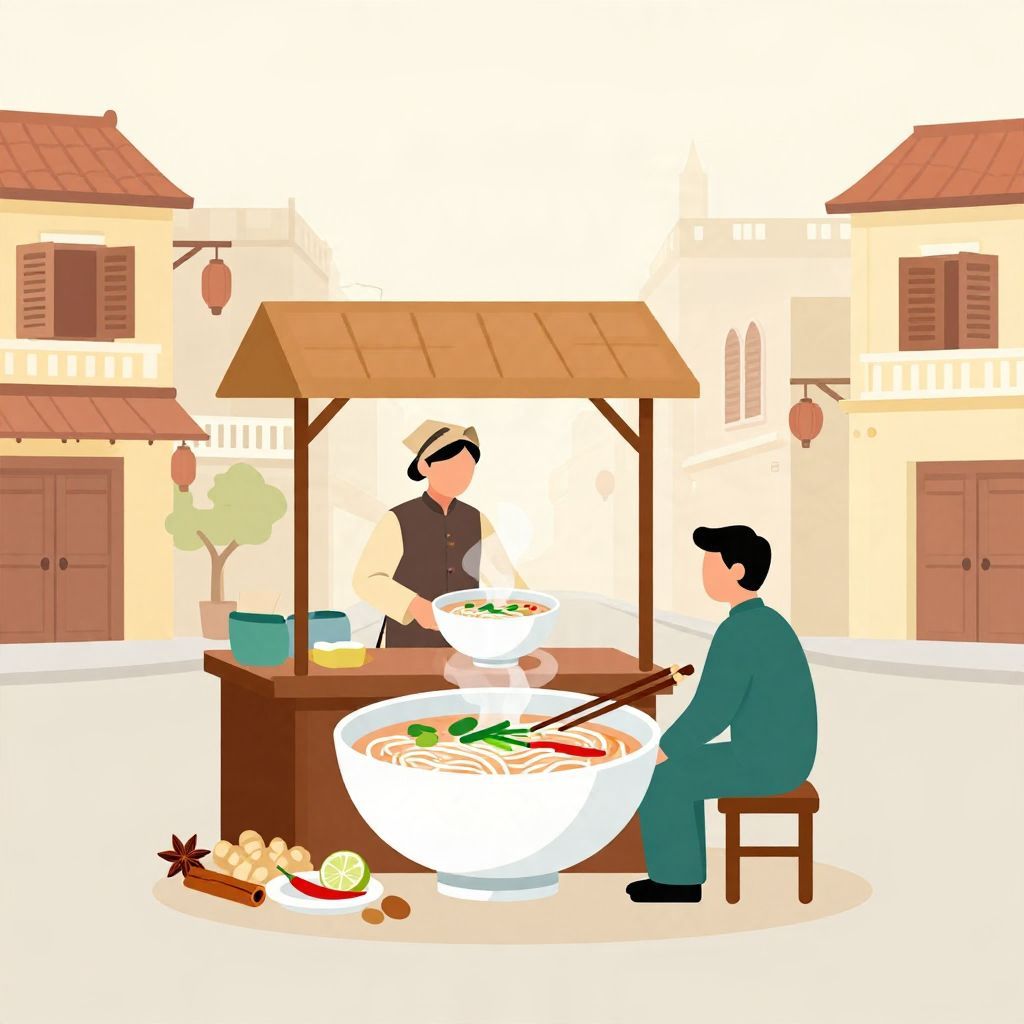
Where is pho from? The short historical answer is Vietnam, especially northern Vietnam, where the soup emerged in the early 20th century. Pho is now a national dish, but its exact birthplace is debated because it developed in a period of colonial change, migration, and urban food culture.
Its story is not a simple invention by one person. Instead, pho seems to have grown from several influences—local Vietnamese noodle traditions, French colonial-era beef consumption, and regional cooking practices in northern Vietnam.
Where Is Pho From?
Pho is from Vietnam, with its earliest widely accepted roots in northern Vietnam, likely around Hanoi and nearby areas in the early 1900s. Most historians and food scholars trace pho to the Red River Delta region, where street vendors adapted noodle soup traditions into the dish that later spread across Vietnam and the world.
The Historical Background of Pho
Pho did not appear in a vacuum. It emerged during a period when Vietnam was part of French Indochina, and daily life was changing quickly. Urban growth, new transportation networks, and colonial-era markets helped create conditions for street food to flourish. Pho fit that environment: it was portable, filling, and affordable.
Vietnam already had a long tradition of noodle soups before pho became recognizable in its modern form. Rice noodles were common, and broths flavored with meat, herbs, and seasonings were part of regional cooking. Pho likely evolved when these older foodways met new ingredients and tastes introduced or popularized during the colonial period.
Why northern Vietnam matters
The strongest historical evidence places pho’s early development in northern Vietnam, especially around Hanoi. Northern versions of pho are often considered the oldest style, with a clearer broth, wider noodles, and a simpler garnish profile than many southern versions. That northern origin matters because pho later changed as people moved south and adapted the soup to local preferences.
How Pho Likely Developed
Historians do not have a single founding document for pho, so its origin is reconstructed from food history, language, and social context. The most accepted view is that pho developed in the early 20th century, when Vietnamese cooks began serving beef noodle soup in urban areas. Beef became more visible in the diet under French colonial rule, even though cattle had long been used in Vietnam for labor more than for meat.
One common interpretation is that pho reflects a blend of influences rather than a direct copy of any one foreign dish. Some scholars have pointed to possible connections with French pot-au-feu because of the phonetic similarity between “pho” and “feu,” but this idea remains debated. The name may also have roots in Chinese culinary terms or local Vietnamese adaptations. What is clear is that pho became distinctly Vietnamese in flavor, technique, and cultural meaning.
What ingredients reveal about its origin
- Rice noodles reflect long-standing Vietnamese grain and noodle traditions.
- Beef broth suggests the growing availability and acceptance of beef in the colonial era.
- Herbs and aromatics show continuity with Vietnamese taste preferences for freshness and balance.
- Street-vendor service points to early 20th-century urban food culture in northern cities.
Was Pho Invented by One Person?
No reliable historical evidence identifies a single inventor of pho. Popular stories sometimes name individual cooks or vendors, but these accounts are usually local legends rather than documented fact. Pho is better understood as a dish that gradually took shape through many hands, especially among street sellers and urban cooks in northern Vietnam.
This kind of origin is common in food history. Dishes often develop slowly, with recipes changing as ingredients become available and tastes shift. Pho likely began as a regional specialty and only later became a national symbol.
From Regional Soup to National Dish
Pho’s wider transformation came in the mid-20th century. Political upheaval, especially the division of Vietnam in 1954, played a major role in spreading the dish. Many northerners moved south, bringing their food traditions with them. In southern Vietnam, pho adapted again, becoming sweeter and more heavily garnished, often served with bean sprouts, basil, lime, and chili.
That regional split is important because it shows pho was never fixed in one form. The northern style remained associated with the dish’s historical roots, while the southern style helped popularize pho in a broader, more flexible way. After the Vietnam War and the global Vietnamese diaspora, pho traveled far beyond Vietnam and became internationally known.
Major stages in pho’s rise
- Late 1800s to early 1900s: Vietnamese noodle soup traditions continue under French colonial rule.
- Early 1900s: Pho appears in northern Vietnam, especially around Hanoi.
- 1954 onward: Migration spreads pho south and reshapes its style.
- Late 20th century: Vietnamese communities abroad introduce pho globally.
Why There Is Debate About Pho’s Exact Origin
Food historians debate pho’s exact origin because the evidence is incomplete. Street food was rarely documented in detail, and early vendors left few written records. Linguistic clues, old advertisements, memoirs, and later recollections all help, but none gives a perfect answer. As a result, scholars tend to agree on the broad picture while differing on smaller details.
The debate usually centers on three questions: where pho first appeared, how it got its name, and how much outside influence shaped it. The safest historical conclusion is that pho is Vietnamese, probably northern Vietnamese in origin, and that it developed in the early 20th century through a mix of local and colonial-era influences.
Pho and Vietnamese Identity
Over time, pho became more than a soup. It came to represent Vietnamese resilience, adaptation, and cultural continuity. Because it emerged during colonial rule and later survived war, migration, and political division, pho carries historical meaning beyond the bowl. It reflects how Vietnamese society absorbed outside influence without losing its own identity.
Today, pho is often treated as a symbol of Vietnam itself, but that national status is relatively recent. In historical terms, pho began as a regional urban dish and only later became a national and global one. Its journey mirrors Vietnam’s modern history: local roots, colonial disruption, migration, and worldwide spread.
So, Where Is Pho From?
Pho is from Vietnam, most likely from northern Vietnam around Hanoi, where it developed in the early 20th century. It grew out of Vietnamese noodle traditions and colonial-era changes, then spread south and eventually around the world. While some details remain debated, its historical home is firmly Vietnamese.
If you’re interested in how other dishes developed across cultures, you may also enjoy reading about where sushi is from and where curry is from.