
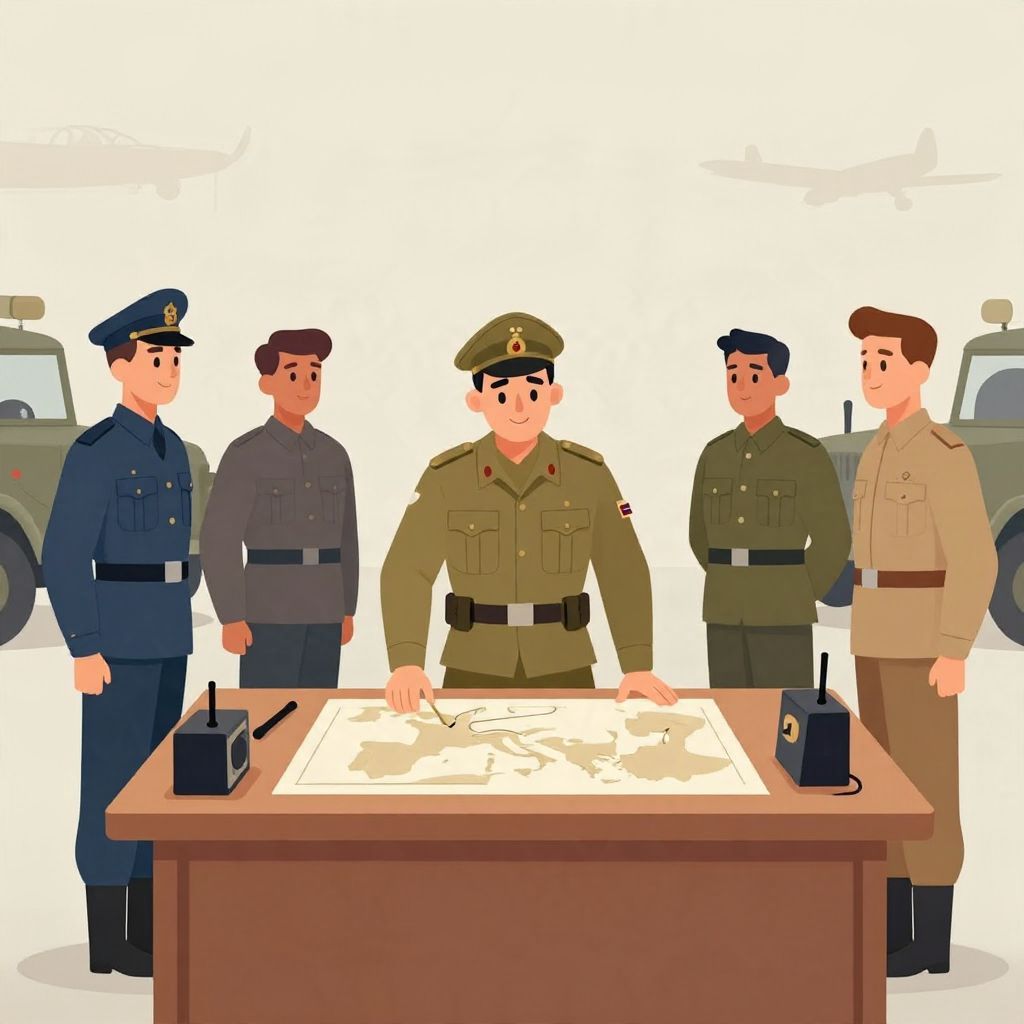
Before he became president, Dwight D. Eisenhower was best known as a general in the Second World War, more commonly called World War II. He did not fight as a battlefield commander in the way some generals did; instead, he became one of the key Allied leaders responsible for planning and directing the war in Europe.
Eisenhower’s wartime reputation came from his ability to coordinate armies from several nations, manage rival personalities, and help turn strategy into victory. His role in World War II shaped his public image, his leadership style, and ultimately his path to the White House.
Before He Was President, Eisenhower Was a General. What War Was He In?
Eisenhower was a general in World War II. He rose to prominence as the Supreme Commander of the Allied Expeditionary Force in Europe, leading the planning and coordination of major operations such as the invasion of North Africa, the liberation of France, and the D-Day landings in Normandy in 1944.
Although he was an Army officer for decades, World War II made Eisenhower a household name. His strength was not personal combat heroics but large-scale command: bringing together American, British, Canadian, and other Allied forces to defeat Nazi Germany.
Eisenhower’s Path to World War II Leadership
From Army officer to strategic planner
Dwight D. Eisenhower graduated from West Point in 1915 and spent the interwar years in a military career that was often more administrative than glamorous. He served under important commanders and developed a reputation for organization, diplomacy, and calm judgment. Those traits mattered enormously when the United States entered World War II after the attack on Pearl Harbor in December 1941.
By then, Eisenhower had become a rising staff officer rather than a famous combat commander. His fast promotion during the war reflected the urgent need for leaders who could plan multinational campaigns and manage enormous logistical problems.
The kind of war he fought
World War II, fought from 1939 to 1945, was a global conflict involving Allied and Axis powers. In Europe, the central struggle was against Nazi Germany and its partners. Eisenhower’s work focused mainly on the European theater, where the Allies had to decide how to defeat Germany while coordinating forces across different countries and political systems.
This was a war of industry, logistics, air power, armor, intelligence, and coalition politics. Eisenhower’s job was to make all of those pieces work together.
Eisenhower’s Major World War II Roles
North Africa and Operation Torch
One of Eisenhower’s first major wartime commands was the Allied invasion of North Africa in 1942, known as Operation Torch. This campaign was important because it gave the Allies a way to engage German and Italian forces while building experience for larger operations to come. It also tested Eisenhower’s ability to manage Allied cooperation under pressure.
The North African campaign was not a simple American victory. It involved setbacks, political tension, and difficult coordination with British leaders. But it helped establish Eisenhower as a capable coalition commander.
Invasion of Sicily and Italy
After North Africa, Eisenhower oversaw the Allied invasion of Sicily in 1943 and the broader campaign in Italy. These operations helped weaken Axis control in the Mediterranean and forced Germany to commit more troops to another front. The Italian campaign was long and difficult, but it contributed to the overall pressure on Nazi Germany.
These campaigns also showed that Eisenhower’s role was increasingly strategic. He was not simply commanding one army; he was helping direct a multinational war effort across several theaters.
Supreme Commander for D-Day
Eisenhower’s most famous wartime responsibility came in 1943, when he was appointed Supreme Commander of the Allied Expeditionary Force. In that role, he oversaw the planning of the invasion of Nazi-occupied France. The result was Operation Overlord, launched on June 6, 1944, better known as D-Day.
D-Day was one of the most significant military operations in history. Allied troops landed on the beaches of Normandy and began the long campaign to liberate Western Europe. Eisenhower’s success depended on careful planning, deception operations, air and naval support, and the coordination of enormous numbers of soldiers and supplies.
Why Eisenhower’s Role in World War II Mattered
He was a coalition leader, not just a battlefield general
Eisenhower’s wartime importance came from his ability to lead a coalition. The Allies were not one unified army; they were several nations with different priorities, military traditions, and political goals. Britain and the United States, in particular, often debated strategy. Eisenhower had to balance these differences while keeping the larger war effort moving forward.
That made him especially valuable. His leadership style emphasized consensus, patience, and practical decision-making. In a war where disagreements could delay victory, those traits were essential.
He helped shape the liberation of Western Europe
The Normandy invasion opened the way for the liberation of France, the defeat of German forces in Western Europe, and eventually the collapse of the Third Reich in May 1945. Eisenhower’s command helped turn Allied industrial strength into battlefield success. His decisions affected the timing and direction of the final stages of the war in Europe.
While many generals contributed to victory, Eisenhower became the public face of Allied coordination. His name became closely associated with the liberation of Europe and the defeat of Nazi Germany.
What Kind of General Was Eisenhower?
Not a front-line tactician in the usual sense
Eisenhower was not known for leading charges or for developing dramatic battlefield tactics in the style of some combat commanders. Instead, he excelled at command structure, logistics, diplomacy, and strategic oversight. That distinction matters because it explains why his wartime fame came from leadership at the highest level rather than from a single famous battle.
He was often described as a “staff officer’s general,” meaning someone whose strengths lay in planning and coordination rather than in individual battlefield brilliance. In World War II, that was exactly the kind of leader the Allies needed.
His relationship with other leaders
Eisenhower worked with major figures such as British Prime Minister Winston Churchill, General Bernard Montgomery, General George C. Marshall, and General Omar Bradley. These relationships were not always easy. Allied strategy involved disagreements over timing, priorities, and command authority. Eisenhower’s success depended in part on his ability to keep stronger personalities aligned behind a common goal.
That diplomatic skill later became one of the reasons many Americans saw him as presidential material.
The Lasting Effects of Eisenhower’s World War II Service
His war record helped launch his political career
After the war, Eisenhower’s reputation as a victorious Allied commander made him one of the most admired public figures in the United States. His military service gave him credibility, national recognition, and a reputation for steadiness. Those qualities helped him when he entered politics and won the presidency in 1952.
Many voters saw him as a man who had already guided the nation through crisis, even though he had done so in uniform rather than in elected office.
World War II shaped his presidency
Eisenhower’s wartime experience influenced how he governed. He valued planning, alliances, and careful management of conflict. As president, he often approached the Cold War with the mindset of a commander who understood the dangers of escalation and the importance of coalition-building. His military background did not make him a warmonger; in many ways, it encouraged caution.
His experience also gave him a deep understanding of the costs of large-scale war. That perspective mattered in an era defined by nuclear weapons and global tension.
His legacy in historical memory
Today, Eisenhower is remembered both as a president and as a wartime general. But if someone asks, “Before he was president, Eisenhower was a general—what war was he in?” the answer is straightforward: World War II. More specifically, he was one of the central Allied commanders in the European theater, where he helped lead the campaign that defeated Nazi Germany.
His wartime career remains important not only because of the victories achieved, but because it shows how modern war depends on leadership, logistics, and cooperation across nations. For more context on global conflict, see what was the longest war in history and, for another example of U.S. military history, what caused the Spanish-American War.
In short: Dwight D. Eisenhower was a general in World War II, where he served as a top Allied commander and the Supreme Commander for D-Day. His wartime leadership helped defeat Nazi Germany and paved the way for his later presidency.