
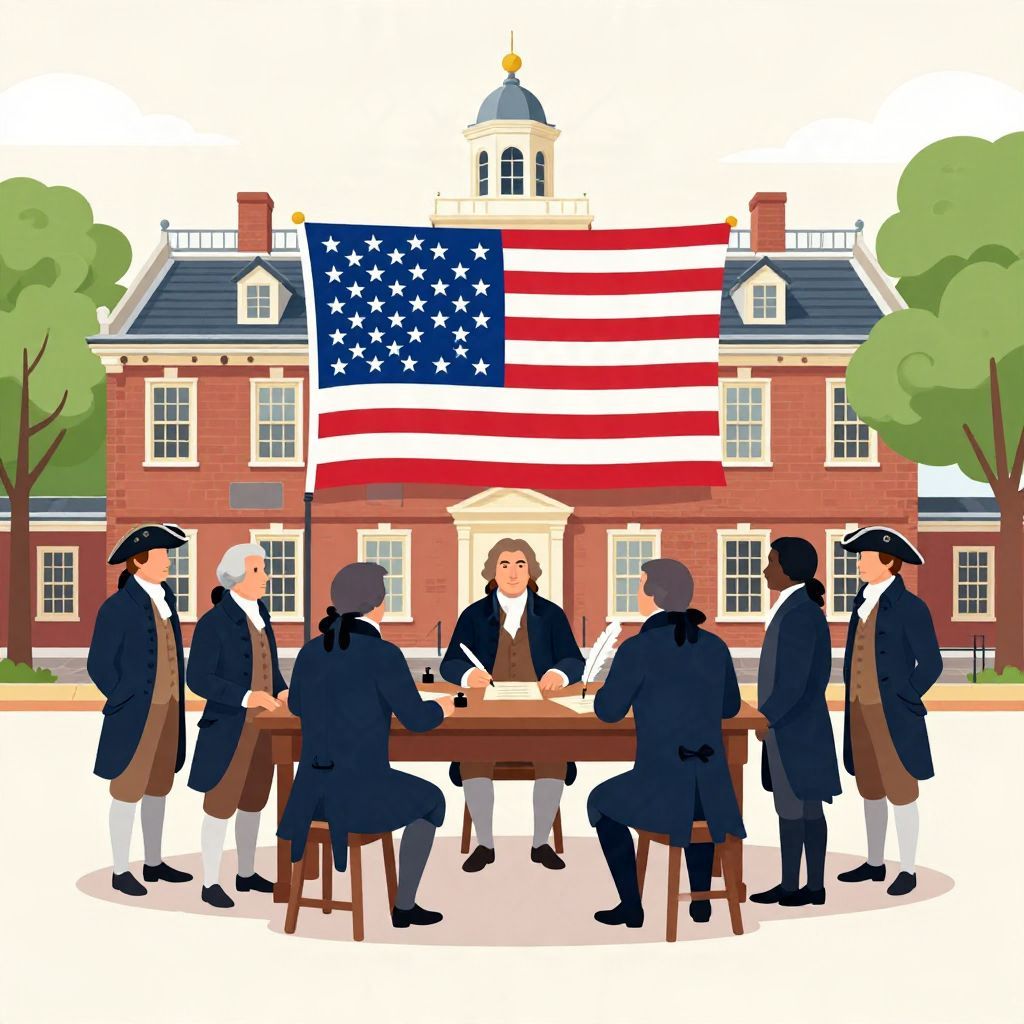
People often ask, “When is America’s birthday?” The short answer is July 4, 1776, the date the Continental Congress adopted the Declaration of Independence. That day is celebrated as the United States’ birthday because it marked the colonies’ formal break from Great Britain.
The story is a little more complicated than a single date, though. Independence was declared in 1776, but the nation was not fully organized overnight, and different people have used different dates to mark the country’s beginning.
When Is America’s Birthday?
America’s birthday is commonly celebrated on July 4, 1776, because that is when the Continental Congress approved the Declaration of Independence. In historical terms, it was the moment the American colonies announced they were no longer part of the British Empire. For most Americans, that is the clearest and most meaningful “birthday” of the United States.
Why July 4, 1776, Matters
On July 4, 1776, delegates in Philadelphia adopted a document explaining why the colonies were separating from Britain. The Declaration did not create the United States by itself, but it gave the new nation its public birth announcement. It declared that the colonies were “free and independent States,” a major political break with the old imperial order.
The date became central because it represented a decisive act of self-definition. Before then, the colonies had been British possessions. Afterward, they were claiming the right to govern themselves. That is why July 4 became the date Americans associate with national independence, civic identity, and celebration.
The Declaration Was Adopted on July 4, Not Signed by Everyone That Day
One common misconception is that all the founders signed the Declaration on July 4. In fact, the Continental Congress adopted the text on that day, but many delegates signed later. The famous parchment copy most people picture was signed over time, and some signatures were added in August 1776.
This distinction matters because it shows how national history often works: the symbolic date and the administrative process are not always the same. July 4 is the birthday in the commemorative sense, even if the paperwork unfolded over several weeks.
Was America Born on July 2, 1776?
Some historians note that July 2, 1776 was the day Congress voted in favor of independence. John Adams even thought July 2 would become the great national holiday. But the Declaration itself was adopted two days later, and July 4 is the date printed on the document and remembered by the public.
So which date is “right”? It depends on how you define birth. If you mean the formal vote for independence, July 2 has a strong claim. If you mean the public announcement and the date the nation has long celebrated, July 4 is the answer most people mean when they ask about America’s birthday.
Why Not the Constitution or the Founding of the Government?
Another possible birthday is 1787, when the U.S. Constitution was written, or 1789, when the new federal government began operating under it. Those dates are important because they shaped the country’s political system. But they are not usually treated as the nation’s birthday.
The reason is historical and symbolic. The Declaration of Independence marked the moment Americans claimed a separate national existence. The Constitution came later, when the new country built a more durable government. In other words, 1776 is the birth of the nation in principle, while 1787–1789 are the birth of the constitutional system.
How the Road to Independence Led to July 4
America’s birthday did not happen suddenly. It grew out of years of conflict between Britain and its North American colonies. After the French and Indian War, Britain tried to raise revenue and tighten control over the colonies through taxes and regulations. Many colonists resisted, arguing that they were being taxed without proper representation.
Tensions escalated through events such as the Stamp Act crisis, the Boston Massacre, the Boston Tea Party, and the fighting at Lexington and Concord in 1775. By then, many colonists had moved from protest to armed resistance. The Declaration of Independence was the culmination of this long political break, not the beginning of it.
The Continental Congress and the Decision to Separate
The Continental Congress served as the colonies’ collective political body during the crisis. In 1776, delegates increasingly concluded that reconciliation with Britain was unlikely. Thomas Jefferson, with help from other delegates, drafted the Declaration to explain the colonies’ reasons for independence in language that emphasized natural rights and self-government.
Its famous ideas were not entirely new, but they were powerful. The document argued that governments derive their power from the consent of the governed and that people have rights that rulers cannot simply take away. These ideas helped define the new nation’s identity long after the war ended.
What Americans Celebrate on the Fourth of July
Today, the Fourth of July is both a historical commemoration and a civic holiday. Americans celebrate the nation’s independence with fireworks, parades, concerts, family gatherings, and public readings of historical documents. The holiday has become one of the most recognizable symbols of American national identity.
Still, the celebration has changed over time. In the early republic, Independence Day was often marked by speeches, cannon fire, and public dinners. Over the nineteenth century, it became more widespread and more festive. By the twentieth century, fireworks and community events had become standard traditions across the country.
Why Fireworks Became Part of the Tradition
Fireworks were used early on because they fit the spirit of public celebration and patriotic display. Loud, dramatic, and communal, they symbolized joy and national triumph. Their use also connected the holiday to older public festivities in Europe and America, where fireworks were often used for major political occasions.
Even so, fireworks are a tradition, not the historical event itself. They are one way later generations have chosen to remember the day the Declaration was adopted.
Why America’s Birthday Can Mean Different Things
There is no single universally agreed “birthday” for a country in the same way there is for a person. Nations emerge through declarations, wars, constitutions, treaties, and institutions. For the United States, different dates can be defended depending on the question being asked.
- July 2, 1776 — Congress voted for independence.
- July 4, 1776 — Congress adopted the Declaration of Independence.
- 1781 — The Articles of Confederation were ratified, creating an early national framework.
- 1787 — The Constitution was written.
- 1789 — The new federal government began operating.
For public memory, though, July 4 won out because it is the date tied to the Declaration. It is the clearest symbol of the nation’s founding ideal: that a people can declare themselves independent and create a new political community.
The Lasting Meaning of July 4
America’s birthday is not just about the past. It continues to shape how Americans think about liberty, citizenship, and national purpose. The Declaration of Independence is still read as a statement of ideals, even though the country’s history has often fallen short of them. That tension is part of why the date remains so important.
For many people, the Fourth of July is both a celebration and a reminder. It celebrates the creation of a new nation, but it also invites reflection on who counted as part of that nation in 1776 and how the meaning of freedom has expanded over time. In that sense, the holiday is as much about the unfinished American story as it is about the founding moment.
So, When Is America’s Birthday?
America’s birthday is July 4, 1776, the day the Continental Congress adopted the Declaration of Independence. That is the date most Americans celebrate, and the one most closely tied to the nation’s birth as an independent country. If you want the shortest answer, that is it.
But the fuller historical answer is that America’s founding unfolded over several years, with July 4 serving as the symbolic beginning. If you want to explore more, see why Americans celebrate the 4th of July and when the USA was founded.