
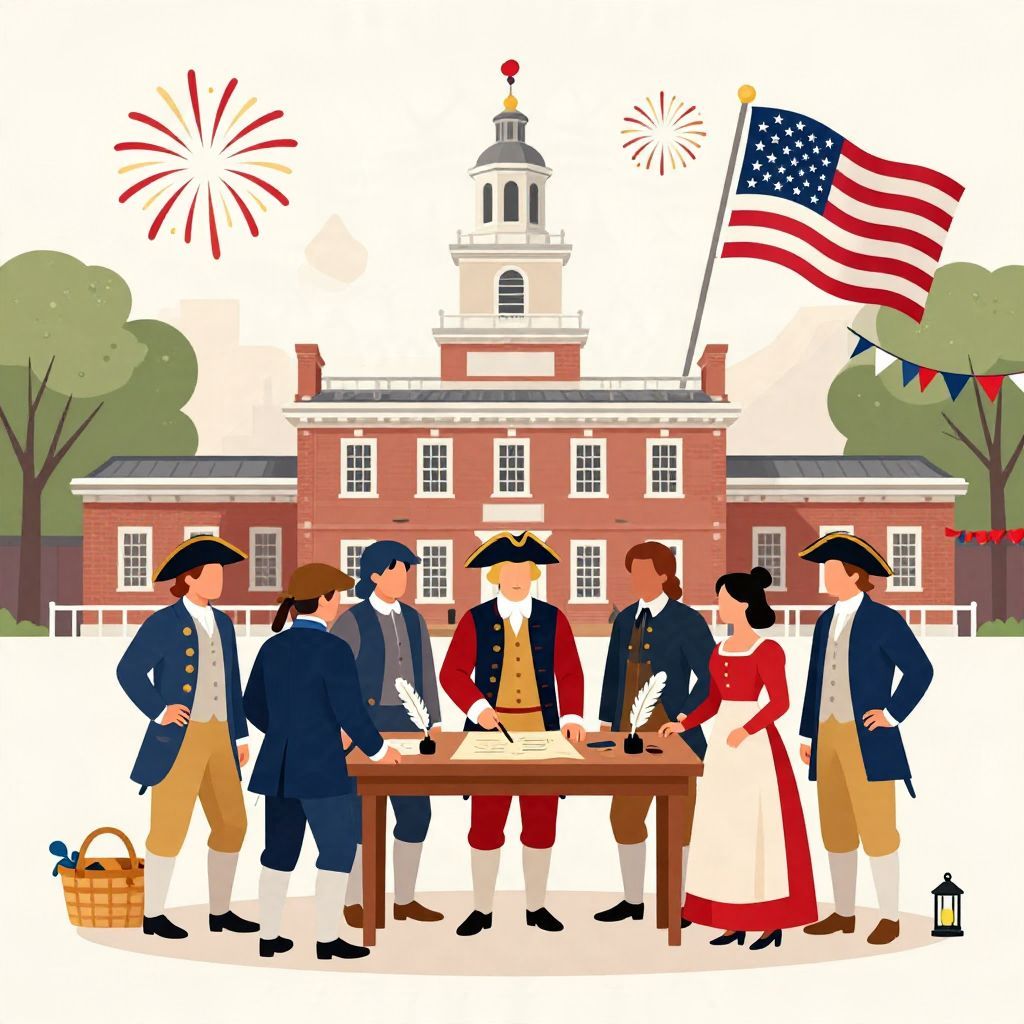
Why do we celebrate the 4th of July? In the United States, the day marks the adoption of the Declaration of Independence on July 4, 1776, when the Continental Congress formally announced that the thirteen American colonies were no longer subject to British rule. It is celebrated as the nation’s symbolic birthday, even though independence was won only after years of war.
The holiday honors a political break with empire, the ideals stated in the Declaration, and the long struggle that followed to make those ideals real. Its meaning has changed over time, but at its core the Fourth of July commemorates the birth of the United States as an independent republic.
Why Do We Celebrate The 4Th Of July?
We celebrate the 4th of July because it marks the day in 1776 when the Continental Congress adopted the Declaration of Independence. That document announced the American colonies’ separation from Britain and explained the principles behind it: government by consent, natural rights, and the right of a people to create a new nation.
What Happened on July 4, 1776?
On July 4, 1776, the Continental Congress in Philadelphia approved the final wording of the Declaration of Independence. The vote for independence itself had already taken place on July 2, after Richard Henry Lee’s resolution declared that the colonies “are, and of right ought to be, free and independent States.” The Declaration was the formal explanation of that decision.
The Declaration was more than a breakup letter
Thomas Jefferson wrote the first draft, and Congress edited it before approval. The document did not simply announce separation from Britain; it defended the decision in political language that has shaped American identity ever since. Its famous argument that “all men are created equal” became a lasting ideal, even though the reality of slavery, unequal rights, and exclusion contradicted it from the start.
Why July 4 Became the National Holiday
Although July 2 was the actual vote for independence, July 4 became the date remembered because that was the day the Declaration was adopted and dated. Early Americans treated the document as the public face of independence, and celebrations grew around it. Over time, July 4—not July 2—became the date most closely associated with the nation’s founding.
Early celebrations helped fix the date in memory
In the late 18th and early 19th centuries, communities marked the anniversary with speeches, dinners, bells, cannon fire, and fireworks. These public rituals helped turn the Fourth into a shared civic holiday. By the time it became a federal holiday in 1870, the date had already become deeply rooted in American memory.
The Historical Context: Why Independence Was Declared
The Declaration of Independence did not appear suddenly. It emerged from a growing conflict between Britain and its colonies after the French and Indian War, when Britain tried to tighten control and raise revenue. Many colonists objected to taxes, trade restrictions, and what they saw as violations of their political rights as English subjects.
Key tensions leading to revolution
- Taxation and representation: Colonists protested taxes imposed by Parliament without colonial representation.
- Imperial control: Britain sought greater authority over colonial trade and administration.
- Escalating conflict: Events such as the Boston Massacre, the Boston Tea Party, and the Intolerable Acts deepened distrust.
- War had already begun: Fighting started in 1775 at Lexington and Concord, before independence was formally declared.
By 1776, many colonists had moved from protest to separation. Independence was no longer just a complaint about policy; it had become a revolutionary claim that political authority should rest with the people, not a distant king.
Who Was Involved in Declaring Independence?
Delegates from the thirteen colonies met in the Continental Congress, a body that had become the central political forum for colonial resistance. Prominent figures included John Adams, Benjamin Franklin, Thomas Jefferson, Roger Sherman, Robert Livingston, and many others who debated the language and meaning of independence.
Thomas Jefferson’s role is important, but not singular
Jefferson is often remembered as the main author of the Declaration, and that is broadly correct. Still, the document was a collective product. Congress revised his draft, removed some passages, and shaped the final text. The Fourth of July therefore commemorates not one man’s achievement, but a political decision made by a revolutionary assembly.
What the Fourth of July Means Beyond the Date
The holiday celebrates independence, but it also represents a larger set of ideals that Americans have debated ever since 1776. The Declaration’s language about equality and rights gave later reformers a powerful standard to invoke. Abolitionists, women’s rights advocates, civil rights leaders, and others pointed to the nation’s founding promises when demanding change.
An ideal and a contradiction
One reason the Fourth of July remains historically significant is that it captures both aspiration and contradiction. The United States declared liberty while slavery continued. Women, Native Americans, and many poor men were excluded from full political participation. The holiday has therefore served not only as a celebration, but also as a reminder of unfinished democratic promises.
How the Celebration Evolved Over Time
In the early republic, the Fourth of July was often marked by civic rituals rather than the modern family-centered holiday people know today. Towns held parades, orations, and public readings of the Declaration. As the country expanded, the holiday became more popular, more festive, and more commercialized, while still retaining its patriotic core.
Common traditions developed gradually
- Public readings and speeches: Early Americans listened to long orations about liberty and the Revolution.
- Fireworks: Fireworks became a signature part of the celebration, symbolizing joy, spectacle, and national identity.
- Parades and community events: These reinforced local and national belonging.
- Food and family gatherings: Over time, the holiday became associated with outdoor meals and summer recreation.
The modern Fourth of July blends serious history with festive tradition. That combination is part of why the holiday has endured: it is both a remembrance of political origins and a public expression of national identity.
Why the Fourth of July Matters in American History
The Fourth of July matters because it marks the moment the colonies declared themselves a new political community. It is not the day the war ended, and it is not the day independence was fully secured. But it is the day Americans chose to define themselves as separate from Britain and to justify that choice in universal terms.
Declaration, war, and independence are not the same thing
It is important to distinguish between the declaration of independence and the achievement of independence. The Revolutionary War continued until 1783, when Britain recognized American independence in the Treaty of Paris. In other words, July 4 commemorates the announcement and principle of independence, not the military victory that confirmed it.
Misconceptions About the Fourth of July
Because the holiday is so familiar, a few misunderstandings are common. Clearing them up helps explain the history more accurately.
- It was not the day the war ended: The Revolution continued for years after 1776.
- It was not the first vote for independence: The Continental Congress voted on July 2, then adopted the Declaration on July 4.
- It was not instantly celebrated everywhere: The holiday grew in popularity over time.
- It did not mean freedom for everyone: The new nation remained deeply unequal in practice.
The Fourth of July in Historical Perspective
Seen historically, the Fourth of July is a commemoration of revolution, state formation, and political ideals. It remembers the moment when a group of colonies claimed the right to govern themselves and presented that claim to the world. Its lasting power comes from the fact that the Declaration’s language still invites debate about what liberty, equality, and citizenship should mean.
So, why do we celebrate the 4th of July? Because it is the anniversary of the Declaration of Independence, the foundational statement that announced the United States as a separate nation and set out its revolutionary ideals. For more context on the holiday’s meaning and the broader Revolutionary era, see why we celebrate national holidays and what year the Revolutionary War ended.