
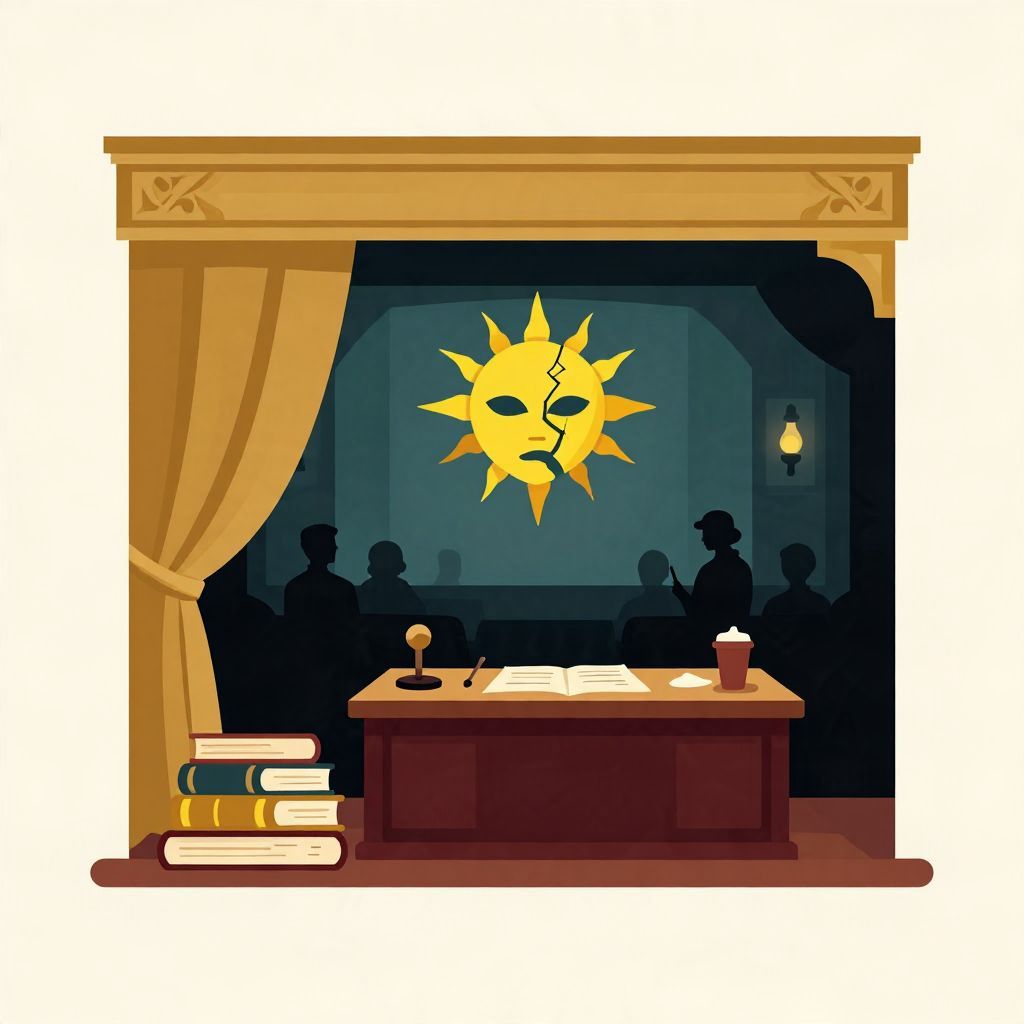
Why is The King in Yellow banned? The short answer is that it usually is not banned in any broad, official sense. Robert W. Chambers’s 1895 short-story collection has been controversial at times because of its eerie themes, occult imagery, and influence on later horror and weird fiction, but there is no well-known historical record of a universal or long-standing legal ban on the book itself.
Confusion often comes from censorship in schools, libraries, or online platforms, where a work may be restricted for age appropriateness, religious concerns, or fear of disturbing content. In other words, the idea that The King in Yellow is “banned” is more a matter of rumor, local challenge, or modern internet myth than a single clear historical prohibition.
Why Is The King in Yellow Banned?
It generally was not banned as a single famous book in the way some controversial novels were. The collection was published in 1895 and became known for unsettling stories, a fictional play that drives readers mad, and a mood that later helped shape cosmic horror. Any restrictions were usually informal, local, or based on taste rather than a formal national ban.
The book’s unsettling reputation
Robert W. Chambers’s collection contains two very different halves: several decadent, romantic, and atmospheric stories, followed by tales tied to the fictional play The King in Yellow. That invented play is the source of much of the book’s fame. In the stories, characters who encounter it are often changed, frightened, or ruined by its contents. This made the book memorable, but also easy to misunderstand as inherently dangerous or forbidden.
The title itself became associated with madness, forbidden knowledge, and occult dread. Later readers, especially fans of horror fiction, treated it as a kind of cursed text within the story world. That fictional reputation sometimes spilled over into real-world rumors that the book had been banned.
No clear evidence of a sweeping legal ban
Historically, there is no widely documented government prohibition of The King in Yellow comparable to the censorship of some politically sensitive, sexually explicit, or anti-religious works. The book was published openly in the United States, and it circulated in print for decades. If it was ever removed from a school reading list or challenged in a library, that would be a local decision, not proof of a general ban.
This distinction matters. A book can be controversial, difficult to classify, or even restricted in one institution without being “banned” in a broad historical sense. For The King in Yellow, the evidence points much more strongly to reputation and rumor than to formal suppression.
What Is The King in Yellow and Why Did It Cause Concern?
The King in Yellow is a collection of short stories by American writer Robert W. Chambers, first published in 1895. The first four stories are more literary and romantic, while the later stories introduce the eerie fictional drama that gives the book its title. The imagined play is said to produce obsession, despair, or madness in those who read it.
Late 19th-century literary context
The book appeared during the fin-de-siècle period, when many writers were fascinated by decadence, symbolism, spiritual anxiety, and the instability of modern life. Readers at the time were already encountering literature that explored dreams, neurosis, taboo desire, and the supernatural. Chambers’s work fit that atmosphere, but it pushed it into a more disturbing direction.
That does not mean the book was automatically censored. In the 1890s, publishers were used to controversy, and many books that seemed strange or morally questionable were still sold widely. What made Chambers’s collection notable was not official suppression, but the way it lingered in the cultural imagination.
Why the fictional play mattered so much
The invented play within the stories is one of the most famous examples of a “forbidden text” in modern literature. It is never fully revealed, which makes it more frightening. Readers are told enough to imagine a dangerous work, but not enough to define it clearly. That technique helped make the book influential, and it also encouraged later myths that the text itself was somehow banned or hidden.
In reality, the book’s power came from suggestion. Chambers used partial revelation, atmosphere, and dread to create a sense of something unspeakable. That literary success is probably the main reason people still ask whether it was banned.
How the Ban Myth Developed
The idea that The King in Yellow was banned likely grew from a mix of literary reputation, internet culture, and confusion with other censored books. Because the title sounds ominous and the stories involve madness and forbidden knowledge, it is easy for readers to assume there must have been a real-world prohibition behind it.
Common sources of confusion
- Fictional censorship inside the stories: the cursed play is treated as dangerous within the narrative.
- Modern horror fandom: later writers and gamers turned the title into a symbol of forbidden lore.
- School or library caution: some institutions may avoid disturbing or mature material without formally banning it.
- Mix-up with other challenged books: many classic works have been restricted at various times, so readers may assume this one was too.
Once a rumor like this spreads, it can be difficult to separate fact from atmosphere. The book itself teaches readers to expect hidden dangers, so the myth of a ban feels almost like part of the text’s legacy.
Why horror stories invite censorship rumors
Horror fiction often receives more suspicion than other genres because it deals with death, madness, religion, the occult, and moral disorder. Even when such works are not formally banned, they may be treated with caution by parents, teachers, or librarians. A title like The King in Yellow can therefore acquire a reputation for being “forbidden” simply because it seems transgressive.
That reputation is especially strong when a work becomes iconic among fans of weird fiction. The more a text is discussed as mysterious or dangerous, the more likely people are to assume it was suppressed in the past.
Historical Censorship and the Difference Between Banned and Challenged
To understand the question properly, it helps to distinguish between a true historical ban and a local challenge. A ban usually means an authority formally prohibits sale, distribution, or possession. A challenge means an individual, school, library, or community objects to the work and tries to remove it from a setting.
What historians look for
When historians ask whether a book was banned, they look for evidence such as:
- government orders or court decisions,
- publisher suppression under legal pressure,
- documented confiscation or removal from circulation,
- or repeated institutional restrictions with clear records.
For The King in Yellow, such evidence is not prominent in the historical record. That does not mean no one ever objected to it. It means the book does not belong to the category of clearly and widely banned classics such as some politically subversive, sexually explicit, or religiously controversial works.
Why the distinction matters
Calling a book “banned” can make it seem more dangerous, more persecuted, or more historically important than it really was. In this case, the label can distort the truth. The book’s significance lies less in censorship history and more in literary influence, especially on horror, fantasy, and role-playing culture in the 20th century.
The Book’s Real Historical Importance
Even if The King in Yellow was not broadly banned, it became historically important for other reasons. It helped define a mood of cosmic unease that later writers expanded into modern horror. Its most famous legacy appears in the work of authors who were inspired by Chambers’s blend of atmosphere, hidden menace, and psychological dread.
Influence on later horror
The book’s fictional play and mysterious entity became touchstones for later creators interested in forbidden knowledge and incomprehensible forces. The idea that a text itself can corrupt the reader became a powerful motif in horror literature. That theme echoes through 20th-century weird fiction and beyond.
Its influence also shows how a book can matter historically without being censored. Sometimes a work becomes famous precisely because it is strange, unsettling, and unlike the mainstream literature of its time.
Why modern readers keep asking about a ban
Modern readers often encounter The King in Yellow through references rather than the original text. It appears in discussions of occult fiction, cosmic horror, and secret knowledge. Because it is so often framed as dangerous within popular culture, people naturally assume there must be a real censorship story behind it. The truth is simpler: its reputation for forbidden power is mostly literary, not legal.
So Why Do People Still Say It Was Banned?
People keep repeating the claim because the book’s premise encourages it. A fictional play that destroys minds sounds like exactly the sort of thing authorities might suppress. Add the aura of 1890s decadence and the later cult status of the book, and the rumor becomes believable even without evidence.
In historical terms, this is a good example of how a text’s symbolic danger can be mistaken for actual censorship. The book was unsettling, influential, and sometimes treated cautiously, but that is not the same as being officially banned across a nation or era.
Conclusion: The Historical Answer
The King in Yellow was not broadly banned in the historical sense most people mean. It was a provocative, influential 1895 collection whose fictional cursed play helped create a lasting reputation for dread and forbidden knowledge. The “banned” idea comes mostly from confusion, rumor, and the book’s own eerie mythology rather than from a clear record of legal suppression. For readers interested in literary censorship and horror’s cultural history, it is worth comparing this case with other controversial classics and the broader history of challenged books.