
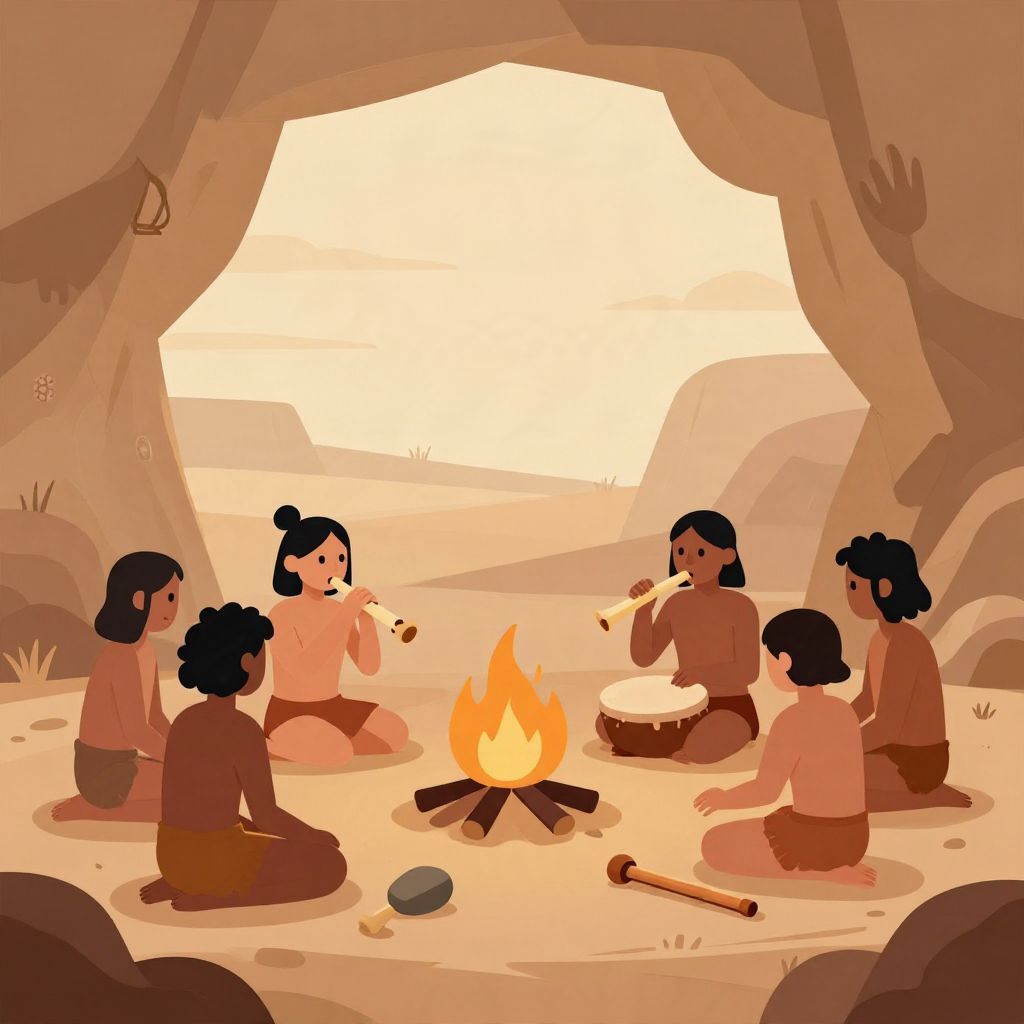
What was the first instrument? It is a deceptively simple question, but history does not give a single neat answer. The earliest musical instruments were probably made long before writing, so the evidence comes from archaeology, not records. What we can say with confidence is that humans were making sound with purpose tens of thousands of years ago.
The oldest widely accepted instruments are flutes made from bird bone and mammoth ivory, found in Upper Paleolithic Europe and dated to roughly 40,000 years ago. But percussion, rattles, voice, and body sounds almost certainly came earlier. In other words, the “first instrument” depends on how you define instrument and what kind of evidence you accept.
What Was the First Instrument?
The earliest clearly identified musical instruments are bone flutes from the Upper Paleolithic period, especially from sites in present-day Germany. However, many scholars believe the first instruments were probably simple percussion devices, such as sticks, stones, or rattling objects, which rarely survive in the archaeological record. The true origin is therefore older than the oldest surviving artifact.
Why There Is No Single Answer
To ask what was the first instrument is to ask two questions at once: what counts as an instrument, and what evidence has survived. A flute is easy to recognize because it leaves a durable shape and holes. A drum made of hide and wood, or a set of clapped sticks, usually does not survive for tens of thousands of years.
Different definitions change the answer
- Any intentional sound-making object: likely very ancient, perhaps older than surviving archaeology can show.
- The first surviving instrument: bone flutes from the Upper Paleolithic.
- The first melodic instrument: flutes are among the earliest known.
- The first rhythmic instrument: percussion may have come first, but is harder to prove.
Because of this, historians and archaeologists usually avoid naming one universal “first” instrument. Instead, they discuss the earliest known instruments and the likely earlier stages of musical behavior.
The Oldest Known Instruments: Paleolithic Flutes
The strongest archaeological evidence for early instruments comes from flutes found in caves in southern Germany, including sites such as Hohle Fels and Geissenklösterle. These instruments are generally dated to around 40,000 years ago, making them some of the oldest surviving musical objects in the world. They were crafted from bird bones and mammoth ivory.
What makes them important?
These flutes show that early modern humans were not only making tools for survival but also creating objects for artistic and social purposes. The holes were deliberately placed, which indicates planned pitch control rather than accidental sound. That is why they are usually treated as real musical instruments, not just hollow bones.
What they tell us about early music
These finds suggest that music was already part of human culture very early in the Upper Paleolithic. Music may have supported ritual, bonding, storytelling, teaching, or group identity. We cannot know the exact use, but the craftsmanship shows that sound mattered enough to shape and preserve.
Could Percussion Have Come First?
Many scholars think percussion likely predates flutes. Hitting stones, tapping sticks, beating logs, or shaking seeds in a container are simple ways to create rhythm. These actions require little technology and may have been used by early humans long before durable instruments appeared in the archaeological record.
Why percussion is hard to prove
Unlike flutes, percussion instruments often leave little trace. A wooden drum frame, a skin membrane, or a bundle of sticks decays quickly unless preserved in exceptional conditions. That means the absence of evidence is not evidence of absence. Percussion may have been the earliest musical practice, but it is much harder to document.
Rhythm before melody?
Some researchers argue that rhythm may have been the first organized musical element because it is closely tied to walking, labor, dance, and communal movement. Others caution that melody and rhythm probably developed together in human prehistory. The surviving evidence does not allow a final verdict.
How Early Humans May Have Made Music
Long before formal instruments, humans had the body itself: clapping, stomping, singing, chanting, and striking objects together. These forms of sound-making are not always classified as instruments, but they likely formed the foundation of musical culture. Instruments may have extended and refined those natural human abilities.
Possible early sound sources
- Clapping hands
- Stomping feet
- Voiced chanting and singing
- Hitting stones or sticks together
- Shaking seeds, shells, or bones
- Blowing into hollow reeds, bones, or tubes
These activities would have been useful in social rituals, communication, and group coordination. Over time, people likely learned which materials produced the clearest, loudest, or most pleasing sounds, leading to the first true instruments.
What the Earliest Instruments Reveal About Human History
The first instruments are important because they show that symbolic and creative behavior emerged very early in human history. Making a flute or a rhythmic object requires planning, skill, and an understanding that sound can carry meaning beyond practical utility. That is a major step in cultural development.
Music and social life
Music may have helped early communities build trust and cooperation. Joint singing or drumming can synchronize movement and emotion, making group activity feel unified. While historians cannot prove every social use, it is reasonable to think early instruments supported ceremony, memory, dance, and communication.
Music and identity
Instruments also helped distinguish groups from one another. Different materials, playing styles, and sounds could become markers of local tradition. This pattern appears across later ancient civilizations, where instruments became tied to religion, court life, festivals, and warfare.
Ancient Civilizations and the Expansion of Instruments
After the Paleolithic period, instruments became more varied and more visible in the archaeological record. Ancient Egypt, Mesopotamia, China, India, and later Greece and Rome all developed rich musical traditions. By then, instruments included drums, lyres, harps, pipes, horns, and stringed devices.
From simple sound to specialized instruments
As societies became more complex, instruments also became more specialized. Some were used in temples, some in royal courts, some in military settings, and some in public celebrations. This development does not change the fact that the earliest instruments were likely simple, but it shows how quickly sound-making became culturally important.
Popular Claims About the First Instrument
People sometimes hear that a particular instrument was “the first” because it is ancient, iconic, or linked to a famous civilization. These claims should be treated carefully. The oldest surviving instrument is not necessarily the first one ever made, and many traditional instruments have deep histories without being the earliest known.
Examples of common misunderstandings
- “The flute was definitely first” — not proven; it is only the earliest clearly surviving melodic instrument.
- “Drums were first” — plausible, but difficult to verify archaeologically.
- “One culture invented music” — false; music is a human behavior with very ancient and widespread roots.
History works best here when it accepts uncertainty. The question is not whether one instrument magically appeared first, but how human beings gradually turned sound into art, ritual, and shared experience.
So, What Is the Best Historical Answer?
If you want the shortest accurate answer, it is this: the earliest known musical instruments are bone and ivory flutes from around 40,000 years ago, but the first instruments were probably simpler percussion or sound-making objects that have not survived. The origin of music is therefore older than the oldest artifact we can name.
That makes the “first instrument” less a single invention than a long human process. From clapping and striking objects to flutes and drums, early people transformed ordinary materials into tools for rhythm, melody, and meaning. For related ancient-history reading, see what a didgeridoo is and what Archimedes invented.