
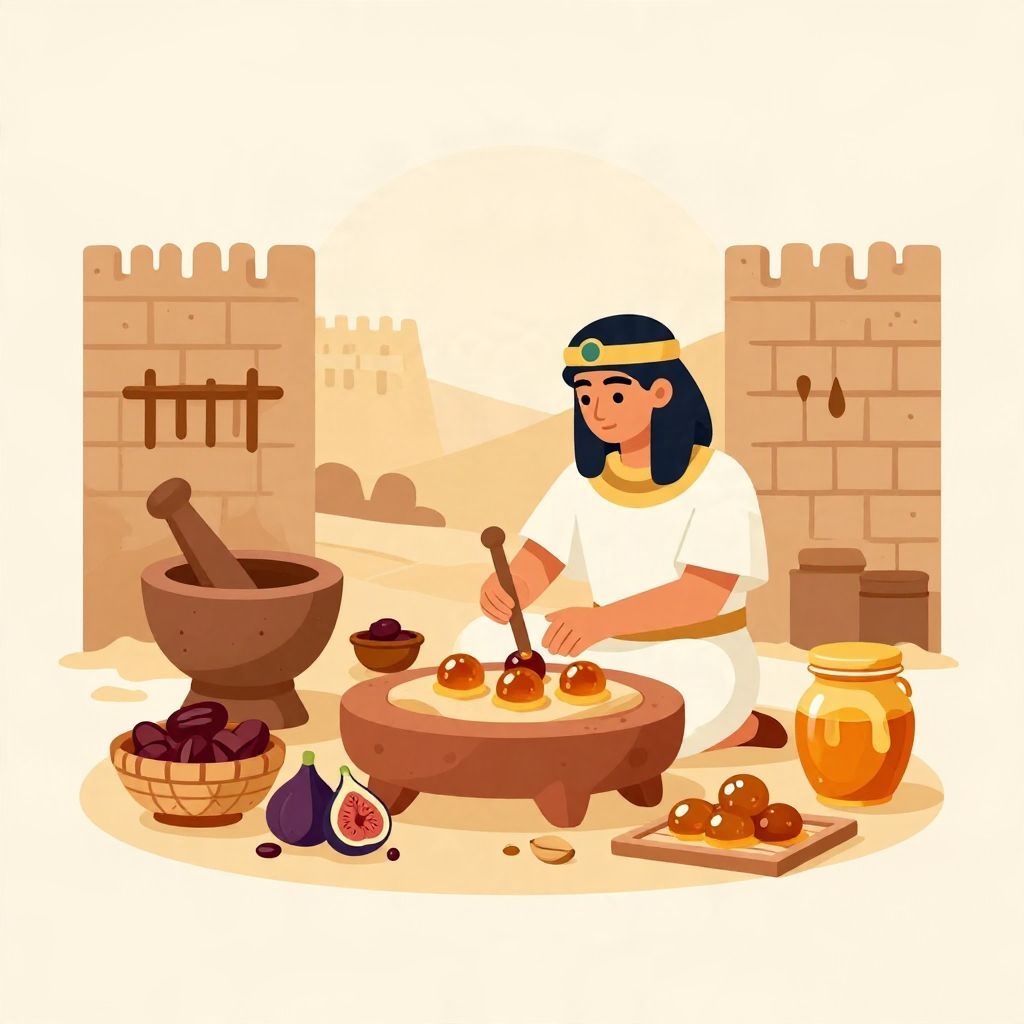
What was the first candy ever made? The honest historical answer is that there is no single, universally agreed “first candy.” Sweet foods existed in many ancient societies long before modern candy, and the earliest forms were usually honey-coated fruits, nuts, seeds, or sweetened confections rather than the hard, packaged sweets we think of today.
If the question is asking about the earliest known candy-like treat, the best answer is sweetened confections made with honey in the ancient world, especially in Egypt, Mesopotamia, Greece, and Rome. If the question means the first true sugar candy, that comes much later, after sugar spread from India into the Islamic world and then Europe.
What Was The First Candy Ever Made?
The first candy ever made was not one specific invention but an early sweet confection, most likely made with honey and ingredients such as nuts, seeds, or fruit. Before refined sugar became common, people used honey as the main sweetener, so the earliest “candies” were really honey-based treats created in ancient civilizations thousands of years ago.
Why there is no single answer
The word candy is modern, and ancient people did not divide sweets into the same categories we use today. A honeyed pastry, a fruit preserve, a nut brittle, or a sugar-coated seed might all count as candy depending on how broadly the term is defined. That is why historians usually speak of the earliest candy-like foods rather than one exact first candy.
The Earliest Sweet Treats Came from Honey, Not Sugar
For most of human history, sugar was rare or unknown in many parts of the world. Honey was the oldest and most important sweetener, so early sweets were built around it. Archaeological and textual evidence from ancient Egypt, Mesopotamia, and the Mediterranean shows that people made sweet snacks and ceremonial offerings using honey, dates, figs, nuts, and grains.
Ancient Egypt and Mesopotamia
In ancient Egypt, honey was highly valued and used in food, medicine, and religious offerings. Egyptians also made sweetened cakes and confections with dates and nuts. In Mesopotamia, people used dates extensively, and date-based sweets likely formed part of everyday and ritual food culture. These were not candy bars or lollipops, but they were early examples of portable sweets.
Greek and Roman sweet confections
The Greeks and Romans inherited and expanded older sweet-making traditions. They enjoyed honey-coated nuts, sesame sweets, and fruit preserves. Roman writers described foods made with honey and seeds that resemble later confections such as brittle or nougat-like treats. These foods were often served at feasts, religious occasions, or as luxury items for the wealthy.
When Did Sugar Candy Appear?
True sugar candy developed much later, after people learned how to crystallize and refine sugar. Sugarcane was first cultivated in South Asia, and by the early centuries CE, sugar-making techniques spread westward through trade and conquest. The earliest sugar candies were likely small crystallized pieces of sugar used both as medicine and as luxury sweets.
India and the early history of sugar
India played a central role in the history of sugar. Ancient Indian texts and practices show early knowledge of sugarcane and crystallized sugar. The very idea of making solid sugar pieces came from this region, where sugar was processed into a more portable form than liquid syrups. This was a major step toward candy as later generations would understand it.
The Islamic world and Europe
During the medieval period, sugar-making knowledge moved through the Islamic world into the Mediterranean and Europe. Sugar remained expensive, so early sugar candies were luxury goods, often used in elite households and medicine. Apothecaries sometimes sold sugar-coated spices or fruits because sugar was believed to have health benefits as well as flavor.
What Ancient People Considered a “Candy”
To understand the first candy ever made, it helps to think about what ancient people actually ate. Their sweets were often practical, seasonal, and tied to available ingredients. They were not mass-produced treats sold in shops, but handmade foods prepared at home, in palaces, or in temple settings.
Common early candy-like foods
- Honeyed nuts — nuts coated in honey and sometimes toasted for texture.
- Fruit and date balls — mashed dried fruit formed into bite-sized sweets.
- Sesame and seed sweets — early versions of brittle or bars.
- Honey cakes — small baked sweets flavored with honey and spices.
- Crystallized sugar pieces — later, once sugar refining became more common.
Not all sweets were “candy” in the modern sense
Some ancient sweets were closer to desserts, preserves, or ceremonial foods than to candy. For example, fruit cooked in honey might be preserved food rather than a treat. Historians therefore avoid claiming that one ancient recipe was the first candy unless the evidence is clear. The safest conclusion is that honey-based confections were the earliest candy-like foods.
How Candy Evolved from Ancient Sweeteners to Modern Sweets
Candy history is really the history of sweeteners, preservation, and trade. As sugar became cheaper and more available, candy changed from an elite luxury into a common treat. That shift transformed candy from occasional handmade confection into the wide variety of sweets familiar today.
From honey to sugar
Honey dominated early sweet-making because it was naturally available and did not require complex processing. Sugar, by contrast, had to be extracted, purified, and crystallized. Once sugar production expanded, confectioners could make harder, cleaner, and more varied sweets. This eventually led to boiled sugar candies, lozenges, fondants, and many other forms.
Medieval and early modern confectionery
By the Middle Ages, sugar was still expensive, but confectioners and apothecaries were experimenting with it. Sugar candies often appeared as medicinal aids or status symbols. Over time, improvements in agriculture, colonial plantation systems, and industrial production made sugar more affordable in Europe and the Americas. Candy then became a commercial product rather than an elite specialty.
So What Is the Best Historical Answer?
If you want the shortest accurate answer, it is this: the first candy ever made was probably a honey-based confection in the ancient world, not a single named invention. If you mean the earliest true sugar candy, that developed later in ancient or early medieval India and spread through trade to the wider world.
The key distinction
- Earliest candy-like foods: honeyed nuts, fruits, seeds, and cakes in ancient civilizations.
- Earliest sugar candy: crystallized or refined sugar sweets developed after sugarcane processing advanced in South Asia.
- Modern packaged candy: a much later industrial product, shaped by mass sugar production and commercial confectionery.
Why the Question Matters
Asking about the first candy ever made opens a wider story about human taste, trade, and technology. Candy did not begin as a toy-like snack; it grew out of ancient food preservation, ritual offerings, medicine, and luxury dining. Its history shows how a simple desire for sweetness helped shape global commerce and everyday eating habits.
So, while there is no single “first candy” with a known inventor and date, the earliest answer is clear enough: ancient honey-based confections were the first candies in human history. The modern candy aisle is the end result of a very long evolution from honey, fruit, nuts, and early sugar into the sweets we know today.