
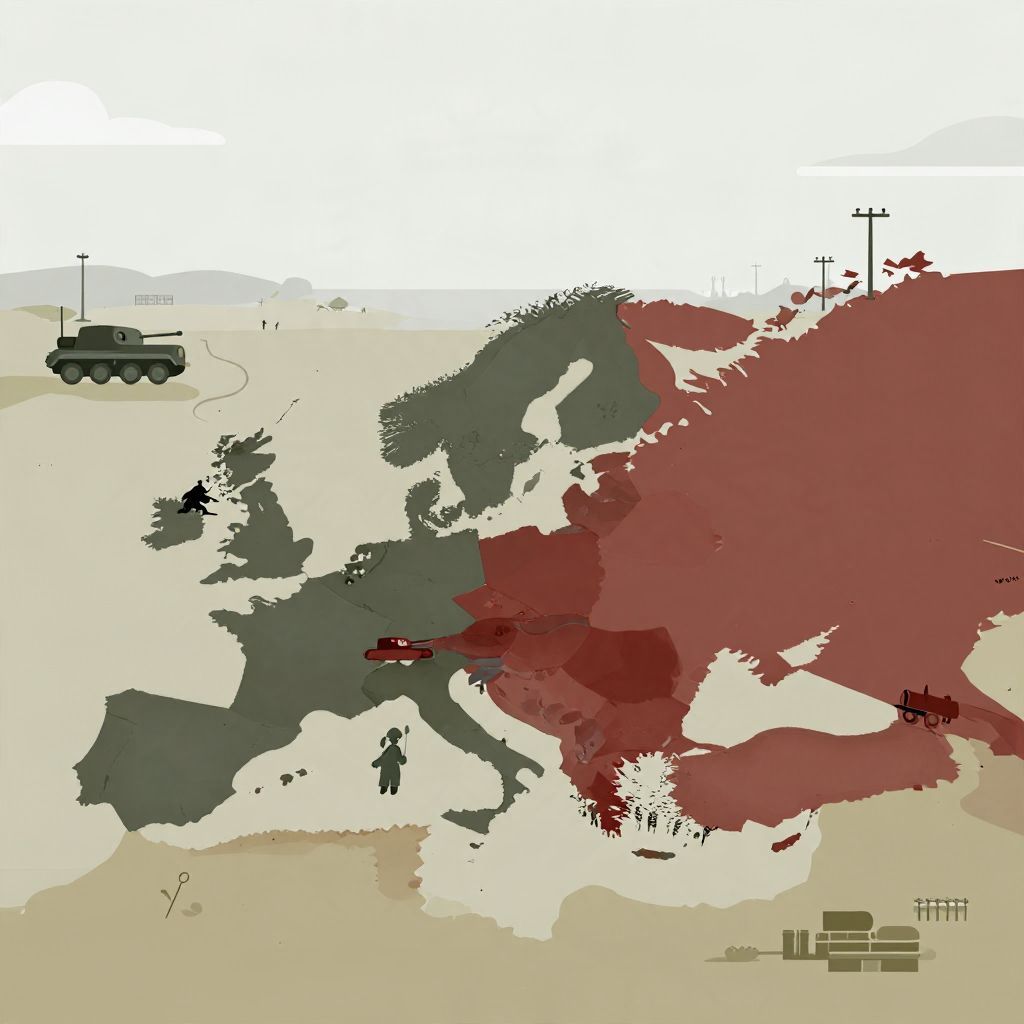
Why did Hitler invade the Soviet Union? The short answer is that Adolf Hitler saw war in the East as essential to Nazi ideology, German expansion, and his long-term plan for European domination. The invasion was not a sudden decision in 1941; it grew out of years of anti-communism, racial ideology, economic ambition, and Hitler’s belief that Britain would eventually accept German power if the Soviet Union were destroyed.
Operation Barbarossa, launched on 22 June 1941, became the largest invasion in history. It was meant to crush the Red Army quickly, seize territory and resources, and turn the Soviet Union into a colonial empire for Nazi Germany. Instead, it opened the deadliest front of the Second World War and helped determine the defeat of Hitler’s regime.
Why did Hitler invade the Soviet Union?
Hitler invaded the Soviet Union because he believed Germany needed Lebensraum—“living space”—in Eastern Europe, wanted to destroy what he saw as “Judeo-Bolshevism,” and hoped to gain food, oil, and raw materials for a long war. He also assumed the Soviet state would collapse quickly under a surprise attack, allowing Germany to dominate Europe.
The ideological roots of the invasion
Hitler’s decision was driven first by ideology. From the beginning of Nazi politics, the Soviet Union represented everything Hitler hated: communism, Slavic peoples whom Nazis considered inferior, and the Jewish population that Nazi propaganda falsely linked to Bolshevism. In Nazi thinking, war against the USSR was not just strategic; it was racial and ideological struggle.
Lebensraum and Nazi expansionism
Hitler had long argued that Germany needed territory to grow. He imagined the conquest of Eastern Europe as a way to provide farmland, settlement space, and imperial power for Germans. This was not a defensive war in Nazi eyes. It was a project of conquest, colonization, and demographic transformation.
The lands of Ukraine, Belarus, and western Russia were especially attractive to Nazi planners because they were fertile and densely populated. Hitler expected German rule to reorganize these regions for German benefit, while millions of local people would be expelled, enslaved, or killed. That genocidal vision was central to the invasion, not a side effect.
Anti-communism and “Judeo-Bolshevism”
Nazi propaganda portrayed the Soviet Union as a mortal enemy of European civilization. Hitler and his followers treated communism as a Jewish conspiracy, despite the fact that this claim had no basis in reality. The invasion was framed as a crusade against Bolshevism, but it was also an excuse for extreme violence and racial war.
This ideological hostility mattered because it shaped German policy from the start. The invasion was planned not as a conventional campaign between states, but as a war of annihilation. That is why German forces were instructed to treat Soviet political officers, Jews, and many civilians with exceptional brutality.
Strategic and military reasons behind Operation Barbarossa
Hitler also had strategic reasons for attacking. He believed the Soviet Union was Germany’s most dangerous potential enemy and wanted to destroy it before it could become stronger. He also thought a rapid victory in the East would free Germany to confront Britain and perhaps force London to make peace.
Hitler’s belief in a quick collapse
One of Hitler’s biggest miscalculations was his confidence that the Soviet state would fall in a few months. He assumed the Red Army was weak, poorly led, and incapable of resisting German operational skill. Early German victories in Poland, France, and the Balkans encouraged this belief.
Hitler underestimated Soviet industrial capacity, the size of Soviet reserves, and the ability of Soviet leadership to absorb enormous losses. He also failed to grasp how far the USSR could move factories eastward and continue producing weapons even after losing territory. The invasion was built on the illusion of a short war.
Britain, the wider war, and Hitler’s calculations
By 1941 Britain was still fighting Germany, and Hitler had not forced it to surrender. He increasingly believed that Britain’s resistance depended on hope of Soviet support or American intervention. If Germany destroyed the Soviet Union, he thought Britain might accept a settlement rather than continue alone.
This was another major error. Instead of ending the war, the invasion widened it. It strengthened British determination, eventually drew the United States deeper into the conflict, and created a massive eastern front that Germany could not sustain.
Economic motives: food, oil, and empire
Economic greed was another major reason for the invasion. Nazi Germany faced serious resource problems, especially in oil, grain, and industrial raw materials. Hitler and his planners believed the Soviet Union contained the resources Germany needed to fight a long war and build a self-sufficient continental empire.
Ukraine and the grain question
German planners focused heavily on Ukraine because of its agricultural wealth. Nazi leaders expected Soviet grain to feed Germany and its army, while local populations would be starved or reduced to laboring status. This was not a vague fantasy; it was part of a broader plan for exploitation.
The economic logic was brutal. Nazi policy aimed to redirect food from occupied Soviet lands to Germany, even if that meant mass famine. In practice, the invasion and occupation produced catastrophic civilian deaths through starvation, deportation, and deliberate destruction of local economies.
Oil and the need for long-term war
Germany’s access to oil was limited, and Hitler knew that modern mechanized warfare depended on fuel. Soviet territories, especially in the south and around the Caucasus, seemed to offer a solution. Control of these areas would strengthen Germany’s military position and weaken the Soviet Union at the same time.
Hitler’s desire for resources was tied to his expectation of a prolonged struggle against global enemies. He wanted the Soviet Union’s wealth to support German power across Europe. In that sense, Barbarossa was not just a military campaign but an attempt to seize the economic foundations of empire.
Why Hitler thought the timing was right
The invasion happened in June 1941 because Hitler believed the moment was favorable. The Soviet Union had recently expanded westward after the 1939 Nazi-Soviet Pact, but its military performance in the Winter War against Finland had appeared disappointing. Hitler also thought the Red Army was still recovering from Stalin’s purges of the officer corps in the late 1930s.
The Nazi-Soviet Pact and Hitler’s temporary restraint
In August 1939, Germany and the Soviet Union signed a non-aggression pact. This shocked many observers, but for Hitler it was a temporary arrangement. The pact allowed him to attack Poland without Soviet interference and avoid a two-front war in the short term.
Yet Hitler never intended the agreement to last. He saw it as a tactical pause while Germany dealt with Poland, France, and Britain. Once he believed the western situation was manageable, he turned against the Soviet Union, which he had always regarded as the main ideological enemy.
Misreading Soviet weakness
Hitler and many of his generals believed the Soviet Union was brittle and could be defeated by striking hard and fast. They expected the Soviet state to collapse under the shock of invasion, especially if key cities and armies were destroyed early.
That assessment ignored the Soviet Union’s depth, population, and capacity for mobilization. It also ignored the resilience of Soviet political control under Stalin. Even after huge losses in the opening months, the Soviet state did not collapse. Instead, it adapted, relocated industry, and continued the war.
How the invasion was planned
Operation Barbarossa was planned as a massive three-pronged assault across a vast front. German forces aimed to destroy Soviet armies near the border, capture major cities, and advance toward strategic and economic targets. The scale of the operation reflected Hitler’s ambition and his belief that the Soviet Union could be crushed before winter.
- Start date: 22 June 1941
- Main objective: destroy the Red Army and seize Soviet territory
- Key targets: Leningrad, Moscow, and Ukraine
- Underlying goals: ideology, resources, and imperial expansion
The plan depended on speed. German leaders assumed Soviet resistance would be disorganized and that the campaign would end before supply problems became serious. But the vast distances of the Soviet Union, poor roads, overstretched logistics, and unexpectedly fierce resistance made the invasion far more difficult than expected.
What Hitler expected versus what happened
Hitler expected a rapid victory, but the invasion turned into a long and devastating war of attrition. German forces advanced deeply into Soviet territory in 1941, but they failed to destroy the Soviet Union. The failure before Moscow, combined with the Soviet counteroffensive and the brutal winter, marked a turning point.
Why the plan failed
Several factors undermined Hitler’s assumptions. Soviet forces were larger than expected, Soviet industry proved more resilient, and German logistics could not sustain the advance. The German army also became trapped in a war of conquest that required more manpower and resources than Nazi Germany could provide.
Another major failure was political. Nazi brutality in occupied territories alienated many people who might otherwise have opposed Soviet rule. Instead of winning support, German occupation often drove civilians into resistance or cooperation with the Soviet war effort.
The invasion’s wider consequences
Barbarossa transformed the Second World War. It turned the conflict into a truly continental struggle and eventually a global one. The Soviet Union became one of the main Allied powers, and the eastern front consumed the majority of German military strength.
The invasion also unleashed mass murder on an unprecedented scale. The war in the East included the Holocaust by bullets, starvation policies, anti-partisan reprisals, and the destruction of entire communities. Understanding why Hitler invaded the Soviet Union therefore means understanding not only military strategy, but also Nazi genocide.
So, why did Hitler invade the Soviet Union?
Hitler invaded the Soviet Union because he wanted to destroy a regime he saw as his ideological enemy, seize land and resources for Germany, and win a war he believed could be decided quickly. He thought the USSR was weak, Britain might then surrender, and Germany could build a vast empire in the East.
In reality, the invasion became one of the greatest strategic disasters in modern history. It was driven by racist ideology, imperial ambition, and catastrophic miscalculation. If you want to explore related wartime strategy, you may also find this history article on strategic mistakes in war useful.