
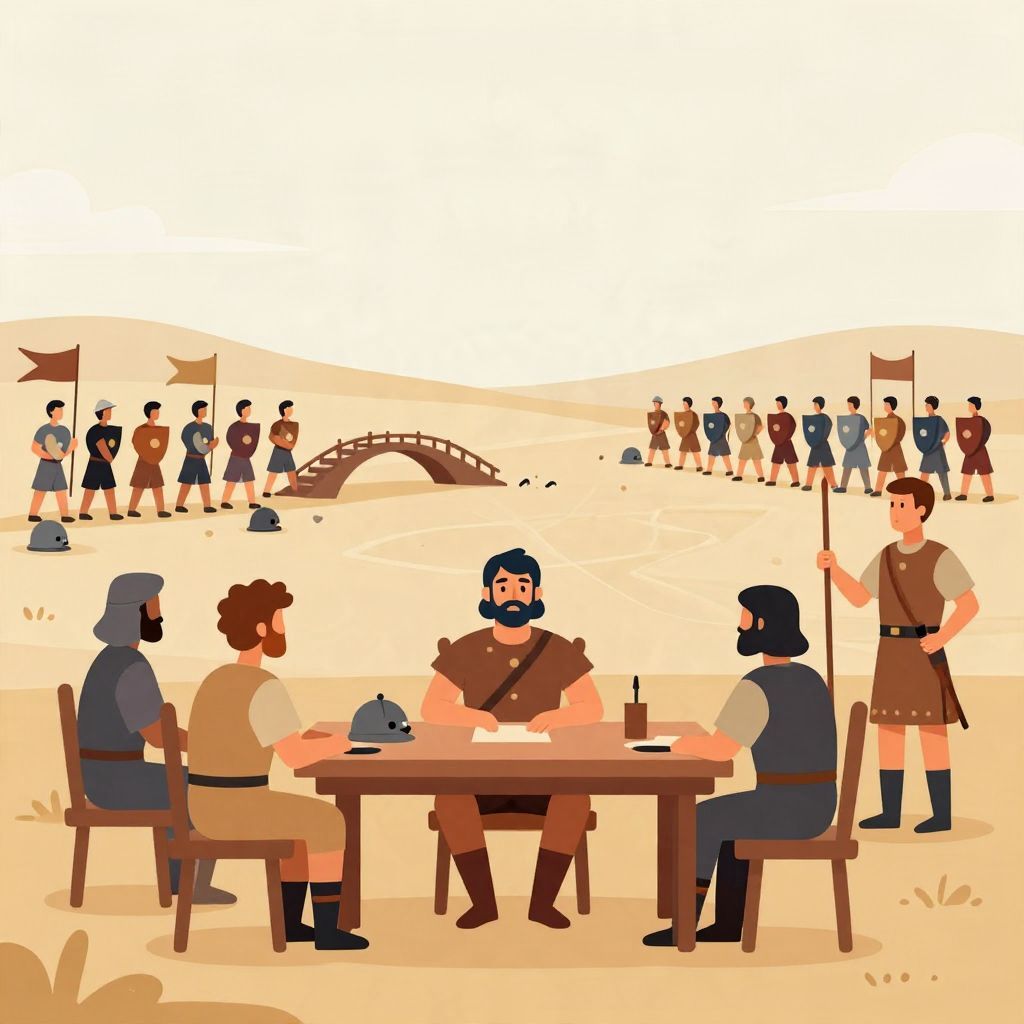
The phrase “Never Interrupt Your Enemy When He Is Making A Mistake” is one of the most famous sayings attributed to Napoleon Bonaparte. It is often repeated as a clever summary of military and political strategy, but its historical value lies less in whether Napoleon truly said it and more in what the saying reveals about his reputation, the culture of warfare in the early modern era, and the enduring appeal of sharp strategic wit.
To understand the phrase historically, we need to separate documented fact from later legend. The quote is widely associated with Napoleon, yet like many famous sayings attached to great leaders, its exact origin is uncertain. What is clear is that it reflects a long-standing strategic principle: an opponent’s error can be more useful than a direct attack, and patience can sometimes win where immediate action would only help the enemy recover.
What does “Never Interrupt Your Enemy When He Is Making A Mistake” mean in history?
The saying means that in conflict, an opponent’s poor judgment should sometimes be allowed to continue rather than corrected or interrupted too early. Historically, this idea fits military strategy, diplomacy, and politics alike: when an enemy overextends, miscalculates, or exposes weakness, restraint can be more effective than haste.
Was Napoleon really the source of the quote?
Napoleon is the figure most commonly linked to the phrase, but historians treat the attribution cautiously. There is no universally accepted contemporary source proving he said these exact words. The line likely became attached to him because it matches his image as a brilliant, unsentimental strategist and because later writers enjoyed packaging his reputation into memorable aphorisms.
Why famous quotes get attached to famous leaders
Napoleon was one of the most quoted figures in modern history, and many sayings were credited to him after the fact. This happened for several reasons. He was a prolific political and military actor, his life was intensely documented, and later generations wanted short, dramatic lines that seemed to capture his personality. In such cases, a quote can become “Napoleonic” in style even if its exact wording cannot be proven.
That does not mean the saying is meaningless. Even if the wording is apocryphal, it expresses a principle that Napoleon and many other commanders understood well: enemy mistakes create opportunities. In that sense, the phrase belongs to the broader history of strategy, not just to one man’s biography.
How Napoleon’s career shaped the meaning of the saying
Napoleon Bonaparte rose during the upheavals of the French Revolution and became First Consul in 1799, then Emperor of the French in 1804. His military successes depended on speed, concentration of force, and exploiting enemy hesitation. He repeatedly defeated larger coalitions by moving faster than his opponents could coordinate.
His campaigns also show why the idea behind the quote mattered. At times, enemy commanders made mistakes in deployment, timing, or communication, and Napoleon benefited by striking before they could recover. His victories at Austerlitz in 1805 and Jena-Auerstedt in 1806 are often cited as examples of operational brilliance against opponents who misread the battlefield. In such settings, interrupting an enemy’s blunder too soon could mean giving them a chance to regroup.
Strategy, patience, and the enemy’s self-destruction
The saying reflects a broader strategic truth: victory is not always won by constant aggression. Sometimes the best move is to observe, wait, and let the opponent commit further errors. This principle appears in military history from antiquity onward. Commanders have long known that overconfidence, poor reconnaissance, and divided command can defeat an army before the decisive battle even begins.
Napoleon’s own career also illustrates the danger of this principle when overused. He was extraordinarily effective when he could force opponents into mistakes, but his later campaigns show that an enemy’s errors are not guaranteed. In Spain, Russia, and eventually against the Sixth Coalition, his enemies adapted, learned, and sometimes refused the kind of battle he preferred. Strategy based on waiting for the other side to fail still requires careful judgment.
The historical roots of the idea behind the quote
Although the exact wording is modern, the underlying idea is ancient. Writers and commanders across history have emphasized deception, patience, and the use of an enemy’s weakness. Sun Tzu’s Art of War, for example, is often invoked in discussions of this concept, though it predates Napoleon by many centuries and comes from a different cultural and military context. The common thread is the same: war rewards intelligence as much as force.
Examples from earlier history
- Ancient warfare: Greek and Roman commanders often exploited enemy overconfidence or disorganization rather than attacking blindly.
- Medieval conflict: Feudal armies and dynastic rivals frequently won by waiting for an opponent to split forces or exhaust resources.
- Early modern state warfare: As armies grew larger and campaigns became more complex, commanders increasingly valued intelligence, timing, and logistics.
Seen in this longer history, the phrase is not really about cruelty or passivity. It is about recognizing that opponents can defeat themselves through error, and that wise leaders do not always rush to “fix” a situation that is already working in their favor.
Why the phrase became so popular
The saying became popular because it is short, memorable, and useful far beyond the battlefield. It applies to business competition, courtroom tactics, elections, and personal conflict. People remember it because it turns a complicated strategic lesson into a single vivid image: if your opponent is already making a mistake, do not rescue them from it.
Its popularity also reflects the fascination with Napoleon himself. He remains one of history’s most studied military and political figures, and anything attributed to him gains instant authority. A sharp line attached to Napoleon sounds like wisdom distilled from empire, war, and defeat. That aura of authority helped the phrase circulate widely in modern political and popular culture.
From military maxim to everyday advice
Over time, the quote moved beyond history and into general advice. In business, it can mean letting a competitor overreach. In politics, it can mean avoiding a reaction that would unite an opponent’s divided faction. In personal life, it can even mean not interrupting someone who is undermining their own argument. The historical core remains the same: patience can be a weapon.
Still, the saying should not be treated as a universal rule. Sometimes an enemy’s mistake must be interrupted because delay would cause greater harm. History shows that strategy depends on context. A blunder may be temporary, and a commander who waits too long may miss the chance to prevent disaster. The value of the phrase lies in judgment, not in rigid formula.
What historians can say with confidence
Historians can say with confidence that the phrase is strongly associated with Napoleon, but its exact authorship is uncertain. They can also say that the saying reflects a genuine strategic principle with deep historical roots. What cannot be said with confidence is that Napoleon definitely coined the exact wording as it is commonly repeated today.
This distinction matters because historical memory often turns plausible sayings into fixed facts. Napoleon’s name has become a magnet for aphorisms, and the phrase survives because it sounds exactly like something a brilliant and ruthless commander might say. That may explain its endurance more than any surviving document does.
Lasting historical influence of the saying
The enduring influence of “Never Interrupt Your Enemy When He Is Making A Mistake” lies in how it captures a timeless feature of conflict: opponents often contribute to their own defeat. Whether in war, diplomacy, or politics, success often depends on recognizing when to act and when to wait. The phrase survives because it expresses a practical truth in a memorable form.
As a historical statement, it belongs to the world of Napoleon, but as a strategic idea, it belongs to a much older tradition. The best takeaway is simple: history rarely rewards impulsive interference when an adversary is already undermining himself. If you are interested in broader questions of strategy and power, you may also enjoy exploring military strategy in history and Napoleon Bonaparte’s rise and fall.