
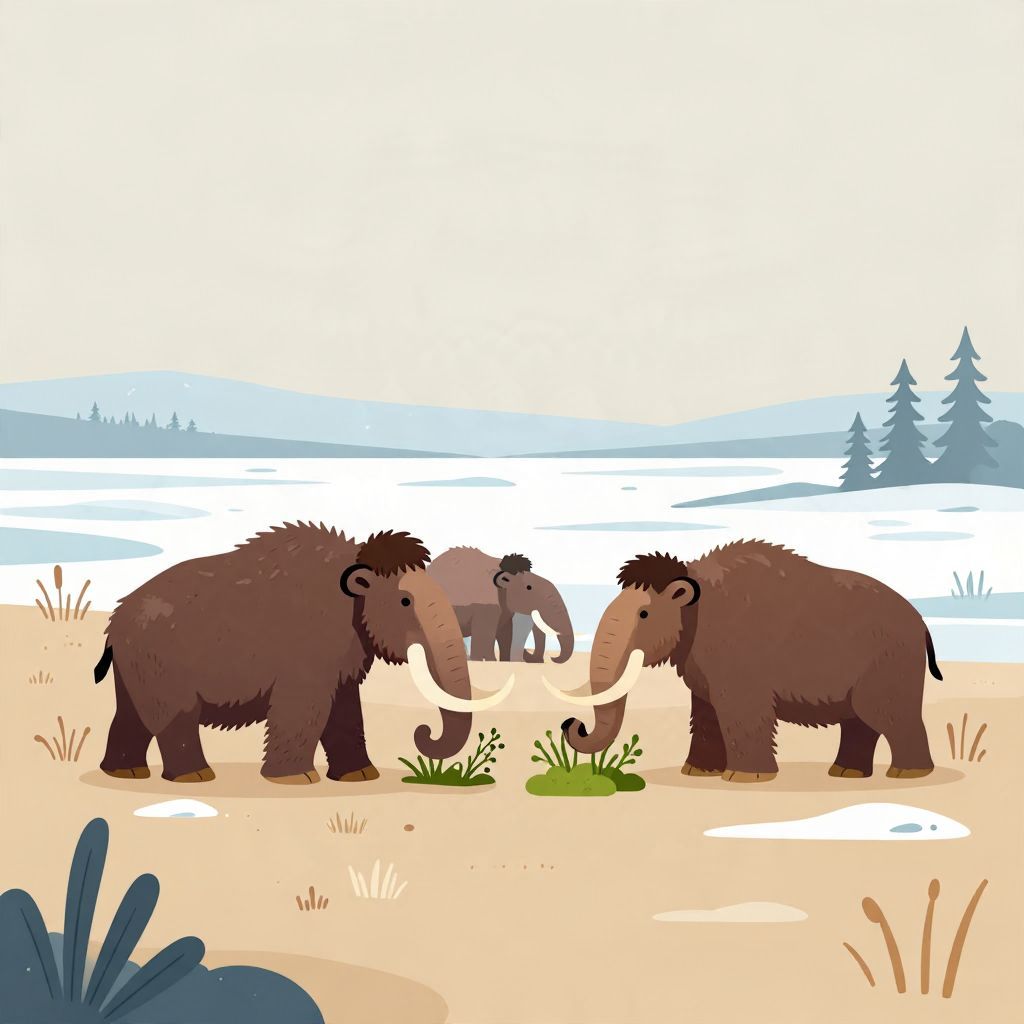
What did woolly mammoths eat? The short answer is that these Ice Age giants were mostly grazers, feeding on cold-steppe grasses, sedges, herbs, and other low-growing plants. They also browsed on shrubs, mosses, and sometimes bark when seasonal conditions or local habitats made those foods available.
Their diet mattered because it helped shape one of the most famous ecosystems of the Pleistocene: the mammoth steppe. By studying frozen carcasses, fossil teeth, stomach contents, and ancient plant remains, historians and scientists can reconstruct not just what mammoths ate, but how they survived in harsh northern environments for thousands of years.
What Do Woolly Mammoths Eat?
Woolly mammoths ate a mixed plant diet dominated by grasses, sedges, and herbs, with some shrubs, mosses, and woody plants added seasonally. They were adapted to forage on open, cold landscapes rather than forested areas. Their teeth were built for grinding tough vegetation, and their feeding habits were similar to those of modern elephants, but better suited to Ice Age tundra-steppe conditions.
The main foods in a mammoth diet
Evidence suggests woolly mammoths relied heavily on plants that grew close to the ground. These included grasses, sedges, and flowering herbs that flourished in the dry, cold grasslands of northern Eurasia and North America. In some places and seasons, they also ate willow, birch, and other shrubs, especially when grass was scarce.
- Grasses — a major staple in open steppe habitats
- Sedges — common in wet or marshy patches
- Herbs and forbs — nutrient-rich seasonal plants
- Shrubs — including willow and birch twigs or leaves
- Mosses and other low plants — likely eaten opportunistically
- Bark and woody material — a fallback food in lean periods
How scientists know what they ate
Researchers do not rely on guesswork alone. Woolly mammoth diet is reconstructed from several kinds of evidence: tooth wear, preserved stomach contents, dung, and chemical analysis of bones and tusks. Together, these sources show a flexible herbivore that fed across broad landscapes and adjusted to seasonal change.
One of the most famous discoveries is the preserved stomach contents of frozen mammoths, which have revealed plant fragments consistent with grasses, herbs, and other low vegetation. Coprolites, or fossilized dung, have also helped confirm that mammoths ate a varied mix of plants rather than a single food source.
How Their Teeth Reveal Their Diet
Mammoth teeth were large, ridged grinding surfaces designed for chewing abrasive vegetation. This is a classic adaptation for grazing animals that eat tough, gritty plants often coated with dust or ice-borne sediment. The more a mammoth chewed, the more its teeth wore down, which is why they evolved to replace molars repeatedly during life.
Grazers, not pure browsers
Woolly mammoths are usually described as grazers, but that label does not mean they ate only grass. They were mixed feeders with a strong preference for grazing. In ecology, a grazer mainly eats grass and similar low plants, while a browser focuses on leaves, twigs, and shrubs. Mammoths leaned toward grazing because open steppe plants were abundant and accessible.
Their skull and jaw structure also supported this lifestyle. The high-crowned molars had many enamel ridges, which helped process fibrous plants efficiently. This dental design was especially useful in environments where food could be tough, dry, or contaminated with grit from windblown sediments.
The Mammoth Steppe and Its Seasonal Food Supply
Woolly mammoths lived across the mammoth steppe, a vast Ice Age ecosystem stretching across parts of Europe, Asia, and North America. Despite the name, this was not a frozen wasteland. It was a productive, cold, dry grassland with enough plant life to support large herbivores, including mammoths, bison, horses, and woolly rhinoceroses.
What they ate in summer and winter
Seasonal change shaped mammoth feeding. In warmer months, they likely had access to more grasses, herbs, and fresh growth. During winter, when snow covered the ground and plant growth slowed, they may have depended more on sedges, shrubs, bark, and dried vegetation exposed above the snowpack or uncovered by wind.
This flexibility was important for survival. Mammoths were enormous animals with high energy needs, so they needed to find enough food even in difficult conditions. Their tusks may have helped them sweep away snow to reach buried plants, much as modern elephants use their trunks and tusks to forage.
Why open landscapes mattered
Woolly mammoths were especially successful in open terrain because grasses and sedges grow well in cold, dry environments. Dense forests, by contrast, offered less of the food they preferred. As climate shifted and forests expanded after the last Ice Age, mammoth habitat shrank, reducing the availability of their favored plants.
Did Woolly Mammoths Eat Meat?
No credible evidence shows that woolly mammoths were meat-eaters. They were herbivores, and their anatomy fits a plant-based diet. Popular stories sometimes imagine Ice Age animals as more aggressive or omnivorous than they were, but mammoths were not predators or scavengers in any meaningful sense.
That said, herbivores sometimes ingest small amounts of animal matter accidentally while feeding, especially if it is mixed into soil or water. This does not make them meat-eaters. The historical and scientific record is clear that woolly mammoths were plant-eating mammals adapted to a grazing lifestyle.
What Their Diet Tells Us About Ice Age Life
Understanding what woolly mammoths ate helps explain how Ice Age ecosystems worked. Mammoths were not isolated creatures; they were part of a large network of plants, herbivores, predators, and climate conditions. Their diet shows that the far north once supported rich grassland habitats very different from the tundra seen there today.
Ecological impact
Mammoths likely influenced the landscapes they lived in. By trampling vegetation, dispersing seeds, and grazing heavily, they may have helped keep some areas open and prevented forests from spreading too quickly. This idea is part of a broader scholarly discussion about “ecosystem engineering,” the way large animals can shape their environments.
Not every detail is settled, and scientists continue to debate how much mammoths actively maintained the mammoth steppe versus simply thriving within it. Still, there is broad agreement that their feeding habits were important to the ecology of Ice Age northern Eurasia and North America.
Diet and extinction
The mammoth’s diet also helps explain why it disappeared. As the climate warmed near the end of the last Ice Age, grasslands contracted and wetter, forested, or shrub-dominated landscapes spread. At the same time, human hunting and environmental pressures likely added stress in some regions. Reduced access to preferred foods would have made survival harder for already vulnerable populations.
Isolated mammoth groups survived on islands long after most populations vanished, but they too eventually disappeared. Their extinction was not caused by diet alone, yet changing vegetation was a major part of the larger story.
How Woolly Mammoths Compare with Modern Elephants
Woolly mammoths were close relatives of modern elephants, and their feeding behavior was broadly similar. Like elephants, they used trunks to gather food and had large appetites. But woolly mammoths were adapted to colder climates and more open habitats, so their diet leaned more heavily toward grasses and steppe plants than the diets of many living elephant species.
Modern elephants often browse more than mammoths did, especially in wooded or savanna environments. This comparison shows how closely diet and habitat are linked in evolutionary history. A species’ teeth, body size, and feeding habits all reflect the landscape it evolved to inhabit.
Key Facts About Woolly Mammoth Food
- Main diet: grasses, sedges, and herbs
- Secondary foods: shrubs, mosses, bark, and woody twigs
- Feeding style: mostly grazing, with some browsing
- Habitat: cold, open mammoth steppe environments
- Evidence base: teeth, dung, stomach contents, and chemical analysis
- Not meat-eaters: woolly mammoths were herbivores
The Historical Significance of Their Diet
So, what do woolly mammoths eat? They ate the plants of Ice Age grasslands, and that simple answer opens a window into a vanished world. Their diet reveals how animals adapted to extreme climates, how ancient ecosystems functioned, and why environmental change could be so destructive to large mammals.
If you want to explore the broader story, the next step is to look at how climate change, habitat loss, and human activity contributed to their disappearance in how woolly mammoths went extinct. Together, diet and extinction show why these iconic animals remain central to Ice Age history.