
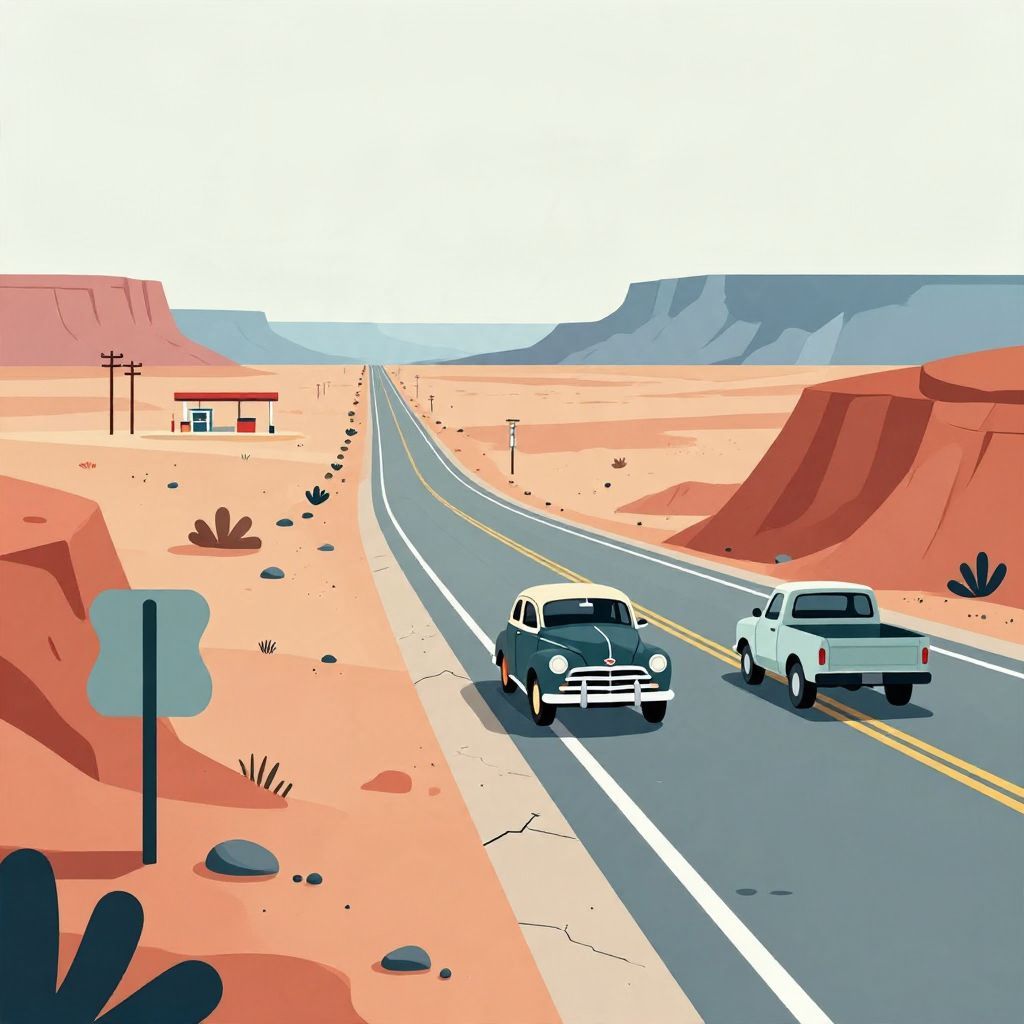
Why is Route 66 dangerous? The short historical answer is that it was built for an earlier era of travel and later became a high-speed, long-distance highway crowded with fast cars, heavy trucks, rural intersections, and aging infrastructure. Its danger was never just one thing; it came from the way the road evolved over time.
As Route 66 became an American icon, its original design, uneven maintenance, and changing traffic patterns made accidents more likely. Understanding its risks means looking at the history of highway building, automobile travel, and the transformation of the American West and Midwest in the 20th century.
Why Is Route 66 Dangerous?
Route 66 was dangerous because much of it was designed before modern highway safety standards existed. It often had narrow lanes, sharp curves, poor lighting, limited shoulders, and many at-grade crossings where local roads met the highway. As traffic increased after World War II, these older roads were pushed beyond what they were built to handle.
The Historical Origins of Route 66
Route 66 was established in 1926 as part of the U.S. numbered highway system, linking Chicago to Santa Monica. It was not originally a superhighway but a patchwork of preexisting roads, many of them rural or lightly improved. In the early automobile age, that was normal. Safety expectations were much lower than they are today.
A road built for a different America
When Route 66 emerged, American motorists were still adapting to cars as a mass technology. Roads were often shared with farm wagons, livestock, pedestrians, and local traffic. Many stretches were paved only gradually, and some remained gravel or dirt for years. The highway’s early form reflected a country that was still learning how to build for automobiles at scale.
Why the original design mattered
Unlike later interstates, Route 66 was not built as a fully controlled-access highway. It passed directly through towns, crossed rail lines, and connected to local streets. That made it convenient for commerce, but it also created conflict points: driveways, intersections, roadside businesses, and sudden turns. Those features became more dangerous as vehicle speeds rose.
How Road Design Made Route 66 Risky
Many of Route 66’s hazards came from physical design. The road often followed older alignments that wound through hills, deserts, and small towns. Curves, blind rises, narrow bridges, and uneven pavement were common. In bad weather, or at night, these conditions could be especially dangerous for drivers unfamiliar with the route.
Narrow lanes and limited shoulders
Early highway construction did not always include wide lanes or paved shoulders. If a driver drifted, there was often little room to recover. On some sections, the edge of the road dropped off abruptly into a ditch or embankment. A flat tire or mechanical failure could quickly become a serious incident.
At-grade crossings and local traffic
Route 66 frequently intersected with railroads and local roads at the same level. That meant drivers had to watch for trains, cross traffic, and turning vehicles. In towns, pedestrians and parked cars added more hazards. These were manageable at lower speeds, but as cars became faster and more numerous, the same design became much riskier.
Weather and geography
The highway crossed very different landscapes, from the humid Midwest to the deserts of the Southwest. Rain, fog, ice, dust, flash flooding, and extreme heat all posed problems. A road that seemed straightforward in one season could become treacherous in another, especially before modern drainage, signage, and lighting were common.
Why Traffic Became More Dangerous After World War II
Route 66 grew more dangerous as American driving changed after 1945. Vehicle ownership surged, trucks became larger and heavier, and families began taking long-distance road trips in greater numbers. The highway, however, remained a two-lane road in many places, so traffic congestion and passing risks increased sharply.
Speed and volume outgrew the road
By the mid-20th century, cars were faster and more reliable than the vehicles Route 66 had originally served. Drivers traveled farther and expected smoother, quicker journeys. But the road still had curves, crossroads, and town centers that forced sudden slowdowns. Speed differentials between vehicles made rear-end collisions and passing accidents more likely.
Truck traffic added strain
Commercial trucking expanded after the war, and Route 66 became an important freight corridor before interstate highways redirected traffic. Large trucks on narrow roads created hazards for smaller vehicles, especially on hills and bends. Passing a truck on a two-lane highway could be difficult and dangerous, particularly where sightlines were poor.
Driver fatigue on long distances
Route 66 stretched for roughly 2,400 miles, depending on the era and alignment. Long, monotonous stretches could lead to fatigue, especially before air conditioning, modern rest areas, and interstate-style services became common. Fatigue slowed reaction times and made drivers more vulnerable to mistakes, particularly at night.
Town Traffic, Roadside Businesses, and Human Risk
One reason Route 66 became famous was its roadside culture: motels, diners, gas stations, and tourist stops lined the road. That commercial life was part of its charm, but it also made the highway more complicated and less predictable. Cars turned in and out of businesses constantly, often without the separation found on later roads.
The “main street” problem
In many towns, Route 66 functioned as the main street. Local residents used it for everyday errands, children crossed it, and businesses depended on direct access. This created a mixed-use environment where through-traffic and local traffic competed for space. The result was convenience with a higher risk of collisions.
Pedestrians and roadside stops
Unlike modern limited-access highways, Route 66 invited people to stop frequently. Travelers pulled over for food, repairs, or lodging, and pedestrians often moved close to traffic. In the pre-freeway era, this was normal. But as traffic speeds increased, the same roadside pattern became more hazardous.
Maintenance Problems and Uneven Standards
Route 66 was never a single uniform road. It passed through multiple states, counties, and local jurisdictions, and standards varied widely. Some sections were improved early, while others lagged behind for years. That patchwork history helps explain why the road could feel safe in one place and dangerous in another.
Patchwork paving and repairs
Because Route 66 reused older roads, its surface quality often depended on local funding and state priorities. Potholes, washboarding, and rough pavement could damage vehicles or cause drivers to lose control. In the early decades of motoring, a bad road surface was more than an inconvenience; it could be a serious safety issue.
Bridges and bottlenecks
Some bridges along Route 66 were too narrow for modern traffic, and many were built before current engineering standards. Bottlenecks forced vehicles into tighter spaces, especially where the route crossed rivers or ran through older town centers. Narrow bridges and sudden lane shifts created obvious hazards, especially at night or in poor weather.
The Interstate Highway System Changed the Meaning of Danger
The danger of Route 66 also changed after the Federal-Aid Highway Act of 1956, which launched the Interstate Highway System. As new interstates opened, much of Route 66 was bypassed or absorbed into newer roads. Ironically, the safer highways made Route 66 seem more dangerous by comparison, because traffic was diverted away from the older route’s mixed-use design.
Bypassed towns and abandoned segments
When interstates replaced Route 66 as the main cross-country corridor, many businesses lost traffic. Some stretches were downgraded, rerouted, or left with less maintenance. Older segments could become isolated, underused, or poorly marked. On these remnants, hazards increased because drivers might not expect the road’s condition to change so abruptly.
Fewer services, more uncertainty
As the interstate system expanded, gas stations, repair shops, and motels moved to newer exits. Travelers on surviving pieces of Route 66 could encounter long gaps between services. In remote areas, that meant a breakdown or wrong turn could become more serious. The road’s danger was partly physical and partly logistical.
Popular Memory Versus Historical Reality
Route 66 is often remembered with nostalgia, and that memory is not wrong. It was a gateway to migration, tourism, and postwar mobility. But nostalgia can soften the reality that the road was also demanding and sometimes unsafe. For many drivers, especially before modern car safety features, it was a challenging journey rather than a carefree one.
The myth of the “easy open road”
Popular culture sometimes treats old highways as simpler and safer than modern roads. In fact, early motoring was often more dangerous because roads lacked guardrails, standardized signs, divided lanes, and reliable lighting. Route 66 was beloved precisely because it was adventurous, but that adventure included real risk.
Why the road still attracts travelers
Today, people drive Route 66 for its history, scenery, and symbolism. Many sections have been preserved as historic byways, and some are safer now than they were in the mid-20th century. Yet the road’s reputation for danger remains part of its identity because it reflects the era when American travel was less regulated and far more exposed to uncertainty.
What Route 66 Teaches Us About Transportation History
Route 66 is dangerous in historical terms because it shows how infrastructure can become unsafe when technology, traffic, and expectations change faster than the road itself. A highway built for early automobiles could not easily cope with postwar speeds, mass tourism, and heavy trucking. The road’s risks reveal the broader history of American modernization.
From local road to national symbol
Route 66 began as a practical transportation corridor and became a cultural icon. Its danger was part of that story: it was a road of movement, commerce, migration, and opportunity, but also one shaped by imperfect engineering and rapid change. That tension helps explain why it holds such a powerful place in American memory.
In the end, Route 66 was dangerous because it belonged to an earlier transportation world that later traffic outgrew. Its narrow lanes, town crossings, rough surfaces, and aging bridges made it risky long before nostalgia turned it into legend. For more on the era that created it, see related history articles on the Interstate Highway System and the history of American road travel.