
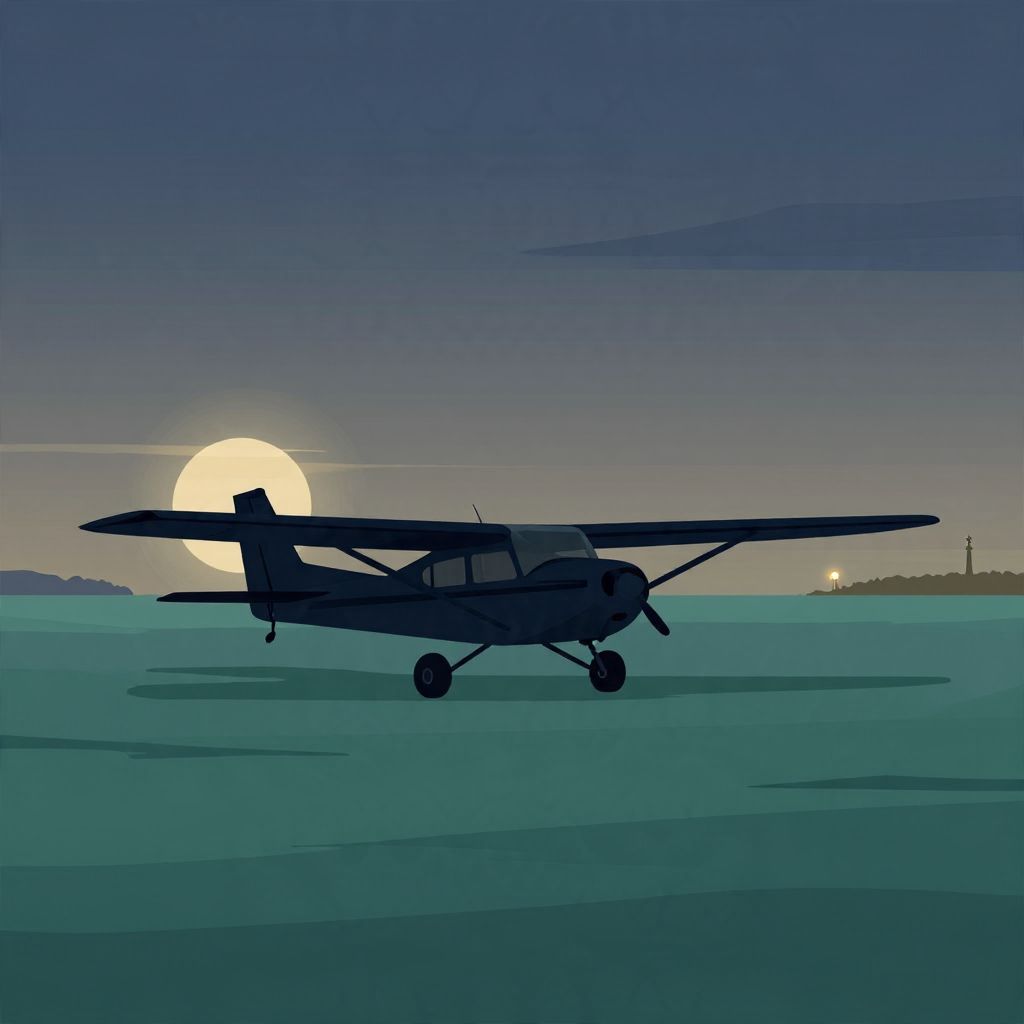
Why did JFK Jr. plane crash? The short answer is that John F. Kennedy Jr. died in a nighttime aircraft accident on July 16, 1999, when the small plane he was piloting went out over the Atlantic and crashed near Martha’s Vineyard. Investigators concluded that the most likely cause was pilot disorientation in poor visibility, a tragic example of how demanding night flying can be even for a capable and experienced person.
The crash became one of the most widely discussed aviation tragedies of the late 20th century because of Kennedy’s fame, the weather conditions, and the uncertainty that surrounded the final minutes of the flight. Understanding what happened requires looking at both the immediate flight conditions and the broader context of private aviation safety.
Why did JFK Jr. plane crash?
JFK Jr.’s plane likely crashed because he became spatially disoriented while flying at night over water in haze and darkness, losing control of the aircraft before it descended into the Atlantic. The official investigation found no evidence that sabotage or mechanical failure caused the accident. The key factors were the difficulty of visual navigation, the absence of a clear horizon, and the challenge of flying a light aircraft under those conditions.
What happened on the night of July 16, 1999?
On that evening, Kennedy flew a Piper Saratoga from the New Jersey area toward Martha’s Vineyard, with his wife, Carolyn Bessette Kennedy, and her sister, Lauren Bessette, as passengers. The flight took place after sunset. The weather was not stormy, but visibility was poor enough to make visual flying difficult, especially over open water where there are few ground lights or landmarks.
The flight path and final moments
As the aircraft approached the island area, it did not complete a normal landing. Instead, it descended into the ocean west of Martha’s Vineyard. Search and rescue teams later recovered the wreckage and the bodies. The accident shocked the public not only because of the Kennedy name, but also because the crash seemed sudden and inexplicable to many observers at first.
What the investigation found
The National Transportation Safety Board (NTSB) investigated the crash and concluded that the probable cause was the pilot’s failure to maintain control of the aircraft during a descent over water at night, likely because of spatial disorientation. In simple terms, Kennedy may have lost his sense of where the plane was relative to the horizon and the sea, a hazard that can affect even trained pilots when outside visual cues disappear.
Spatial disorientation explained
Spatial disorientation happens when a pilot cannot accurately judge the aircraft’s position, altitude, or attitude because the senses are being misled. At night, especially over dark water, the inner ear can create false impressions of level flight or banking. If a pilot relies too much on those sensations instead of instruments, the aircraft can gradually turn, descend, or bank without the pilot realizing it.
Why this was especially dangerous that night
- Night conditions reduced outside visual reference points.
- Haze and darkness made the horizon difficult to see.
- Flying over water removed the usual visual cues from roads, buildings, and terrain.
- Limited instrument-flying experience increased the risk if the pilot had to rely entirely on cockpit instruments.
Was mechanical failure involved?
There is no strong evidence that a mechanical failure caused the crash. The aircraft was not found to have a catastrophic defect that would explain the accident on its own. That matters because aviation accidents often involve multiple contributing factors, but in this case the evidence pointed more strongly to human factors than to a broken airplane.
Why investigators focused on the pilot, not the plane
Investigators examined the wreckage, flight conditions, and the aircraft’s performance. Their conclusion reflected the pattern of the descent and the absence of signs that the plane had suffered an obvious in-flight structural failure. In aviation history, that distinction is important: many crashes are not caused by one dramatic event, but by a chain of decisions, conditions, and limitations.
Who was JFK Jr., and why did the crash draw so much attention?
John F. Kennedy Jr. was the son of President John F. Kennedy and Jacqueline Kennedy Onassis. By 1999, he was one of the most recognizable public figures in the United States. He had worked as a lawyer, founded the magazine George, and remained a subject of intense media attention throughout his adult life.
The Kennedy legacy and public fascination
The Kennedy family had long occupied a unique place in American political memory, shaped by power, tragedy, and public symbolism. JFK Jr. was often seen as the heir to that legacy, even though he did not hold elected office. His death therefore felt to many Americans like another chapter in a family history already marked by loss.
What role did weather and environment play?
The weather did not need to be extreme to be dangerous. In aviation, a clear-looking night can still be risky if the horizon is hard to distinguish. Over the ocean, the absence of lights below can make it difficult to tell whether the aircraft is level. This is one reason night flying over water is considered challenging, especially for pilots who are not routinely flying by instruments alone.
Why “good enough” weather can still be unsafe
People sometimes assume that only storms cause fatal accidents. In reality, aviation accidents often happen in conditions that seem manageable on the ground but become hazardous in the air. A dark, hazy night can remove the visual cues a pilot depends on. That is why training, currency, and instrument proficiency matter so much in private aviation.
Was JFK Jr. an experienced pilot?
He was a licensed pilot and had flown before, but the crash highlighted the difference between being licensed and being fully prepared for difficult night conditions. Aviation requires regular practice, especially for instrument skills. A pilot may be technically qualified yet still vulnerable if flying in conditions that exceed recent experience or comfort.
Experience versus proficiency
This distinction is central to understanding the accident. Many pilots can fly safely in daylight and good weather, but night flying over water demands sharper instrument discipline. The crash became a reminder that aviation safety depends not only on credentials, but on current skill, judgment, and respect for changing conditions.
What were the consequences of the crash?
The crash killed all three people on board and prompted renewed public discussion about private aviation safety. It also deepened the sense of tragedy surrounding the Kennedy family. In the broader aviation world, the accident reinforced long-standing lessons about spatial disorientation, night operations, and the importance of instrument training.
Public memory and historical significance
Because JFK Jr. was so famous, the accident entered public memory almost immediately. Yet historically, it is best understood not as a mystery or conspiracy, but as an aviation accident shaped by known risks. The facts point toward a tragic combination of darkness, water, and loss of orientation rather than anything extraordinary or hidden.
Why the crash still matters today
The reason people still ask “Why did JFK Jr plane crash?” is that the event sits at the intersection of celebrity, political history, and aviation safety. It is a reminder that even highly public figures are subject to the same physical limits and technical dangers as anyone else in a small aircraft. The crash remains a case study in how quickly night flying can turn fatal when visual cues disappear.
In the end, JFK Jr.’s plane crash was most likely caused by pilot disorientation during a nighttime flight over water, not by a dramatic single failure. The tragedy endures because it was both deeply personal and historically visible, a moment that connected the Kennedy family story to the practical realities of aviation risk. For readers interested in the wider context of the Kennedy era, see also what car JFK was shot in and what happened in 1961.