
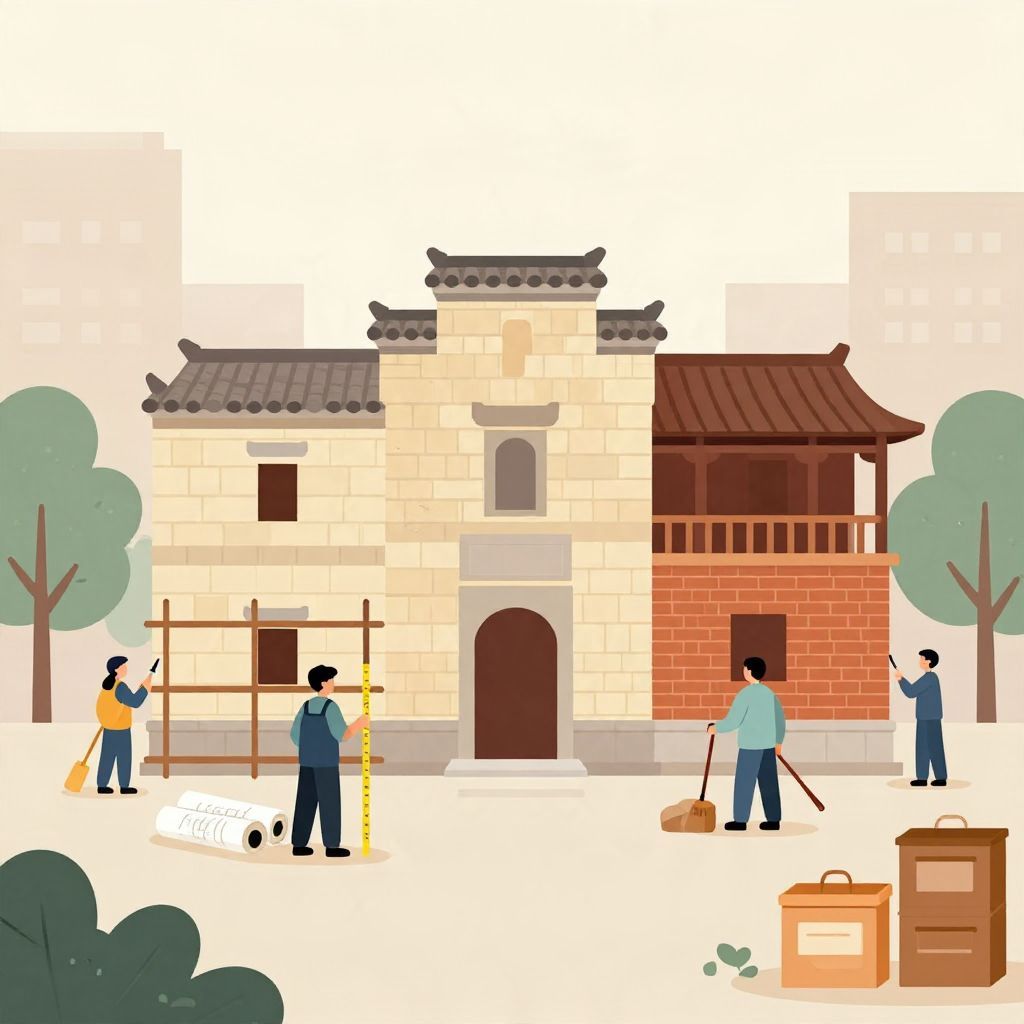
Cultural preservation architecture is the practice of protecting, restoring, adapting, and sometimes reconstructing buildings and places that carry historical, artistic, religious, or social meaning. It is not just about saving old structures; it is about preserving the evidence of how people lived, worshipped, worked, governed, and remembered their past.
The field grew from changing ideas about heritage, national identity, urban planning, and archaeology, especially in the 19th and 20th centuries. Today it sits at the intersection of history, architecture, conservation science, and public memory.
What Is Cultural Preservation Architecture?
Cultural preservation architecture refers to the design, repair, conservation, and adaptive reuse of buildings and sites considered culturally significant. Its goal is to keep historical character and evidence intact while allowing places to survive, function, and remain meaningful for future generations.
In practice, it can mean stabilizing a medieval church, restoring a colonial house, conserving an industrial warehouse, or adapting a historic theater for modern use. The central idea is not simply to make a building look old, but to preserve its historical value, materials, setting, and story.
Background: Why Societies Preserve Buildings
People have long valued monuments, temples, tombs, and sacred places, but systematic preservation is a more recent historical development. Earlier societies often repaired or reused older structures, yet they did not always preserve them for their antiquity alone. Modern preservation emerged when people began to see historic buildings as evidence of collective identity, memory, and artistic achievement.
From reuse to preservation
For much of history, old buildings were reused for practical reasons. Stones from Roman ruins were built into later churches and homes; palaces were remodeled to suit new rulers; temples were converted to different religious uses. This was not preservation in the modern sense, but it did keep parts of the past physically present, even if altered.
The rise of heritage consciousness
In Europe, the late 18th and 19th centuries saw growing interest in ruins, medieval architecture, and national history. Romanticism encouraged admiration for the past, while archaeology and art history helped people classify and date buildings. At the same time, industrialization and urban expansion threatened older neighborhoods, making preservation feel urgent rather than optional.
How Did Cultural Preservation Architecture Develop Historically?
The modern preservation movement developed gradually, first through elite interest in monuments and later through broader public policy. Its history reflects changing attitudes toward nationhood, religion, urban change, and the meaning of authenticity.
Early conservation ideas
During the 19th century, some scholars and architects argued for careful repair of historic buildings rather than complete rebuilding. In France, Eugène Viollet-le-Duc became famous for restoration projects that often aimed to complete or idealize medieval structures. His approach was influential, but also controversial, because it sometimes involved creative reconstruction rather than strict historical accuracy.
The anti-restoration principle
Other thinkers took a more cautious view. In Britain, John Ruskin criticized aggressive restoration, arguing that it could erase the marks of time and craftsmanship. Later, William Morris and the Society for the Protection of Ancient Buildings promoted repair over replacement. These debates shaped a lasting tension in preservation: should a building be returned to an imagined original state, or should its later history be respected too?
Preservation becomes public policy
By the late 19th and early 20th centuries, governments began creating laws and agencies to protect historic sites. This shift reflected nationalism, tourism, scholarship, and public education. After the destruction of the two world wars, preservation became even more important, not only for individual monuments but for entire historic districts and landscapes.
Key Facts About Cultural Preservation Architecture
Several ideas define the field today. These principles are widely used, though the exact balance between them can vary by country, religion, climate, and local law.
- Authenticity: Preserving original materials, design, workmanship, and setting as much as possible.
- Integrity: Protecting the wholeness and historical context of a site, not just isolated features.
- Minimal intervention: Making only the changes needed for safety, stability, or use.
- Reversibility: Using methods that can be removed or changed later if better information becomes available.
- Adaptive reuse: Giving historic buildings new functions while preserving their character.
- Documentation: Recording a structure before, during, and after work so future scholars can understand what changed.
Preservation versus restoration versus reconstruction
These terms are related but not identical. Preservation aims to maintain existing fabric and prevent further loss. Restoration attempts to return a building to a known earlier state by removing later additions or repairing missing parts. Reconstruction rebuilds a lost structure, often based on evidence, but sometimes with some degree of interpretation. Each approach has advantages and risks.
What Kinds of Places Are Included?
Cultural preservation architecture is not limited to famous palaces or cathedrals. It can apply to many kinds of built heritage, including ordinary places that reveal everyday history.
Examples of preserved cultural sites
- Religious buildings such as churches, mosques, temples, synagogues, and shrines
- Historic homes and neighborhoods
- Palaces, forts, castles, and government buildings
- Archaeological remains and ruins
- Industrial structures such as mills, factories, and rail stations
- Bridges, marketplaces, schools, and civic halls
- Landscapes and sacred routes connected to cultural practice
In many cases, the most historically valuable places are not grand monuments but ordinary buildings that show how communities lived over time. This is especially important in studying social history, migration, trade, and urban development.
Why Is Cultural Preservation Architecture Important?
Preservation matters because buildings are historical documents in physical form. They preserve information about materials, labor, technology, belief systems, class, and power. Once destroyed, much of that evidence is lost forever.
Historical value
Historic buildings help historians and archaeologists understand how societies changed. Construction methods can reveal trade networks, local resources, and technological skill. Layouts can show family structure, religious practice, or political authority. Even later repairs can be historically meaningful because they reflect changing tastes and needs.
Cultural identity and memory
Communities often attach meaning to places because they connect people to ancestors, traditions, and shared experiences. A preserved building can become a site of remembrance, pilgrimage, civic pride, or education. At the same time, heritage can be contested: one group’s symbol may be another group’s reminder of conquest, exclusion, or loss.
Economic and social impact
Preserved districts can support tourism, local business, and neighborhood revitalization. But preservation can also raise difficult questions about cost, ownership, displacement, and who gets to define what counts as heritage. A historically protected area may become more valuable, but also less accessible to longtime residents.
The Challenges of Preserving Cultural Architecture
Preservation is never a purely technical task. It involves choices about evidence, ethics, money, and power. Some of the hardest problems arise when historic value conflicts with modern use or with competing historical narratives.
Damage, decay, and climate
Old buildings face water damage, fire, pollution, earthquakes, insects, and general wear. Climate change has added new pressures, including stronger storms, flooding, heat, and humidity shifts. Preservation teams must often balance historical accuracy with structural safety and long-term resilience.
Tourism and overuse
Popular heritage sites can suffer from foot traffic, vibration, air pollution, and overcrowding. In some cases, the very success of preservation creates new risks. Managing visitors while protecting fragile materials is a major concern for museums, religious institutions, and local governments.
Authenticity and reconstruction debates
Scholars do not always agree on how much rebuilding is appropriate. If a structure has been heavily damaged, should it be reconstructed to resemble its former appearance, or should the ruin itself be preserved as evidence of loss? There is no single answer. The decision usually depends on documentation, community values, and the purpose of the site.
How Preservation Architecture Works Today
Modern cultural preservation architecture brings together historians, architects, engineers, conservators, archaeologists, and local communities. The process usually begins with research and documentation, followed by assessment, planning, and carefully phased work.
- Historical research: Gather records, photographs, maps, oral histories, and material evidence.
- Condition assessment: Identify structural problems, decay, and previous alterations.
- Conservation plan: Decide what should be preserved, repaired, stabilized, or adapted.
- Intervention: Carry out repairs using compatible materials and methods.
- Monitoring: Track the building over time to prevent future damage.
Adaptive reuse in the modern era
One of the most important modern strategies is adaptive reuse. A historic factory might become apartments, a train station might become a museum, or a warehouse might become a cultural center. This approach can save buildings from demolition while keeping them active in daily life. It is often more sustainable than building anew, though it requires careful design to avoid erasing historic character.
Global Perspectives on Cultural Preservation
Although preservation ideas developed strongly in Europe and North America, every region has its own traditions of caring for sacred and historic places. In many parts of Asia, Africa, the Middle East, and the Americas, preservation has been shaped by colonialism, war, religious change, and indigenous rights. The modern field increasingly recognizes that heritage is not only architectural; it is also social, spiritual, and linguistic.
Community and living heritage
Some places are preserved not because they are frozen in time, but because they remain active in cultural life. A temple, shrine, market, or neighborhood may continue to evolve while still carrying deep historical meaning. This is often called living heritage, and it challenges the older idea that preservation must always keep a site unchanged.
Conclusion: The Historical Meaning of Preservation
Cultural preservation architecture is the historical practice of keeping meaningful buildings and places alive without erasing their past. It emerged from changing ideas about history, identity, and loss, and it remains a field of difficult choices rather than simple rules. At its best, it helps societies remember where they came from while making room for the future. For related context, see what a cultural script is and what sequent occupance means.