
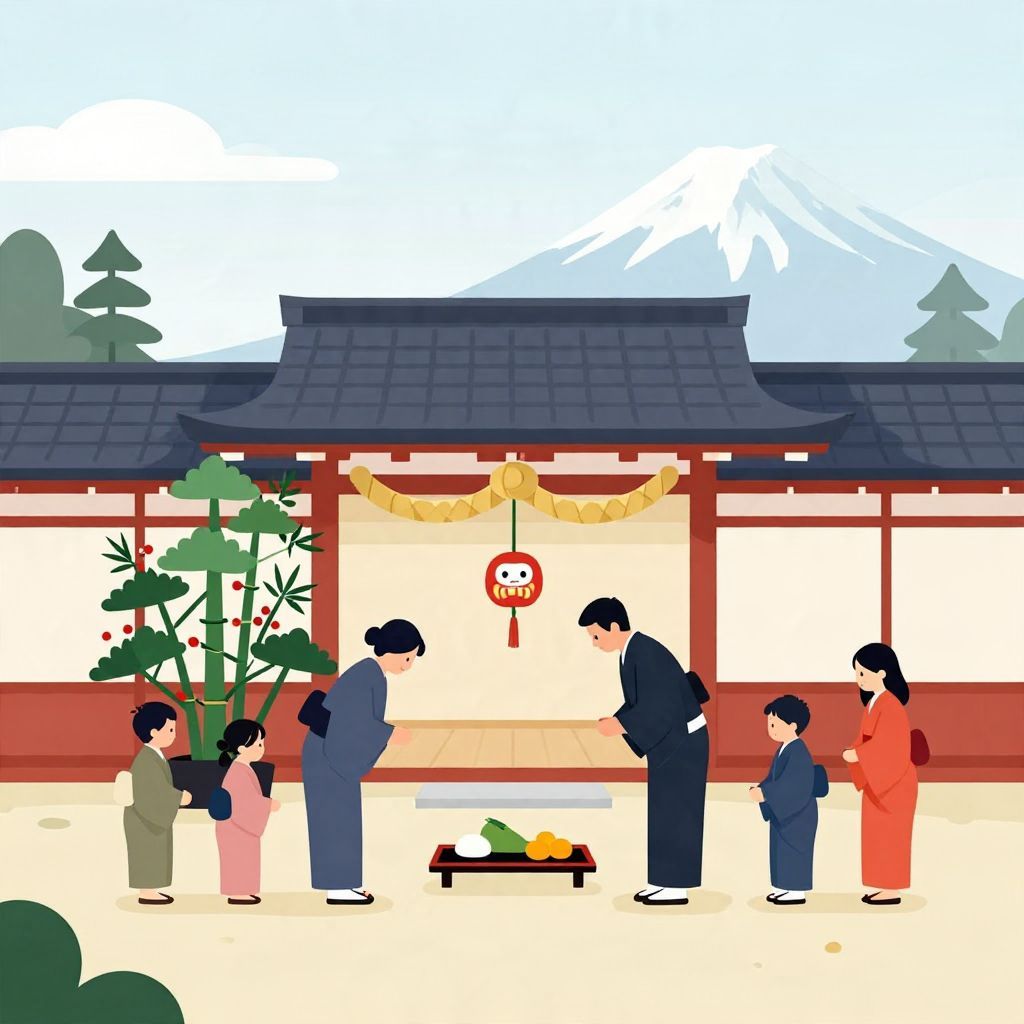
When is Japanese New Year? In modern Japan, New Year’s Day is celebrated on January 1, following the Gregorian calendar. But historically, the answer was different: for centuries, Japan observed the New Year according to the lunisolar calendar, so the date usually fell in late winter or early spring by today’s calendar.
The story of Japanese New Year is not just about a holiday date. It reflects how Japan changed its calendar, how the state modernized in the Meiji era, and how older seasonal customs survived even after the official date shifted.
When Is Japanese New Year?
Today, Japanese New Year is celebrated on January 1. The holiday period usually begins at the end of December and continues through the first few days of January. Historically, however, Japan used a lunisolar calendar, so New Year’s Day moved each year and often arrived in what we would now call late January or February.
The Historical Answer: Japan’s New Year Changed Over Time
Before 1873: New Year followed the lunisolar calendar
For much of Japanese history, the New Year was tied to the traditional East Asian lunisolar calendar, which aligned months with the moon and adjusted for the solar year. That meant the first day of the year did not fall on a fixed date in the modern calendar. Instead, it was based on astronomical cycles and seasonal timing.
Because of this, the traditional New Year, called oshōgatsu, usually occurred in late winter. In modern terms, it often fell somewhere between late January and mid-February, though the exact date varied from year to year.
After 1873: Japan adopted January 1
In 1873, during the Meiji era, Japan officially adopted the Gregorian calendar for civil use. From that point on, New Year’s Day became January 1. This was part of a broader program of modernization and international alignment, as the Meiji government sought to present Japan as a modern nation-state on equal footing with Western powers.
The change did not erase older customs. Many traditions associated with the lunar New Year were simply transferred to the January holiday, which is why Japanese New Year celebrations still carry strong seasonal and symbolic meanings.
Why Did Japan Change the New Year Date?
Modernization and state reform in the Meiji era
The calendar reform of 1873 was not a small administrative adjustment. It was part of the Meiji government’s effort to reorganize society after the end of the Tokugawa shogunate. Japan was rapidly adopting new systems for taxation, military organization, education, communication, and diplomacy. A fixed solar calendar made administration simpler and brought Japan into closer alignment with international practice.
There was also a practical financial reason. Switching to the Gregorian calendar helped the government manage salaries, taxes, and state accounting in a more standardized way. In a period of intense reform, the calendar was one of many tools used to modernize the country.
Influence from the West, but not simple imitation
It is easy to describe the calendar change as a straightforward borrowing from the West, but that is only part of the story. Japan’s leaders were making a strategic choice. They were not simply copying Europe; they were selecting institutions that could strengthen the state and signal sovereignty in a world dominated by imperial powers.
At the same time, the reform created a tension between official modern timekeeping and older seasonal culture. The result was a hybrid tradition: a Western-style calendar date with many older Japanese customs attached to it.
What Is Japanese New Year Called?
Oshōgatsu and its meaning
The Japanese word for New Year is oshōgatsu (お正月). It refers not only to New Year’s Day itself but also to the holiday season and the special customs associated with it. In everyday usage, it can mean the entire New Year period, including family gatherings, shrine visits, special foods, and time off from work or school.
The term carries a sense of renewal and respect. New Year in Japan is traditionally the most important annual holiday, a time for purification, gratitude, and fresh beginnings.
New Year as a seasonal and spiritual moment
Historically, the New Year was more than a date on a calendar. It was a moment when people prepared to welcome a new cycle of life. Homes were cleaned, offerings were made, and symbolic decorations were displayed to invite good fortune. The holiday combined practical seasonal preparation with religious and cultural meaning.
How Japanese New Year Is Celebrated Today
Common modern customs
Although the official date is now January 1, many customs preserve older ideas about welcoming a new year with purity and good fortune. Today, families often celebrate by gathering at home, eating special foods, and visiting shrines or temples.
- Hatsumōde: the first shrine or temple visit of the year
- Osechi ryōri: traditional New Year foods served in decorative boxes
- Otoshidama: money gifts given to children
- Kadomatsu: pine and bamboo decorations placed outside homes and buildings
- Shimekazari: sacred rope decorations meant to welcome good fortune
These customs vary by region and family, but together they make Japanese New Year one of the most recognizable and culturally rich holiday seasons in East Asia.
Why the holiday lasts several days
In modern Japan, the New Year is not limited to a single day. Many businesses close for several days, and schools and offices often pause at the start of January. The holiday period gives people time to travel home, honor ancestors, and begin the year with a sense of order and renewal.
This extended break is a modern social practice, but it also echoes older traditions in which the start of the year was treated as a sacred and carefully prepared transition.
Traditional New Year Customs Before the Calendar Change
What people did under the old calendar
Before 1873, New Year customs were closely tied to the agricultural and seasonal cycle. Since the holiday usually came later in winter, it marked a time when winter was ending and spring was approaching. This made the celebration feel like a true turning point in the natural year.
People cleaned their homes, settled debts, visited relatives, and made offerings to deities and ancestors. The idea was to begin the year free from impurity and ready to receive blessings. Many of these customs were rooted in older religious and folk practices that blended Shinto, Buddhist, and local beliefs.
Continuity after reform
When Japan moved New Year to January 1, many people did not abandon the older customs. Instead, they adapted them. The symbolic meaning of purification, family reunion, and renewal remained strong even though the date shifted. That continuity helps explain why Japanese New Year still feels distinct from a simple public holiday.
How Japanese New Year Differs from Western New Year Traditions
Shared date, different cultural emphasis
Japan now celebrates New Year on the same day as many countries that use the Gregorian calendar, but the holiday has its own historical character. In many Western settings, New Year’s Eve is often the main social event, while in Japan the focus is more often on the first days of the year, family, food, and ritual visits.
The emphasis on beginning the year cleanly and respectfully reflects older Japanese ideas about order, renewal, and auspicious timing.
Not a single fixed tradition across all of Japan
Japan is culturally diverse, and New Year practices are not identical everywhere. Regional customs, local shrine traditions, and family habits shape how the holiday is observed. Some communities preserve older foods or ceremonies more strongly than others, and modern urban life has also changed the way the holiday is experienced.
Why the Date Matters Historically
A calendar change reveals a larger transformation
The question “When is Japanese New Year?” leads into a larger historical story about how Japan changed in the nineteenth century. The shift from a lunisolar calendar to the Gregorian system was part of the country’s rapid modernization after centuries of political restructuring and foreign pressure.
It also shows how traditions can survive institutional change. Even when the state altered the calendar, people retained older meanings and customs. In that sense, Japanese New Year is a useful example of how modernity and tradition often coexist rather than replace one another completely.
Historical significance beyond the holiday itself
The calendar reform of 1873 mattered because calendars organize daily life, government, religion, and the sense of time itself. Changing the New Year changed how people understood seasons, obligations, and beginnings. It was a practical reform, but also a cultural one.
That is why the answer to the question has two parts: today, Japanese New Year is on January 1; historically, it was tied to the lunisolar calendar and moved through late winter. Both answers are correct, depending on the period being discussed.
Conclusion
Japanese New Year is celebrated on January 1 today, but for most of Japan’s history it followed the lunisolar calendar and arrived later in winter. The Meiji-era calendar reform of 1873 fixed the holiday to the Gregorian New Year, while older customs survived in food, decorations, and family rituals. For readers interested in Japan’s broader historical transformation, related topics like the Meiji Restoration and the history of Shinto traditions help explain how modern Japan preserved older cultural rhythms.