
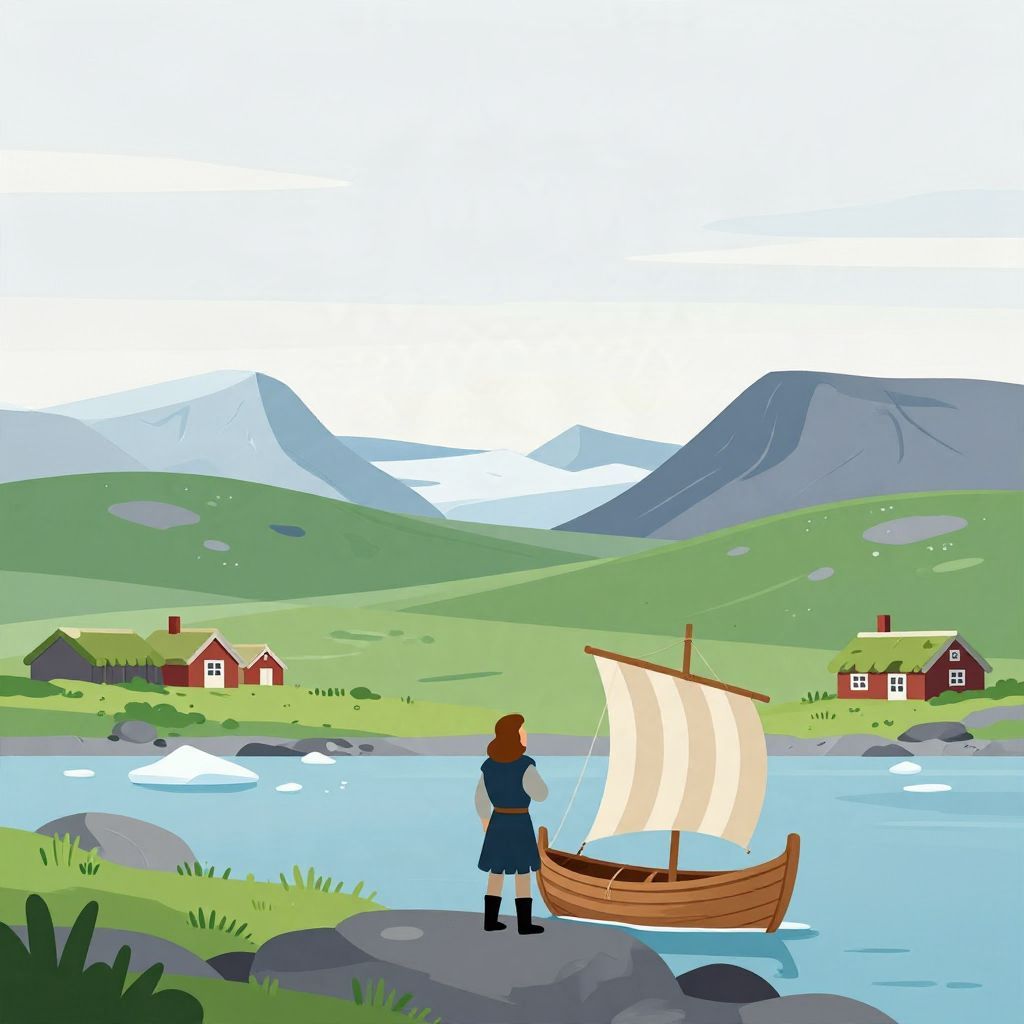
Greenland got its name from the Viking explorer Erik the Red, who arrived there in the late 10th century after being outlawed from Iceland. According to the medieval Icelandic sagas, he chose an inviting name to encourage settlers to move there. The story is famous, but it is also partly shaped by later tradition, so historians treat it carefully.
The name matters because it reveals how exploration, migration, and persuasion worked in the Viking Age. Greenland was not named because the whole island was lush and green; rather, the name helped make a harsh, remote place sound attractive enough for colonists to try their luck there.
How did Greenland get its name?
Greenland was named by Erik the Red around the late 900s, after he explored the island and later promoted it as a place for settlement. Medieval sources say he wanted the name to sound appealing, and that logic fits the colonization effort. The name was partly marketing, not a literal description of the whole island.
Who was Erik the Red, and why was he there?
Erik the Red was a Norse settler from Iceland who was banished after violent disputes. In the sagas, he sailed west and found a large island with fjords, ice, and some coastal land suitable for farming in a few areas. He later returned to Iceland and encouraged others to follow him to this new place.
The Viking world of the 10th century
By the late 10th century, Norse communities had already settled Iceland and were looking farther west across the North Atlantic. These voyages were not random adventures alone; they were part of a wider pattern of migration, land hunger, family feuds, and elite competition. New land could mean status, wealth, and survival for ambitious settlers.
Why a name mattered
In a frontier world, a place name could shape expectations. A name like “Greenland” suggested fertility, opportunity, and life, even if the reality was much more limited. For people considering a dangerous sea crossing, a welcoming name could make the difference between curiosity and commitment.
What do the historical sources actually say?
The main story comes from medieval Icelandic literature, especially the Íslendingabók and the Grœnlendinga saga, written down centuries after the events they describe. These texts preserve valuable traditions, but they are not eyewitness accounts. They likely combine memory, storytelling, and political or cultural motives.
Legend, tradition, and historical caution
Historians generally accept that Norse settlers did name Greenland and that the name was meant to attract colonists. What is less certain is the exact wording of Erik’s explanation and how much of the story was polished by later writers. The broad historical point is strong; the precise dialogue is not.
Was Greenland really green?
Parts of southern Greenland were and are relatively green in summer, especially in sheltered fjords where Norse farms were established. But the island as a whole is dominated by ice. The name was therefore not a simple lie, but it was certainly selective. It highlighted the most appealing features while ignoring the larger frozen landscape.
Why would the Vikings choose such an optimistic name?
The Norse colonization of Greenland depended on persuading people to leave established communities for a difficult environment. A positive name could help create a sense of possibility. It also fit a broader medieval habit of naming places in ways that reflected hope, status, or political ambition rather than strict physical description.
Settlement was difficult
Life in Norse Greenland was never easy. Settlers raised livestock, hunted, traded, and relied on contact with Iceland and Europe. The colony survived for centuries, but it remained small and vulnerable to climate shifts, limited resources, and isolation. A hopeful name could not change those realities, but it could help start the settlement project.
Names as tools of colonization
Place names often serve practical purposes beyond geography. They can claim land, shape identity, and encourage migration. In Greenland’s case, the name helped frame the island as a viable destination. That makes it an early example of how language can be used to support colonization and settlement.
Did Greenland ever have another name?
Before Norse settlement, the island had Indigenous histories and names that were not preserved in the same written record. The Inuit arrived later in Greenland’s history, and their own naming traditions were separate from the Norse one. The English word “Greenland” comes through the Norse name, which became the dominant label in European sources.
Indigenous presence and later history
It is important not to let the Viking naming story erase Greenland’s broader human history. The island was not an empty place waiting to be discovered. Norse settlers were one chapter in a longer history that also includes Inuit societies, adaptation to Arctic environments, and later Danish-Norwegian colonial rule.
What happened after the name took hold?
The name “Greenland” endured because the Norse colony endured for a time and because later Europeans continued using the same term. Over centuries, the colony declined and disappeared, but the name remained. Today it is one of the most famous examples of a place name that sounds more inviting than the landscape itself.
From medieval settlement to modern identity
Greenland’s name has had a long afterlife. It shaped how outsiders imagined the island, even when they knew its climate was severe. In modern times, the name has become part of Greenlandic identity and global recognition, even though the island’s political and cultural history is far more complex than the Viking origin story suggests.
Why this history matters
The story of how Greenland got its name shows how history is made not only by events, but also by language. A name can promote migration, influence memory, and survive long after the original context has changed. It also reminds us that medieval sources can preserve real history while still mixing fact with persuasive storytelling.
So, Greenland got its name from Norse settlers, most likely through Erik the Red’s deliberate choice to make the island sound attractive to would-be colonists. The name was strategic, not literal. It remains a useful reminder that in history, words can be as important as voyages. For related reading, you may also enjoy articles on Viking exploration in the North Atlantic and the history of Icelandic settlement.