
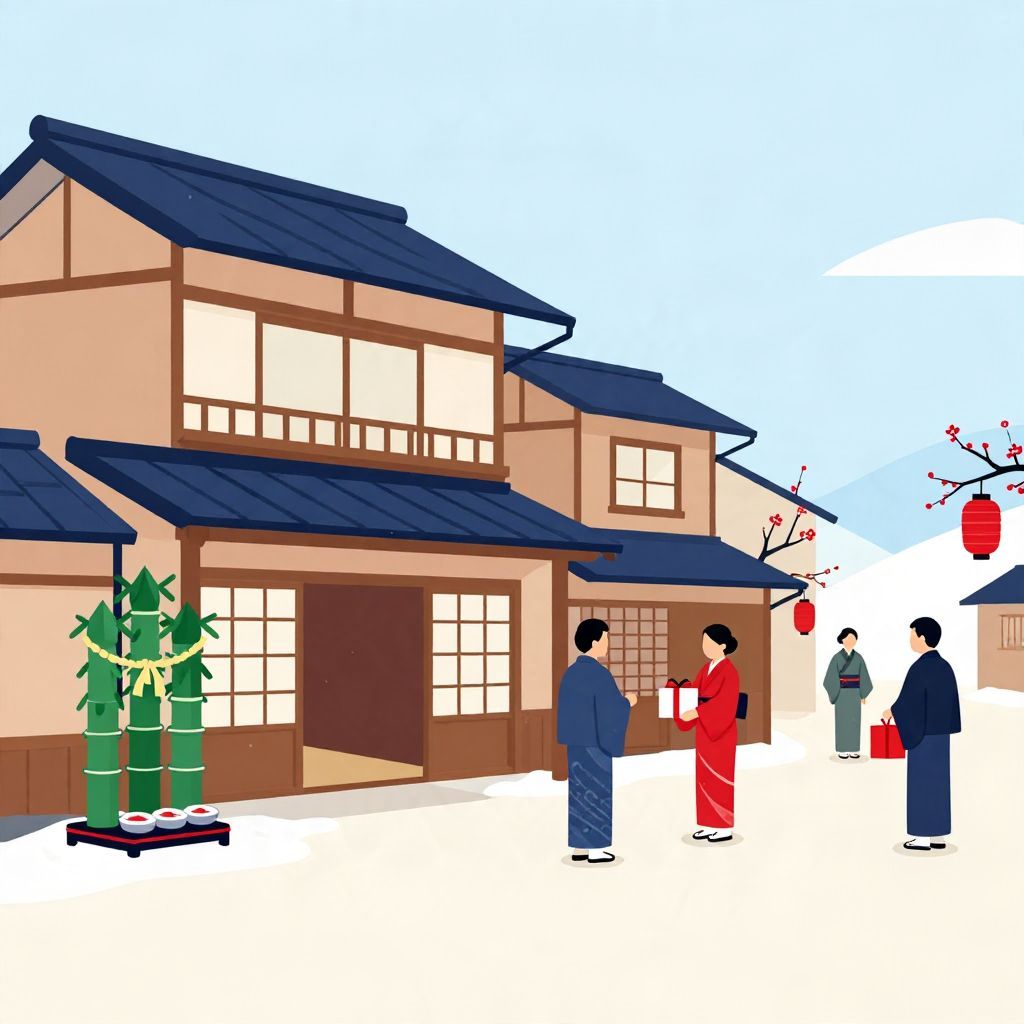
Do Japanese celebrate Lunar New Year? The short answer is: not as a nationwide public holiday in modern Japan. Today, most people in Japan celebrate New Year’s Day on January 1 according to the Gregorian calendar, while some regional communities and families still observe lunar-calendar traditions tied to the old seasonal cycle.
The fuller historical answer is more interesting. Japan once used a lunisolar calendar like China, Korea, and Vietnam, so the New Year fell on a date determined by the moon. That changed in the Meiji era, and the shift reshaped Japanese holiday life, though older customs did not disappear overnight.
Do Japanese Celebrate Lunar New Year?
In modern Japan, most people do not celebrate Lunar New Year as the main national New Year holiday. Instead, Japan observes Shōgatsu on January 1. However, some ethnic Chinese communities, Okinawan traditions, and local festivals still mark lunar-calendar New Year customs, especially in places with strong regional heritage or overseas ties.
How Japan’s New Year Changed Over Time
Japan once followed a lunisolar calendar
For centuries, Japan used a calendar system influenced by China, in which months followed the moon but the year stayed aligned with the seasons. Under that system, the New Year did not always begin on January 1 of the solar calendar. Like other East Asian societies using lunisolar reckoning, Japan celebrated the first day of the first month as the New Year festival.
This older calendar shaped court rituals, seasonal observances, and everyday life. New Year was a major moment for purification, renewal, ancestor veneration, and social obligation. The holiday was not just a date; it structured the rhythm of the year.
The Meiji government changed the calendar in 1873
The decisive break came in 1873, when the Meiji government adopted the Gregorian calendar for official use. Japan’s leaders wanted to modernize the state, simplify administration, and align the country more closely with Western powers. As a result, New Year shifted from the traditional lunar date to January 1.
This change did not erase older customs. Instead, many traditions formerly associated with the lunar New Year were transferred to the new calendar date. In practice, Japanese people kept celebrating New Year, but the timing changed dramatically.
What Japanese People Celebrate Instead of Lunar New Year
Shōgatsu is the main New Year holiday
Today, the most important New Year celebration in Japan is Shōgatsu. It is a family-centered holiday with deep historical roots. People clean their homes, visit shrines or temples, eat special foods, send greeting cards, and welcome the year with rituals meant to ensure good fortune.
Many customs resemble broader East Asian New Year traditions even though the date is different. The continuity lies in the meaning of renewal, not in the calendar system itself.
Common Shōgatsu customs
- Hatsumōde: the first shrine or temple visit of the year
- Osechi ryōri: special New Year dishes prepared in advance
- Kagami mochi: decorative rice cakes offered in the home
- Otoshidama: money gifts for children
- Nengajō: New Year postcards sent to friends and relatives
These customs are now associated with January 1, but many reflect older seasonal beliefs that long predate the Meiji calendar reform.
Why Japan Did Not Keep Lunar New Year as the Main Holiday
Modernization and state centralization mattered
The Meiji leadership was building a modern nation-state after the fall of the Tokugawa shogunate. Standardized timekeeping, taxation, military organization, and bureaucratic administration all benefited from a calendar shared with much of the Western world. The new calendar was part of a broader program of reform, not just a technical adjustment.
By moving the official New Year to January 1, the state also made Japan’s public life more legible in international diplomacy and commerce. That decision helped separate modern Japanese official culture from older East Asian calendrical practice.
Social habits changed gradually, not instantly
Even after 1873, many rural communities and older people continued to feel the old lunar timing in memory and custom. Calendar change does not instantly rewrite culture. Some seasonal observances, agricultural rhythms, and local festivals remained linked to the traditional calendar for decades, and some still do today.
So the historical answer is not that Japan “stopped celebrating” New Year. Rather, it moved the principal New Year celebration to a different calendar date while preserving many older symbolic elements.
Are There Places in Japan That Still Observe Lunar New Year?
Yes, but usually as a local or community tradition
There are still places in Japan where Lunar New Year is observed in some form, though it is not the main national holiday. These celebrations are often connected to local history, ethnic Chinese communities, or regional customs that survived the calendar reform.
Examples can include festivals in port cities, Chinatown districts, or areas with strong links to broader East Asian trade and migration. In these settings, Lunar New Year may be marked with lion dances, temple visits, food traditions, and family gatherings.
Okinawa and the Ryukyu legacy
Okinawa is especially important for understanding calendar diversity in Japan. The Ryukyu Kingdom had its own historical ties to China and used lunar-calendar practices in ways that differed from mainland Japan. Even today, some Okinawan festivals and ancestral observances preserve a stronger connection to the lunar calendar than mainland Japanese New Year customs do.
This does not mean all Okinawans celebrate Lunar New Year in the same way, but it does show that Japan has never been culturally uniform on this question.
How Japanese New Year Differs from Chinese Lunar New Year
Same seasonal idea, different calendar date
Japanese Shōgatsu and Chinese Lunar New Year share older East Asian ideas about renewal, family reunions, cleansing, and good luck. Yet they are not the same holiday in modern practice. The biggest difference is timing: Japan’s major New Year falls on January 1, while Chinese New Year follows the lunisolar calendar and changes date each year.
Because of this, visitors sometimes assume Japan celebrates Lunar New Year in the same way as China or Korea. Historically, that assumption is understandable, but it is not accurate for modern Japan as a whole.
Shared roots, separate modern paths
Japan, China, Korea, and Vietnam all participated in a broader East Asian calendar culture shaped by Chinese models. Over time, however, each society followed a different modern path. Japan adopted the Gregorian calendar officially in the 19th century, while other countries retained or later revived lunar or lunisolar New Year traditions in different forms.
That divergence is a good example of how modernization can preserve cultural memory while changing public institutions.
Historical Significance of the Calendar Shift
The reform changed everyday life
The calendar change affected more than holidays. It altered school schedules, government offices, business timing, and the way people understood seasons and festivals. A holiday that had once arrived with the lunar cycle now came at the start of the solar year, even if its symbolic meaning stayed familiar.
This is one reason New Year in Japan remains such a powerful cultural event. It carries layers of old and new history at once.
It also shows how traditions adapt
Japan’s example shows that a society can change the calendar without fully abandoning the emotional and ritual importance of the New Year. Customs such as shrine visits, special foods, and family gatherings survived because they met enduring social needs: marking time, strengthening kinship, and expressing hope for the future.
In that sense, the question “Do Japanese celebrate Lunar New Year?” points to a larger historical truth: traditions often survive by changing shape.
So, Do Japanese Celebrate Lunar New Year?
Historically, yes—Japan once celebrated New Year according to a lunisolar calendar. In modern Japan, however, no: the main national New Year is celebrated on January 1, not on the lunar New Year date. Some local communities and regional traditions still observe lunar-calendar customs, but they are exceptions rather than the national norm.
Understanding that shift reveals how Japan modernized in the Meiji era while preserving much of its older New Year culture in a new calendar framework. If you want to explore Japan’s seasonal traditions further, you may also enjoy when Japanese New Year is celebrated and the history behind the Land of the Rising Sun.