
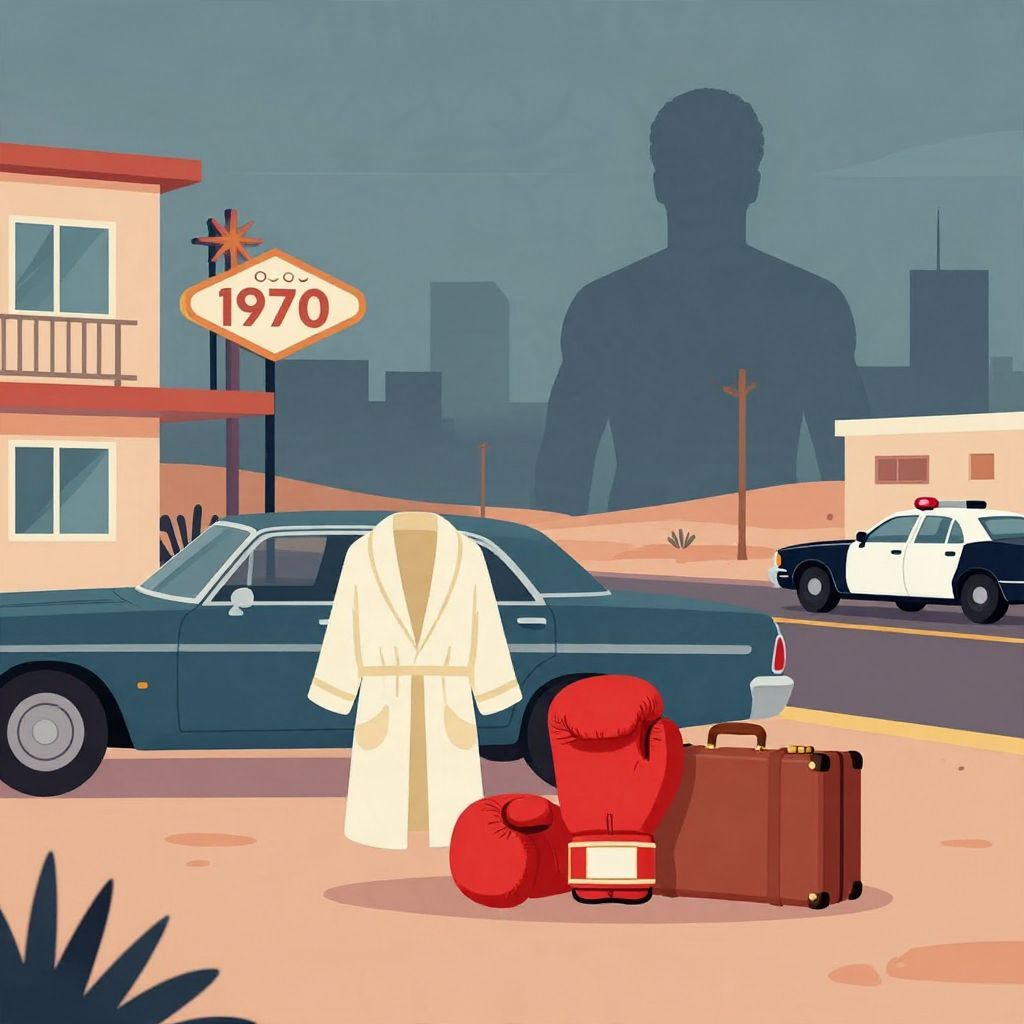
How did Sonny Liston die? The short answer is that the former heavyweight boxing champion was found dead in his Las Vegas home on January 5, 1971, and the official conclusion was that he died of heart failure, with an autopsy also noting pneumonia. Because the circumstances were unusual and Liston’s life was surrounded by rumors, his death has remained one of boxing’s most debated mysteries.
What happened matters because Liston was not just another prizefighter. He was one of the most feared heavyweights of the 1960s, a man whose rise, fall, and death reflected the harsh realities of boxing, race, crime, and celebrity in mid-20th-century America.
How did Sonny Liston die?
Sonny Liston died on January 5, 1971, in Las Vegas, Nevada. He was found dead in his home, and the official explanation was heart failure, with pneumonia listed as a contributing factor. No clear evidence has ever proved foul play, but the odd circumstances and Liston’s connections to organized crime fueled speculation for decades.
What happened in the days before his death?
By early 1971, Liston was living a quieter and more troubled life than the one that had made him famous. His championship years were behind him, and he had struggled with money, legal problems, and the long decline that often follows a boxing career. He was still known in Las Vegas, where he had spent time working and socializing, but he was no longer a major public figure.
The discovery of his body
Liston’s wife, Geraldine, had been away from home. When she returned, she found him dead. The exact timeline of his final hours is not fully documented in a way that settles every question, which helped create later theories. Still, the basic historical record is clear: he was discovered at home, not in a hospital or after a public incident, and authorities treated the death as natural rather than criminal.
The autopsy findings
The coroner’s findings pointed to heart failure, and pneumonia was also noted. That combination is plausible for a man in poor health. Liston had long been associated with heavy drinking, hard living, and the physical wear of a punishing boxing career. Those factors do not prove a single cause, but they help explain why a sudden death in his early forties was medically believable even if it felt suspicious to the public.
Why did Sonny Liston’s death cause so much speculation?
Liston’s death drew attention because his life had been surrounded by violence, secrecy, and distrust. He had a reputation as a dangerous man, and he had also been linked in the public imagination to underworld figures. When someone with that background dies unexpectedly, especially outside a hospital, rumors spread quickly. In Liston’s case, the mystery was intensified by the fact that many people already believed his career had been shaped by forces beyond the ring.
His ties to a shadowy boxing world
In the mid-20th century, boxing was often connected to gamblers, managers, and organized crime. Liston moved through that world, and his image was repeatedly tied to it. That does not mean the mob killed him, but it does explain why some people assumed his death must have involved violence. Boxing history is full of real corruption, so suspicion was not irrational; it was part of the sport’s culture.
A life that invited myth
Liston had an intimidating public image. He was a powerful puncher, a former champion, and a man many Americans viewed through the lens of fear and stereotype. That image made him seem larger than life, and larger-than-life figures often attract legends after death. In his case, the mythmaking began while he was still alive and only grew stronger afterward.
Who was Sonny Liston before he died?
To understand why his death mattered, it helps to know who he was. Charles “Sonny” Liston was born around 1930, likely in Arkansas, though details of his early life are often uncertain because records were poor and his childhood was marked by poverty. He became one of the most dominant heavyweights of his era, known for his reach, strength, and intimidating presence.
From hardship to heavyweight champion
Liston’s early life was difficult, and he spent time in prison before fully entering professional boxing. Once he did, he rose quickly. By the early 1960s, he had become heavyweight champion after defeating Floyd Patterson in 1962. He was a frighteningly effective fighter, especially in the first round, where his jab and power could overwhelm opponents before they settled into a rhythm.
The Muhammad Ali fights
Liston’s place in history was sealed by his two fights with Muhammad Ali, then Cassius Clay. In 1964, Liston lost the title in one of boxing’s most famous upsets. Their rematch in 1965 ended under controversial circumstances, with Liston stopped in the first round after what became known as the “phantom punch.” Those fights made Liston a central figure in one of the most dramatic eras in sports history.
Was Sonny Liston murdered?
There is no conclusive historical evidence that Sonny Liston was murdered. Over the years, some writers and fans have suggested that he may have been killed because of debts, gambling ties, or his knowledge of boxing’s underworld. Those claims remain speculative. The official determination was natural causes, and no definitive proof has overturned that conclusion.
What historians and biographers can say
Careful historical work has to separate possibility from proof. It is fair to say that Liston’s death was ambiguous in the public mind because of his background and the circumstances of discovery. It is not fair to state as fact that he was assassinated or executed without evidence. The most responsible conclusion is that he likely died from health-related causes, even if the surrounding details left room for doubt.
Why the rumors persisted
Rumors persisted because Liston had few close allies in the public eye, and his private life was not well documented. He was also a man many people had already written off as dangerous or doomed. In such cases, a natural death can still seem unbelievable. That is especially true in boxing, where violence is expected in the ring and often imagined outside it as well.
What did his death reveal about boxing in his era?
Liston’s death highlights the brutal economics and social pressures of mid-century boxing. Fighters could become famous and still end up isolated, underpaid, or dependent on people with questionable motives. Medical care for retired boxers was often poor, and the long-term effects of punishment in the ring were not fully understood or adequately addressed.
The human cost of prizefighting
Heavyweights like Liston absorbed enormous physical damage over time. Repeated blows, stress, substance use, and unstable living conditions could shorten a fighter’s life. His death, whether entirely natural or not, fits a broader pattern in boxing history: champions often pay for their careers long after the crowds are gone.
Race, reputation, and public memory
Liston’s legacy was also shaped by race. He was often portrayed in simplistic and hostile ways by the press and public. That made it easier for myths to stick to him, both during his life and after his death. His story shows how African American athletes in the 20th century were often judged not only by their performances but by stereotypes that distorted how they were remembered.
How should Sonny Liston’s death be understood today?
The best historical answer is that Sonny Liston was found dead in his home in Las Vegas on January 5, 1971, and the official cause was heart failure, with pneumonia contributing. The case has never been fully satisfying to people who want a dramatic explanation, but the evidence does not support turning rumor into fact. His death was tragic, but it was also consistent with a life marked by hardship and physical decline.
What matters most is not only how Sonny Liston died, but what his death says about the world that produced him: a sport that could make a champion famous and then leave him vulnerable, a public eager for legend, and a history in which truth and myth often remain closely entangled. For readers interested in boxing’s larger past, related stories about Muhammad Ali’s rise and legacy and the history of boxing in America offer useful context.