
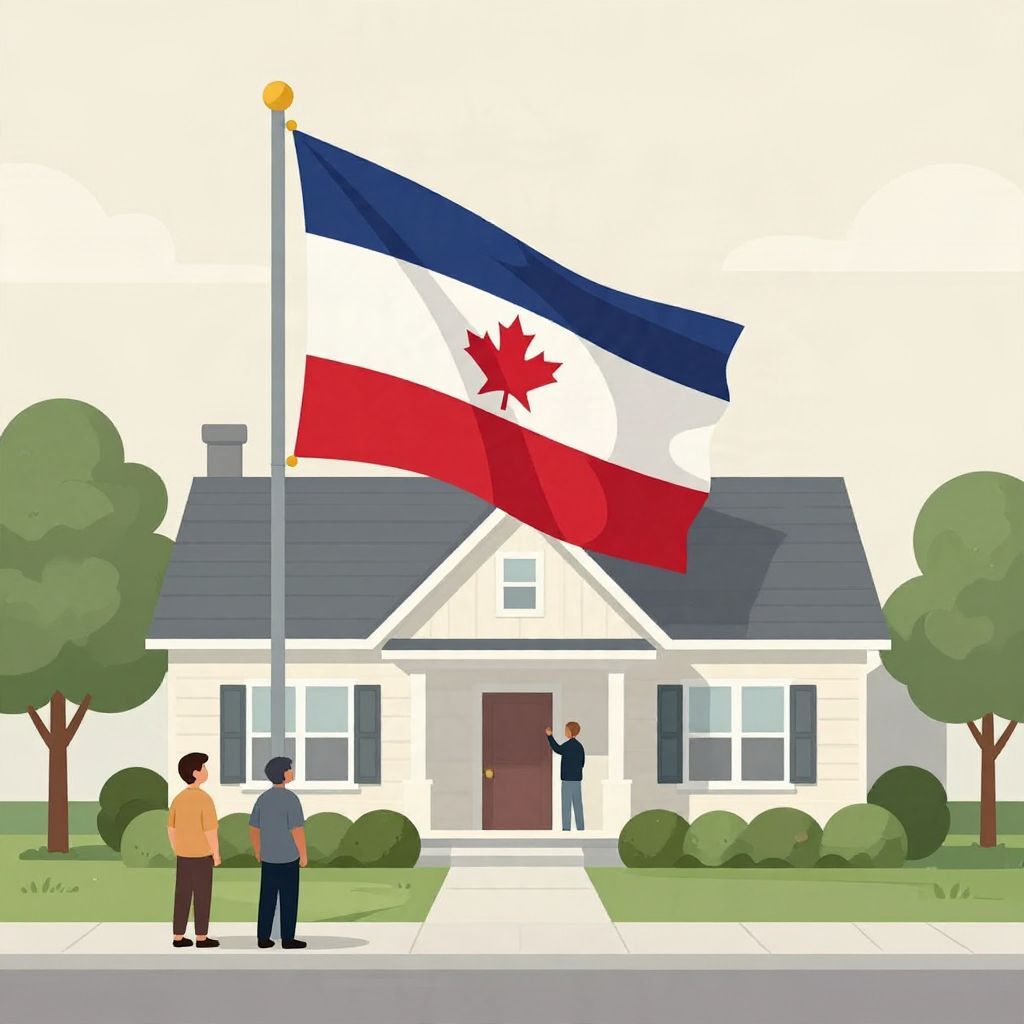
Seeing a neighbor fly a flag upside down can be startling. Many people read it as a political statement, a distress signal, or even a sign of disrespect, but the meaning depends on the flag, the country, and the historical moment.
In the United States, for example, an upside-down flag has long been recognized as a signal of distress. In other places, the same act may be seen as protest, error, or deliberate insult. The history behind that meaning is older and more complicated than many people realize.
My Neighbor Is Flying the Flag Upside Down: What Does It Mean?
An upside-down flag usually means distress or serious trouble, especially in U.S. flag culture. Historically, it has also been used as a form of protest. It is not always meant as disrespect, but the meaning depends on context, tradition, and the specific flag code or customs involved.
Where the Distress Meaning Came From
The idea of an upside-down flag as a distress signal developed from maritime and military practice. On ships, flags were used to communicate quickly at a distance, and an inverted flag could indicate emergency or danger. Over time, that practice influenced broader public understanding of the symbol.
Maritime origins
Before radios and modern emergency systems, ships relied on visual signals. Flags, pennants, and lights carried urgent messages across water and between vessels. An inverted ensign or national flag could signal that a ship was in trouble and needed help. This practical use helped establish the upside-down flag as a recognizable warning sign.
Military and national symbolism
In wartime, flags carried strong emotional and political meaning. Flying a flag upside down could communicate that a nation, unit, or community was in grave danger. Because flags represent authority and identity, inverting one was a dramatic way to show that something was deeply wrong. That symbolism later spread into civilian use.
How the Meaning Changed in the Modern Era
By the 20th century, the upside-down flag was no longer only a maritime distress signal. In the United States especially, it also became a form of political protest. People used it to express alarm, anger, or opposition to government actions, social conditions, or national events.
Protest rather than accident
When someone flies a flag upside down today, it is often intentional. Protesters may use it to say the country is in crisis, that constitutional principles are under threat, or that they are deeply dissatisfied with current events. This use became especially visible during periods of intense political conflict, including the Vietnam era and later culture-war disputes.
Why the interpretation can be controversial
Not everyone agrees on what the act means. Some see it as a legitimate expression of free speech; others see it as disrespectful to the nation or to those who served under the flag. Because flags are powerful symbols, the same gesture can be read as warning, protest, or insult depending on the viewer’s perspective.
What the U.S. Flag Code Says
In the United States, the flag code says the flag should be displayed upside down only as a signal of dire distress in instances of extreme danger to life or property. That wording is important: it does not treat the gesture as a casual decoration or ordinary protest symbol, even though people sometimes use it that way.
Legal meaning versus cultural meaning
The flag code is a set of guidelines for respectful display, not a criminal law in most everyday situations. That means people may still use an upside-down flag in protest, but the act can be widely criticized as improper under traditional flag etiquette. The difference between legal permission and cultural expectation often causes confusion.
Why people disagree about “disrespect”
Some Americans believe any inversion of the flag is offensive unless there is a genuine emergency. Others argue that political protest is itself part of American tradition and that the flag can symbolize the right to dissent as well as national unity. This tension is part of the history of the symbol.
How Other Countries and Traditions Interpret It
The meaning of an upside-down flag is not universal. Different countries, military traditions, and cultural settings can assign different meanings to the same visual act. In some places it is understood mainly as distress; in others, it may be seen as a direct challenge to authority or simply as improper display.
National symbols are culturally specific
Flags are not just pieces of cloth. They carry histories of war, independence, monarchy, revolution, and statehood. Because of that, the same display can have different meanings in different countries. A person who assumes an upside-down flag has one fixed meaning everywhere may misunderstand local custom.
When the mistake is accidental
Sometimes a flag is upside down by accident. This can happen during a hurried setup, poor weather, or simple inattention. In those cases, the message is not symbolic at all. That is why context matters: the location, accompanying signs, and timing all help determine whether the display is deliberate.
How to Tell Whether It Is a Distress Signal or a Protest
Context is the key to interpretation. A single upside-down flag on a home, vehicle, or public building may mean different things depending on what is happening around it. Looking at the broader situation is the best way to understand the intended message.
Questions to consider
- Is there an obvious emergency or danger nearby?
- Is the flag displayed with protest signs or political messages?
- Is it a national flag with a known etiquette rule, such as the U.S. flag?
- Could the flag simply have been hung incorrectly?
- Is the display temporary or part of a larger demonstration?
Why assumptions can be risky
It is easy to project meaning onto a symbol before knowing the reason behind it. A neighbor may be signaling distress, making a political point, or simply making a mistake. Because flags are emotionally charged, it is usually wiser to ask calmly or observe the context before drawing conclusions.
Historical Examples of Upside-Down Flags
Upside-down flags have appeared in many historical settings, from ships in distress to political demonstrations. Their use became more visible in the modern era, when mass media made symbolic acts easier to see and interpret. The gesture gained new force because it was both simple and visually striking.
From naval signal to public protest
What began as a practical emergency code gradually became a public symbol of alarm. In times of war, civil unrest, or constitutional crisis, people have used the upside-down flag to say that normal order is failing. That shift from technical signal to political statement is one reason the symbol remains powerful.
Why it persists
The upside-down flag endures because it is easy to recognize and hard to ignore. It can be understood instantly, even from a distance, and it carries emotional weight without needing words. That makes it a useful symbol for people who want to communicate urgency or discontent quickly.
What It Does Not Always Mean
It is important not to overstate the symbol. An upside-down flag does not automatically mean hatred of a country, support for rebellion, or a threat. It can mean distress, protest, grief, or even error. The same act may be interpreted differently by different communities and generations.
Common misunderstandings
- It is not always a sign of anti-national sentiment.
- It is not always a legal offense.
- It is not always a coded political message.
- It is not always intentional.
The Lasting Historical Significance
The upside-down flag matters because it shows how symbols change over time. A practical emergency signal from maritime and military life became a modern political gesture. That transformation reflects a broader historical pattern: symbols often outlive their original setting and acquire new meanings as societies change.
So, if your neighbor is flying the flag upside down, the most historically grounded answer is this: it usually signals distress or protest, not random decoration. The precise meaning depends on the flag, the setting, and the tradition behind it. If you want to explore related symbolism, you may also find what the black flag means useful, since it covers another powerful historical flag symbol.