
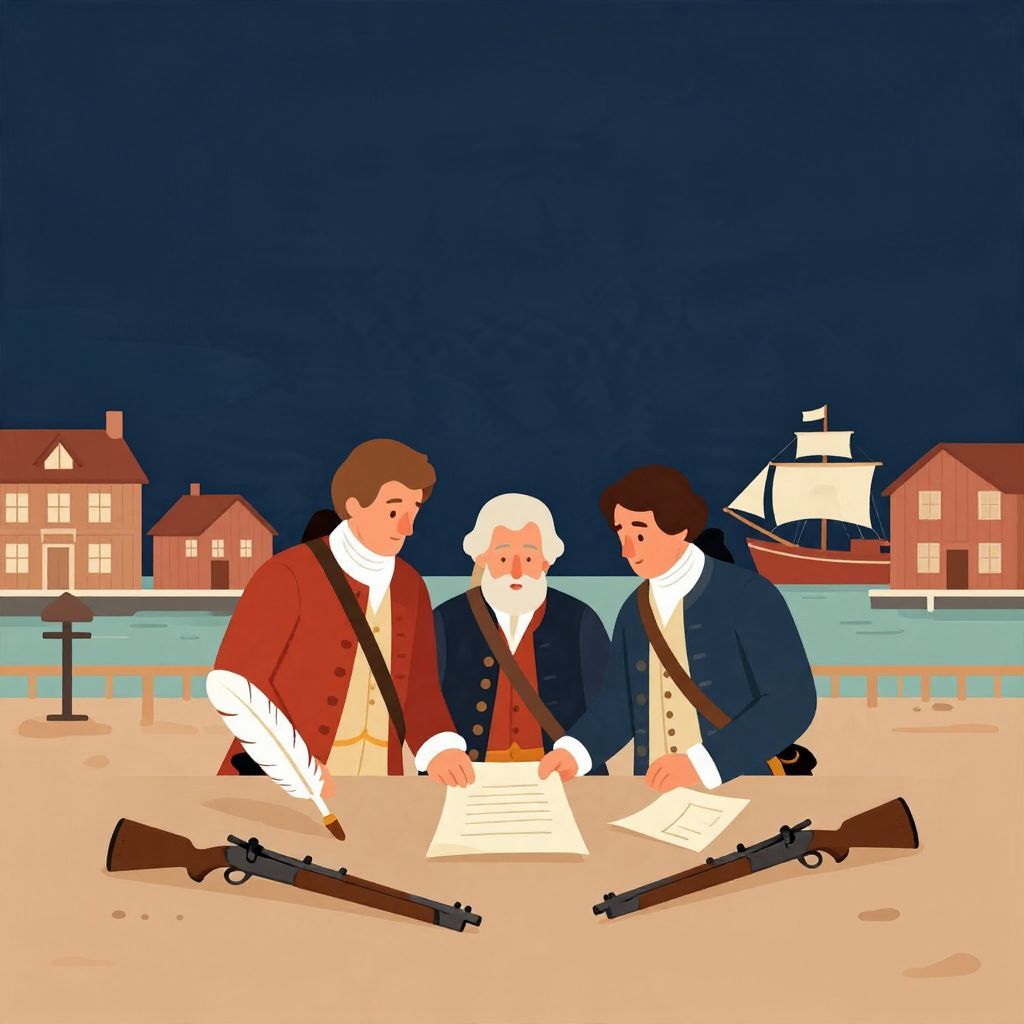
The Revolutionary War ended in 1783. More precisely, the fighting between Great Britain and the American colonies was effectively over by 1781 after the British surrender at Yorktown, but the war was formally concluded by the Treaty of Paris in 1783.
So if you are asking, “What year did the Revolutionary War end?” the best answer is 1783. That is the year the peace treaty was signed and the conflict was officially settled, even though the decisive military turning point came two years earlier.
What Year Did the Revolutionary War End?
The Revolutionary War ended in 1783, when the United States and Great Britain signed the Treaty of Paris. The war’s last major campaign ended in 1781 at Yorktown, Virginia, but formal peace took longer. In historical terms, 1783 is the accepted end date because it marks the legal conclusion of the war.
Why 1783 Is the Official End Date
Wars often end in stages, not on a single day. The Revolutionary War had a military ending and a diplomatic ending. The military struggle largely stopped after Cornwallis surrendered at Yorktown in October 1781, but Britain and the new American government still had to negotiate peace. The treaty signed in 1783 made the end official.
The Treaty of Paris
The Treaty of Paris was signed on September 3, 1783. It recognized the independence of the United States and established the basic terms of peace between Britain and the former colonies. Because treaties are what formally end wars, historians usually give 1783 as the year the Revolutionary War ended.
Why 1781 is sometimes mentioned
Some people say the war ended in 1781 because that was when the fighting effectively broke down after Yorktown. That is understandable, but it is not the full answer. British forces remained in North America, diplomacy continued, and the legal state of war did not end until the treaty was signed in 1783.
The Road to the End of the War
The Revolutionary War did not end suddenly. It stretched across years of military setbacks, shifting alliances, and political uncertainty. The colonies declared independence in 1776, but independence had to be won on the battlefield and then secured at the negotiating table.
Key moments that led to the end
- 1775 – Fighting began at Lexington and Concord.
- 1776 – The Declaration of Independence was adopted.
- 1777 – American victory at Saratoga helped bring France into the war as an ally.
- 1781 – British General Cornwallis surrendered at Yorktown.
- 1783 – The Treaty of Paris officially ended the war.
Each of these events mattered, but Yorktown was especially important because it convinced many in Britain that continuing the war would be costly and difficult. Still, surrender on the battlefield was not the same as a final peace agreement.
What Happened at Yorktown?
The siege of Yorktown was the decisive military event of the war. In 1781, American and French forces trapped British troops under General Charles Cornwallis in Virginia. With French naval support blocking escape by sea, Cornwallis surrendered on October 19, 1781. This defeat made large-scale British victory in America unlikely.
Why Yorktown mattered so much
Yorktown did not instantly end the war, but it changed the political reality. British leaders recognized that the war was becoming harder to win and more expensive to continue. The surrender weakened support for the war in Britain and opened the door to negotiations with American representatives.
The Treaty of Paris in 1783
The Treaty of Paris was the agreement that formally ended the Revolutionary War. It was negotiated after months of talks and signed in Paris on September 3, 1783. The treaty acknowledged American independence and set boundaries for the new nation, though some issues would remain contested in later years.
Main terms of the treaty
- Great Britain recognized the United States as independent.
- The new nation’s boundaries were set broadly to the Mississippi River in the west.
- Americans gained fishing rights off parts of Canada.
- Both sides agreed to address debts and property claims.
The treaty was significant not only because it ended the war, but because it confirmed that the former colonies were now a sovereign country. That legal recognition changed the future of North America and the Atlantic world.
How the War Ended for Different People
For American revolutionaries, 1783 meant independence had been secured. For British officials, it meant accepting the loss of the colonies. For Loyalists, colonists who had supported Britain, the end of the war often meant uncertainty, displacement, or exile. The same date meant very different things depending on where a person stood.
American Patriots
Patriots saw 1783 as the triumph of self-government and resistance to imperial rule. The war’s end confirmed that the United States would exist as a separate nation rather than return to British control.
Loyalists
Loyalists often faced difficult choices after the war. Some stayed in the United States and adapted to the new political order. Others left for Canada, Britain, or the Caribbean. The treaty ended the fighting, but it did not erase the social divisions the war had created.
British leaders
In Britain, the war’s end prompted reflection and political criticism. Many questioned the cost of trying to hold the colonies by force. The loss also influenced future British imperial policy, especially in North America.
Was the Revolutionary War Really Over in 1783?
Yes, in the formal historical sense. Although some fighting and related conflicts continued in limited ways, 1783 is the accepted end year because the treaty settled the war between Britain and the United States. In history, the “end” of a war usually means the point at which peace is officially established, not necessarily the final shot fired.
Why historians use formal end dates
Historians rely on official agreements because they define the political outcome of a war. A battlefield victory can change momentum, but only a treaty can legally end hostilities between governments. That is why 1783, not 1781, is the standard answer.
The Revolutionary War’s Lasting Consequences
The end of the Revolutionary War did more than create a new country. It set the stage for the United States Constitution, debates over federal power, westward expansion, and the long struggle over who would fully benefit from the nation’s ideals. The war’s conclusion was a beginning as much as an ending.
Political impact
Independence forced Americans to build new institutions. The first national government under the Articles of Confederation proved weak, leading eventually to the Constitutional Convention of 1787. In that sense, the war’s end opened the next major chapter in American history.
International impact
The Revolutionary War also influenced other movements. It showed that a colonial rebellion could succeed with military persistence and foreign support. The American victory became an important example for later revolutions, though each movement had its own causes and conditions.
Quick Answer: What Year Did the Revolutionary War End?
The Revolutionary War ended in 1783, when the Treaty of Paris was signed and Great Britain officially recognized American independence. The fighting had largely ended in 1781 after Yorktown, but 1783 is the correct year for the war’s formal conclusion.
If you want to explore more about the era, you can also read related history topics on American Revolution history and the broader story of the founding period at My Life is History.