
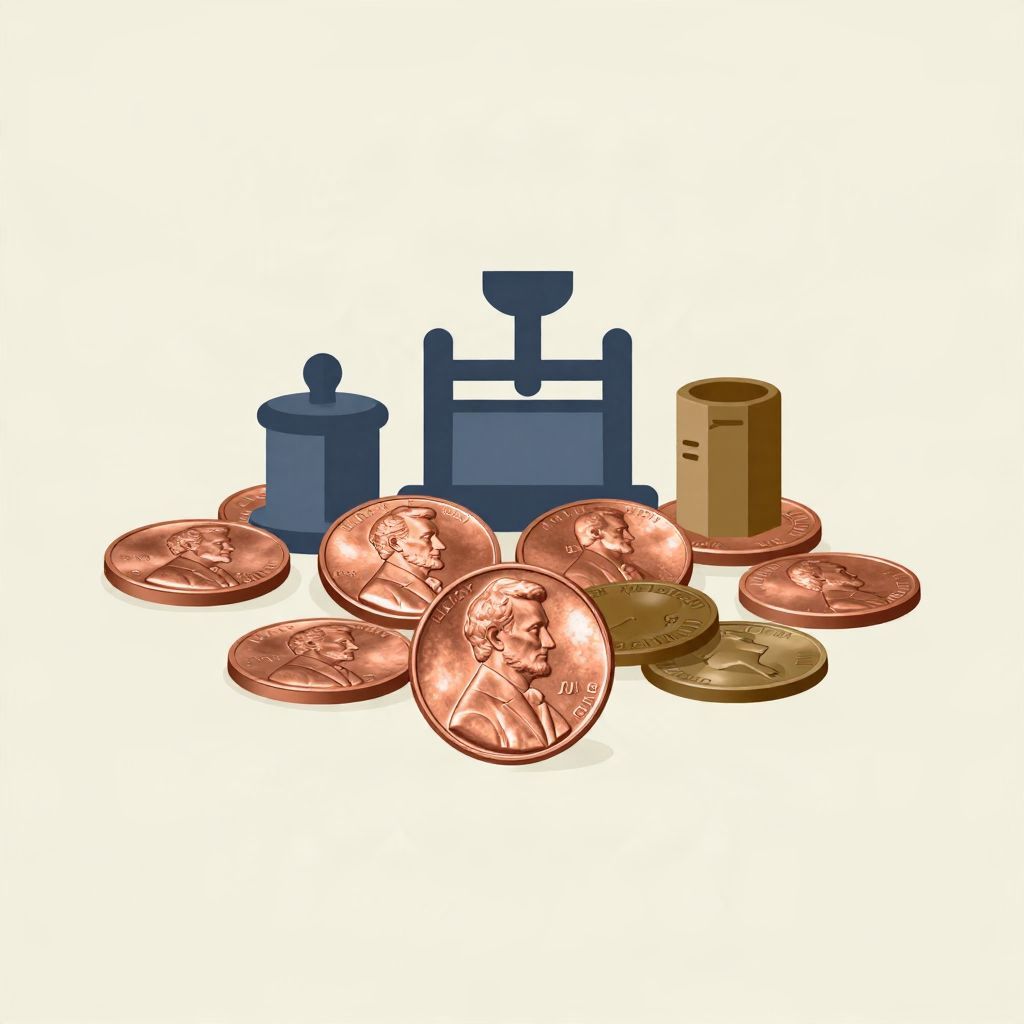
What year pennies are copper? The short answer is that U.S. pennies made before 1982 are generally copper pennies, while pennies dated 1982 and later are mostly zinc with a thin copper plating. The exact cutoff matters because 1982 was a transition year, and both compositions were struck that year.
Behind that simple date is a longer story about rising metal costs, wartime shortages, and the changing economics of everyday money. The penny’s familiar copper color has survived, but its metal content has shifted with the needs of the U.S. Mint and the price of copper.
What year pennies are copper?
Most pennies dated 1981 and earlier are copper pennies. In 1982, the U.S. Mint changed the cent’s composition from mostly copper to mostly zinc, so pennies from 1982 onward are usually not solid copper. However, 1982 pennies are a special case: some were made of the older copper alloy and some of the newer zinc alloy.
The practical rule collectors use
- 1959–1981: generally copper-based pennies
- 1982: mixed year, with both copper and zinc cents produced
- 1983 and later: zinc core with copper plating
If you are sorting pocket change, the easiest dividing line is to check the date. Anything before 1982 is typically copper. For 1982, date alone is not enough; you need weight or another test to know which composition you have.
Why 1982 became the turning point
The change happened because copper became too expensive to use in a one-cent coin. By the late 1970s and early 1980s, the metal value of a penny was approaching, and at times exceeding, its face value. That made the coin costly to produce and tempting to hoard or melt, so the government looked for a cheaper alternative.
From copper alloy to copper-plated zinc
Before the switch, the penny was made mostly of copper with a small amount of zinc and tin. Starting in 1982, the Mint adopted a zinc core with a thin copper coating. This preserved the familiar look of the cent while sharply reducing production costs.
The new design was not about changing the penny’s appearance for novelty’s sake. It was a practical response to inflation, commodity prices, and the challenge of keeping low-denomination coinage economically viable.
How copper the penny used to be
The modern Lincoln cent was introduced in 1909, and for decades it was made of bronze, an alloy dominated by copper. During most of the 20th century, the penny’s reddish color reflected its metal content. That is why older pennies often feel heavier and look more “authentically” copper than modern ones.
Important composition changes before 1982
The penny’s metal has not been perfectly uniform throughout U.S. history. A few wartime and emergency changes altered its makeup:
- 1909–1942: bronze composition, mostly copper
- 1943: steel cents coated with zinc, due to wartime copper shortages
- 1944–1946: copper recovered from shell casings and other wartime sources was reused in cents
- 1947–1981: copper-based alloy returned as the standard
- 1982–present: copper-plated zinc
So if the question is “what year pennies are copper?” the broad answer is “most cents before 1982,” but the deeper history shows that wartime necessity briefly interrupted that pattern.
Why 1943 pennies are not copper
One of the most famous penny myths involves the 1943 cent. Because copper was needed for ammunition and military equipment during World War II, the Mint switched to steel pennies in 1943. These coins were silver-gray, not copper-colored, and they are a well-known exception to the idea that old pennies are always copper.
The 1943 exception and the rare copper error coins
Most 1943 pennies are steel. A few copper 1943 cents are known, but they are rare error or experimental pieces and not the normal issue. Their fame has made them a favorite target for stories, scams, and hopeful treasure hunts. Historically, though, they are exceptions, not evidence that 1943 pennies were meant to be copper.
How to tell whether a 1982 penny is copper
Because 1982 was a transition year, collectors often ask how to identify the composition. The most reliable quick test is weight. Copper cents weigh about 3.11 grams, while zinc cents weigh about 2.5 grams.
Common identification methods
- Date: pre-1982 usually means copper
- Weight: copper is heavier than zinc
- Sound: copper cents often ring differently when dropped, though this is less precise
- Visual wear: worn zinc cents may show corrosion or a dull gray core if damaged
For a 1982 penny, weight is the most useful clue. There were multiple varieties struck that year, including both large-date and small-date versions in each metal, so collectors often compare date style as well as weight.
The history behind the penny’s copper color
Copper was not chosen for the cent by accident. It was durable, familiar, and long associated with small change in the United States and Europe. Early American coinage borrowed from older monetary traditions in which copper and bronze coins handled everyday purchases while silver and gold served larger transactions.
Why copper worked so well for cents
Copper alloys are strong enough for circulation, resist wear better than many softer metals, and can be minted efficiently. They also have a distinctive color that made the penny easy to recognize. For a long time, that combination of practicality and appearance made copper the natural choice for the lowest U.S. coin.
What changed after 1982
Once the Mint shifted to zinc, the penny’s internal structure changed even though its color stayed similar. The copper coating is very thin, so modern pennies can look like older ones at first glance. But the metal beneath the surface is different, and that difference matters for collectors, manufacturers, and anyone interested in coin history.
Why the design stayed the same
The U.S. government did not want to confuse the public by introducing a penny that looked radically different. Keeping the copper appearance helped preserve continuity and public acceptance. In that sense, the penny became a kind of historical compromise: visually traditional, materially modern.
Are copper pennies valuable?
Most copper pennies are worth only face value unless they are key dates, errors, or high-grade collector coins. Their metal content is historically interesting, but not usually enough to make them valuable in everyday circulation. The real numismatic value depends on rarity, condition, mint mark, and demand among collectors.
What collectors look for
- Key dates and low-mintage issues
- Mint errors and varieties
- Uncirculated condition
- Special wartime or transitional pieces
Some people ask whether copper pennies should be saved because of their metal value. In practice, melting U.S. cents is restricted, and the value of ordinary copper pennies as collectibles usually comes from history rather than bullion.
The broader story of changing coin metals
The penny’s shift from copper to zinc is part of a much larger historical pattern. Governments have often altered coinage when war, inflation, or resource scarcity made older materials impractical. Coins are small objects, but they reflect big economic pressures.
What the penny reveals about history
The copper penny tells a story about American industry, wartime sacrifice, inflation, and the constant balancing act between symbolism and cost. A coin can remain the same in name while changing completely in substance. The penny is a perfect example of that historical continuity and change.
So, if you are asking what year pennies are copper, the clearest answer is this: pennies dated 1981 and earlier are generally copper, while 1982 marks the transition to copper-plated zinc. That date is the key dividing line, with 1982 as the exception year and 1943 as the famous wartime outlier. For more on coin history, you may also enjoy when nickels were silver and the broader historical context in what is the oldest city in America.