
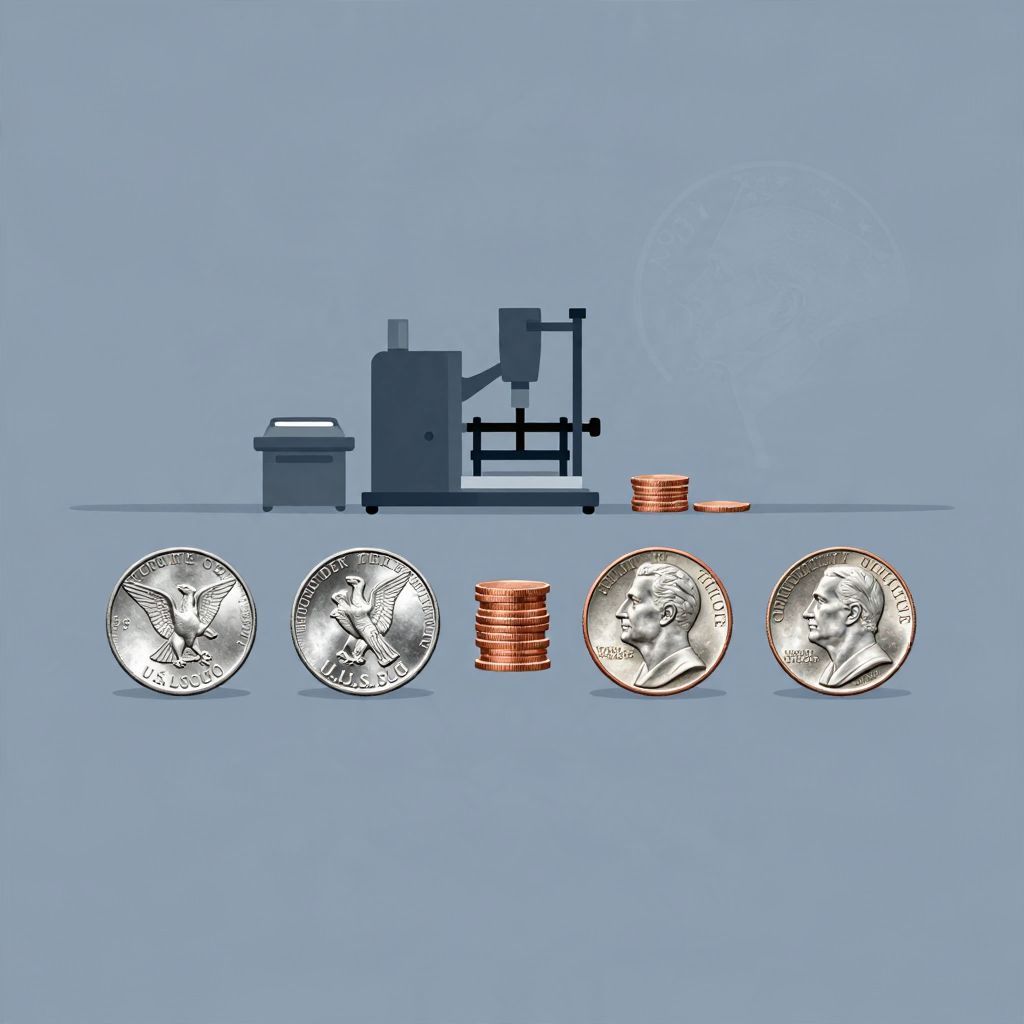
If you’ve ever wondered when quarters stopped being silver, the short answer is that it depended on which kind of quarter you mean. In the United States, regular circulating quarters were made of 90% silver until 1964. After that, the U.S. Mint switched to a copper-nickel “clad” composition for everyday quarters.
The change was driven by rising silver prices, coin shortages, and the practical need to keep U.S. coins in circulation. The transition did not happen overnight, and some special collector and proof coins later contained silver again.
When Did Quarters Stop Being Silver?
U.S. quarters stopped being made of silver for general circulation after 1964. Quarters dated 1964 and earlier were 90% silver, while quarters dated 1965 and later were made of copper-nickel clad metal for everyday use. A few special collector issues and commemoratives have contained silver since then, but ordinary pocket change no longer did.
The Date That Matters: 1964
The key date is 1964. That was the last year the United States struck circulating quarters in the traditional silver alloy. Beginning in 1965, the Mint introduced new quarters with a copper core and outer layers of nickel and copper, eliminating silver from standard circulation coins.
This was not just a cosmetic change. It reflected a major shift in U.S. coinage policy during a period when the old silver-based system had become too expensive to sustain.
Why 1964 Was the Turning Point
For decades, U.S. dimes, quarters, and half dollars had been made of 90% silver and 10% copper. By the early 1960s, however, the market value of silver was rising. As silver became more valuable, the metal in the coins themselves began to approach, and in some cases threaten to exceed, their face value. That created a powerful incentive for people to hoard, melt, or remove silver coins from circulation.
At the same time, the country faced a coin shortage. Americans needed more coins for daily commerce, but silver coins were disappearing from circulation faster than the Mint could replace them. The government’s answer was to remove silver from the standard coinage system.
What Replaced Silver Quarters?
Starting in 1965, quarters were made of a clad composition: a core of pure copper sandwiched between layers of copper-nickel alloy. This new makeup kept production costs lower and made the coins less attractive to hoard for metal value. The new quarters looked similar to the old ones in size and general design, but their metal content was different.
The change also aligned quarters with the new composition of dimes and half dollars. Dimes and quarters became copper-nickel clad in 1965, while half dollars moved away from silver more gradually.
How to Tell Silver Quarters from Clad Quarters
There are a few easy ways to distinguish them:
- Date: Quarters dated 1964 or earlier are generally silver.
- Edge: Silver quarters have a solid silver-colored edge, while clad quarters usually show a copper stripe on the edge.
- Weight: Silver quarters are slightly heavier than clad quarters.
- Sound: Silver coins tend to have a different ring when dropped, though this is not a perfect test.
For most people, the date is the simplest clue. A quarter from 1964 is the last regular silver quarter for circulation.
Why the United States Used Silver Quarters in the First Place
Silver coinage had deep roots in U.S. monetary history. The Coinage Act of 1792 established the basic structure of the American monetary system, and silver remained central to circulating coinage for generations. Quarters were part of a broader silver tradition that gave everyday coins intrinsic metal value as well as face value.
That made sense in a world where precious-metal coinage was standard. But as the twentieth century progressed, the practical disadvantages of silver coinage became harder to ignore. Governments needed coins that were durable, affordable, and less vulnerable to speculation in metal markets.
The Pressure of Rising Silver Prices
By the mid-20th century, silver prices were climbing enough to unsettle the coin system. When the metal in a coin becomes too valuable, the coin can vanish from circulation because people save it, sell it, or melt it down. This is a classic example of the economic principle often summarized as “bad money drives out good money,” though the historical reality is more complicated than the slogan suggests.
In the U.S. case, the government did not simply abandon silver because of symbolism. It did so because the coinage system was becoming unstable and expensive to maintain.
How the Transition Happened
The move away from silver was phased in. The Treasury and Congress did not want a sudden shock to the currency system, so the Mint introduced clad coinage while allowing older silver coins to remain legal tender. That meant silver quarters did not disappear immediately from the economy. They simply stopped being minted for ordinary circulation after 1964.
- 1964: Last year for regular 90% silver quarters.
- 1965: First year of copper-nickel clad quarters for circulation.
- After 1965: Silver quarters remained in pockets and drawers, but no longer as the standard new issue.
Because older coins stayed in use, Americans could still encounter silver quarters for years after the change. Some people saved them, and many were gradually withdrawn from circulation by collectors or simply lost to time.
Were All Quarters After 1964 Non-Silver?
Not exactly. While circulating quarters after 1964 were no longer silver, the U.S. Mint has issued some special silver quarters for collectors. These are not the same as everyday pocket-change quarters. They are usually sold in proof sets, mint sets, or special commemorative products and are intended for collectors rather than circulation.
So if someone asks whether quarters “ever” contained silver after 1964, the answer is yes, in limited special issues. But if the question is about ordinary quarters used in stores and vending machines, then 1964 was the last year of silver.
Collector and Special Issues
Later silver quarters often appear in proof sets or special editions. These coins may be made with silver content for collectors who value the traditional composition. However, they are not part of the standard circulating coinage that most Americans used in daily life.
This distinction matters because many people hear that “quarters stopped being silver in 1965” and assume that means no quarter ever contained silver afterward. The historical reality is more precise: the U.S. ended silver in regular circulation coinage after 1964, but collector issues could still be silver.
What the Change Meant for Everyday Americans
The shift away from silver quarters was part of a larger transformation in American money. For ordinary people, the most immediate effect was subtle: coins in change looked the same but were made of different metals. For the government, the change helped solve a pressing shortage and reduced the cost of minting coins.
Over time, the disappearance of silver from everyday coinage also changed how Americans thought about coins. Older silver quarters became collectibles, keepsakes, or investment pieces rather than simple spending money. What had once been ordinary change acquired historical and numismatic value.
Lasting Consequences
The end of silver quarters marked the broader end of precious-metal circulation coinage in the United States. It reflected a modern monetary system in which the face value of a coin mattered far more than the metal inside it. That shift made coin production more practical, but it also separated modern coins from the older tradition of intrinsic-value money.
For collectors and historians, the change remains an important milestone because it captures a moment when economics, government policy, and everyday life intersected in a small object that millions of people handled every day.
The Bottom Line
Regular U.S. quarters stopped being silver after 1964, when the Mint switched to copper-nickel clad coinage for circulation beginning in 1965. Silver quarters did not vanish instantly, and special collector issues later contained silver, but the classic everyday silver quarter ended with the 1964 date. For related reading, see when quarters were made of silver and what year quarters stopped being silver.