
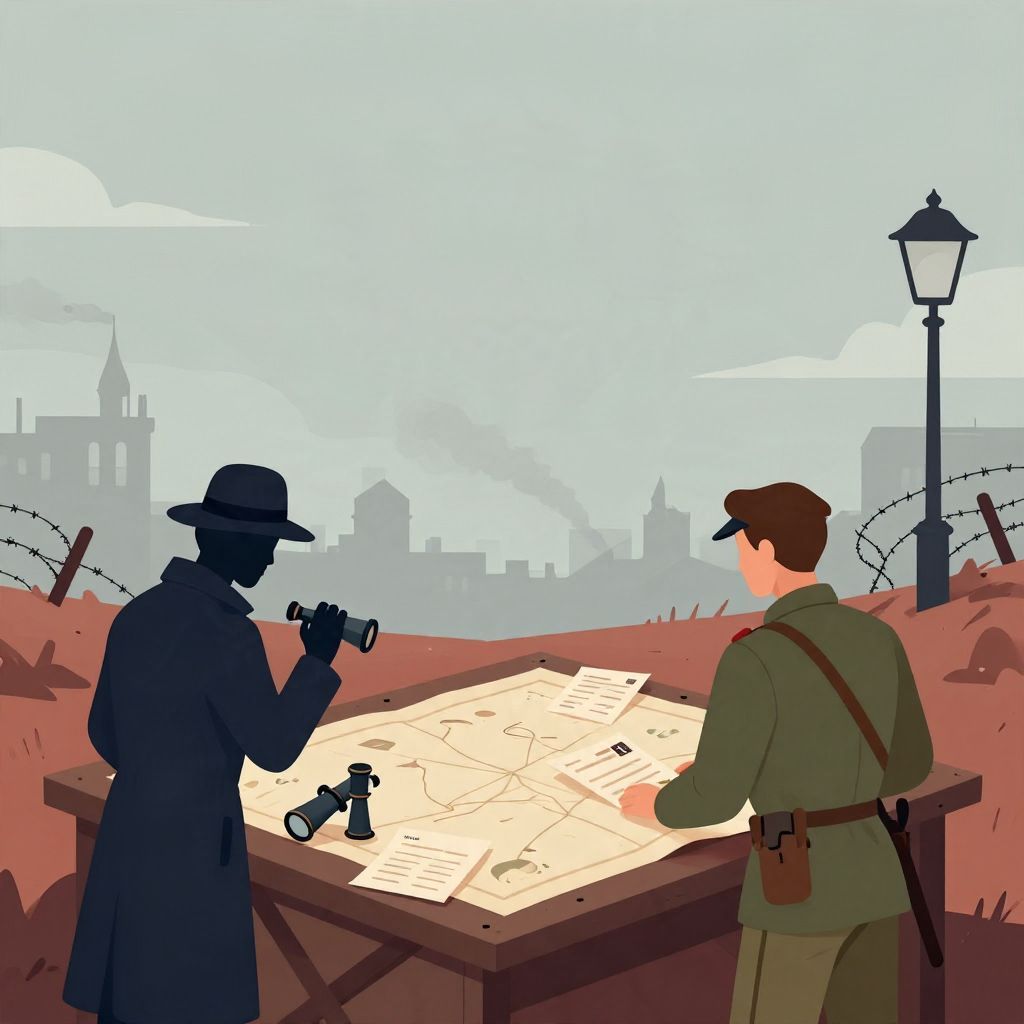
If you are asking, “Which excerpt best states the central idea of the second paragraph of The Dark Game?” the answer depends on that paragraph’s specific wording. In most classroom contexts, the second paragraph introduces the book’s main subject: the hidden world of espionage and the way secret intelligence shaped modern history.
Because different editions and excerpts can vary, the best answer is usually the excerpt that says the text is about spying, secrecy, and intelligence work influencing events behind the scenes. That central idea fits the historical purpose of The Dark Game and the broader story of espionage in the modern world.
Which excerpt best states the central idea of the second paragraph of The Dark Game?
The best excerpt is the one that summarizes the paragraph’s main point about espionage: secret agents, hidden information, and intelligence gathering played an important role in history. In other words, look for the choice that captures the paragraph’s focus on spying as a powerful but unseen force in political and military conflict.
Understanding the question in historical context
The Dark Game is commonly used in school reading materials about the history of espionage. The title itself points to secrecy, deception, and covert operations. When a question asks for the “central idea” of a paragraph, it is asking for the main message, not a minor detail or an example.
In historical writing, that main message often appears in a topic sentence or is reinforced by supporting details. For a text about espionage, the central idea is usually that intelligence work has long influenced wars, diplomacy, and government decisions, even when the public did not see it happening.
What the second paragraph is likely doing
In many informational texts, the first paragraph introduces the topic broadly, while the second paragraph narrows the focus. In a work like The Dark Game, that second paragraph often explains why espionage matters historically: it helped leaders gain advantages, uncover enemies’ plans, and shape outcomes without open battle.
Common ideas that fit the paragraph
- Espionage is a secret form of information gathering.
- Spies have influenced wars and governments for centuries.
- Hidden intelligence can change the course of events.
- Much of history is shaped by actions the public never sees.
If one answer choice says something like “spies and secret intelligence have affected the course of history,” that would usually be the best match for the central idea. A choice that focuses on a single person, a random event, or a small detail would be less likely to capture the paragraph’s main point.
Why espionage matters in history
Espionage is not just a dramatic story element. It has been a practical tool of states for a very long time. Rulers, generals, and governments have always wanted information about enemies’ plans, troop movements, alliances, and weaknesses. The more complex states became, the more valuable secret information became.
In the modern era, especially from the nineteenth century onward, intelligence systems became more organized. Governments created networks of agents, codes, intercepts, and surveillance methods. During the world wars and the Cold War, espionage became even more important because military power depended not only on armies but also on information, deception, and technology.
Examples from modern history
- World War I: intelligence gathering helped armies track enemy plans and movements.
- World War II: codebreaking and undercover operations played major roles in strategy.
- The Cold War: spying became central to competition between the United States and the Soviet Union.
This broader history helps explain why a text titled The Dark Game would emphasize secrecy. Espionage is “dark” not because it is imaginary, but because it happens out of public view and often leaves only partial records behind.
How to identify the best excerpt on a reading question
When answering a question like this, the best strategy is to compare each excerpt against the paragraph’s overall meaning. The correct choice should be broad enough to include the paragraph’s main point and specific enough to match its subject.
Ask these questions
- What is the paragraph mostly about?
- Does the excerpt mention the main subject, not just a detail?
- Does it sound like a summary of the paragraph’s idea?
- Would the excerpt still make sense if the supporting examples were removed?
For The Dark Game, the best excerpt will usually be the one that emphasizes espionage as a hidden but important force in history. If an answer choice only mentions one spy, one war, or one isolated event, it may be too narrow to represent the central idea.
Why the wording matters
Central idea questions often use paraphrasing. That means the correct answer may not repeat the paragraph word for word. Instead, it restates the meaning in simpler or broader terms. Students sometimes miss the right answer because they look for exact wording rather than the underlying idea.
For example, if the paragraph describes secret agents, codes, and hidden operations, the best excerpt may summarize all of that as “spying has long shaped history.” That is not a direct quote, but it can still be the best answer because it captures the paragraph’s purpose.
What makes an excerpt weak?
- It focuses on a small detail instead of the main idea.
- It is too narrow to cover the whole paragraph.
- It introduces a new idea not supported by the paragraph.
- It only describes one example rather than the general point.
The historical theme behind The Dark Game
The deeper historical theme of The Dark Game is that power often depends on information. Armies can be large and governments can be strong, but without knowledge of an opponent’s intentions, even powerful states can be vulnerable. Espionage developed because leaders understood that secrecy could be as valuable as force.
This theme also helps explain why intelligence work has always raised ethical questions. Spying can protect a nation, but it can also involve deception, secrecy, and violations of trust. That tension is part of why espionage remains such a compelling historical subject.
Direct answer for the question
The excerpt that best states the central idea of the second paragraph of The Dark Game is the one that says the text is about espionage and its importance in history. In short, choose the excerpt that summarizes secret intelligence as a hidden force shaping events, rather than one that only mentions a single example or detail.
Takeaway
The Dark Game points to a major historical truth: much of history is shaped by unseen actions, especially espionage and intelligence gathering. If you are choosing between excerpts, pick the one that most clearly expresses that broad idea. For related background on the political themes behind such stories, you may also find what American imperialism was and what nationalism means in history useful.