
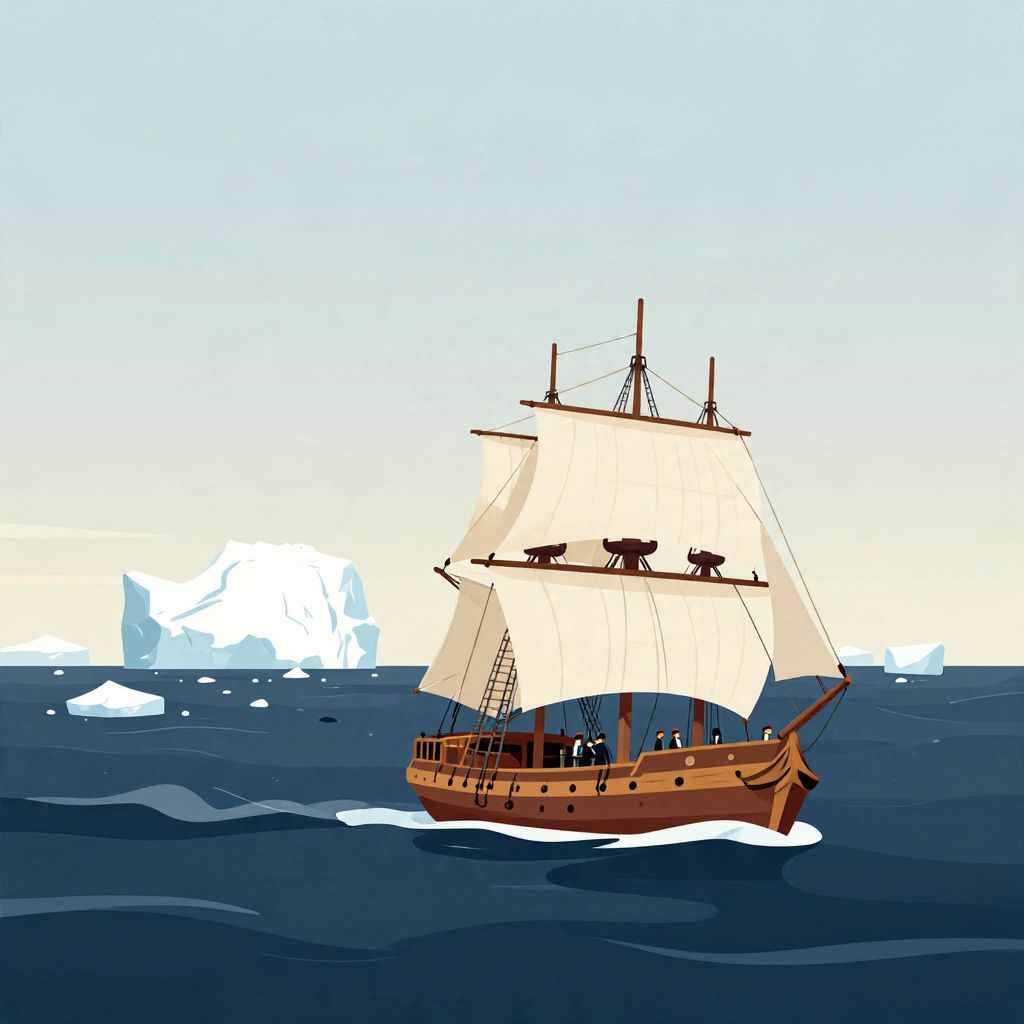
When was Antarctica discovered? The short answer is that Antarctica was first sighted by humans in the early 19th century, with the most widely accepted first confirmed sightings occurring in 1820. The exact “discoverer” depends on how discovery is defined, because several expeditions saw the continent around the same time, and earlier explorers had long imagined a southern land without actually reaching it.
So the story is less about a single heroic moment than a gradual process of sighting, charting, and proving that a vast continent existed at the bottom of the world. By the end of the 1800s, Antarctica had moved from speculation to mapped reality, and in the 20th century it became the focus of scientific exploration rather than imperial conquest.
When Was Antarctica Discovered?
Antarctica was not “discovered” in one universally agreed instant, but the first confirmed sightings of the continent are generally dated to 1820. Several explorers may have seen Antarctic land that year, including Fabian Gottlieb von Bellingshausen, Edward Bransfield, and Nathaniel Palmer. Because records are incomplete and definitions differ, historians usually treat 1820 as the key discovery year.
Why the Date Is Complicated
The question sounds simple, but Antarctica’s discovery is complicated by geography and by the meaning of “discovered.” If discovery means the first humans to see Antarctic land, then 1820 is the crucial year. If it means the first time the continent was conclusively identified and explored, the process stretched across decades.
Ancient ideas of a southern continent
Long before anyone reached Antarctica, European geographers believed there must be a large landmass in the far south to balance the northern continents. This theoretical land, often called Terra Australis, appeared on maps for centuries. It was an idea based on classical geography and speculation, not on direct observation.
That distinction matters. People had imagined a southern continent for a long time, but imagination is not discovery. Antarctica only entered recorded history when explorers actually encountered its ice, coastline, and surrounding seas.
The First Confirmed Sightings in 1820
The year 1820 is usually treated as the moment Antarctica was first discovered because multiple expeditions reported seeing Antarctic land then. The exact order is debated, but the year itself is well established. The sightings took place during a period of intense naval exploration in the Southern Ocean, driven by scientific curiosity, sealing interests, and the broader age of global exploration.
Fabian Gottlieb von Bellingshausen
The Russian naval officer Fabian Gottlieb von Bellingshausen led a circumnavigation of the Antarctic region in 1819–1821. On 27 January 1820, his expedition is often credited with the first sighting of the Antarctic mainland or ice shelf near the continent. Some historians consider this the strongest claim to first discovery, though the evidence is interpreted cautiously because the expedition’s observations were not always precise by modern standards.
Edward Bransfield
Just days later, on 30 January 1820, the British naval officer Edward Bransfield sighted land on the Antarctic Peninsula region. Many historians regard Bransfield’s observations as the first clearly documented sighting of the continent itself. His report helped establish that a substantial southern landmass existed, even if he did not fully realize its scale.
Nathaniel Palmer
In November 1820, the American sealer Nathaniel Palmer also sighted Antarctic land in the peninsula area. Palmer’s claim is important because it shows that commercial sealing voyages were part of the same exploration era. Sealers often traveled farther south than naval expeditions in search of new hunting grounds, and their practical knowledge contributed to the mapping of the region.
So Who Discovered Antarctica?
There is no single universally accepted “discoverer” of Antarctica. If you want the safest historical answer, it is this: Antarctica was first sighted in 1820, by several explorers independently and almost simultaneously. Bellingshausen, Bransfield, and Palmer are the names most often associated with the discovery, but historians still debate priority because the surviving records do not settle the question beyond dispute.
This is common in exploration history. Many famous “firsts” were not clean one-person achievements but overlapping events shaped by weather, ice, navigation limits, and imperfect documentation. Antarctica’s discovery is a textbook example of that problem.
What Happened Before 1820?
Before the 19th century, Europeans did not know Antarctica existed as a real continent, though they strongly suspected some southern land must be there. Explorers had already crossed far into the southern oceans, but the ice barrier, harsh weather, and lack of reliable navigation tools made direct contact with Antarctica extraordinarily difficult.
Cook’s southern voyages
James Cook came close to Antarctic waters during his second voyage in the 1770s. He crossed the Antarctic Circle and proved that if a southern continent existed, it lay in icy, dangerous waters. Yet he did not sight the mainland. Cook’s voyages were important because they narrowed the mystery and showed that the southern hemisphere was far more hostile than earlier mapmakers had imagined.
Cook’s failure to find the continent did not mean it was absent; it meant it was hidden behind sea ice and rough conditions. In that sense, his voyages prepared the way for the later discoveries of 1820.
Why 1820 Matters in Antarctic History
The discovery of Antarctica in 1820 marked the beginning of a new historical phase. Once explorers knew the continent existed, attention shifted from speculation to mapping, sealing, whaling, and eventually science. The continent was no longer a blank space on the map but a real place with coastlines, islands, and ecosystems.
From discovery to exploitation
After the first sightings, sealers and whalers increasingly ventured into Antarctic waters. Their activities were driven by profit, not by scientific goals, and they had a major impact on wildlife. Fur seal populations in particular were heavily hunted in the early 19th century. Discovery therefore led quickly to exploitation, a pattern seen in many newly charted regions.
From exploration to science
By the late 19th and early 20th centuries, Antarctica became a major site of scientific interest. Expeditions sought to understand its geology, climate, magnetic field, and wildlife. The heroic age of Antarctic exploration, associated with figures such as Roald Amundsen, Robert Falcon Scott, and Ernest Shackleton, built on the earlier discovery phase but had very different aims.
Was Antarctica Discovered by Europeans Only?
In historical writing, “discovered” usually refers to the first recorded European sighting because that is what entered global archival history. But it is worth noting that this wording can be misleading. Antarctica was not an empty or timeless place waiting to be found in a philosophical sense; it was a physical continent that became known to the wider world through European maritime exploration.
There is no evidence of an ancient human civilization in Antarctica, and no confirmed pre-19th-century settlement. The continent’s extreme climate and isolation made long-term habitation impossible for the societies known to history. So while the term “discovery” is conventional, it should be understood as a historical label rather than a statement that the continent had no existence before Europeans arrived.
The Role of Maps, Myths, and Misunderstandings
For centuries, maps showed a hypothetical southern land because scholars believed the globe needed balance. That belief was not foolish in its own context; it reflected the best geographic reasoning available before modern exploration. But it also created confusion. Some people later mistook speculative maplands for evidence that Antarctica had already been known.
In reality, the gap between theory and observation was huge. The maps proved that Europeans imagined a southern continent, but only the expeditions of 1820 proved that Antarctica was there in the real world.
Timeline of Antarctica’s Discovery
Here is the basic chronology of how Antarctica became known:
- Ancient and medieval periods: Geographers speculate about a southern continent, often called Terra Australis.
- 1770s: James Cook crosses far into the Southern Ocean and proves that any southern land must lie in icy waters.
- 1820: Bellingshausen, Bransfield, and Palmer independently sight Antarctic land, making this the key discovery year.
- Late 1800s: Expeditions map more of the coastline and surrounding islands.
- Early 1900s: Major expeditions reach the interior and the South Pole, turning Antarctica into a major field of exploration and science.
The Lasting Significance of Antarctica’s Discovery
Antarctica’s discovery changed how the world understood the planet. It completed the broad outline of Earth’s geography and opened a new frontier for scientific research. It also raised questions about sovereignty, resource use, and international cooperation that continue today.
Unlike many other “discovered” lands, Antarctica was never permanently colonized by an indigenous population or divided into long-standing states. That unusual history helped shape the Antarctic Treaty System in the 20th century, which set the continent aside for peaceful scientific purposes. In that sense, the discovery of Antarctica eventually led not to empire, but to a rare international agreement.
Final Answer
If you are looking for the clearest historical date, Antarctica was discovered in 1820. More precisely, it was first sighted by several explorers in that year, with Bellingshausen, Bransfield, and Palmer all associated with the event. The exact “first discoverer” remains debated, but 1820 is the accepted turning point when Antarctica entered recorded history. For related exploration history, you may also enjoy articles on James Cook’s voyages and the heroic age of Antarctic exploration.