
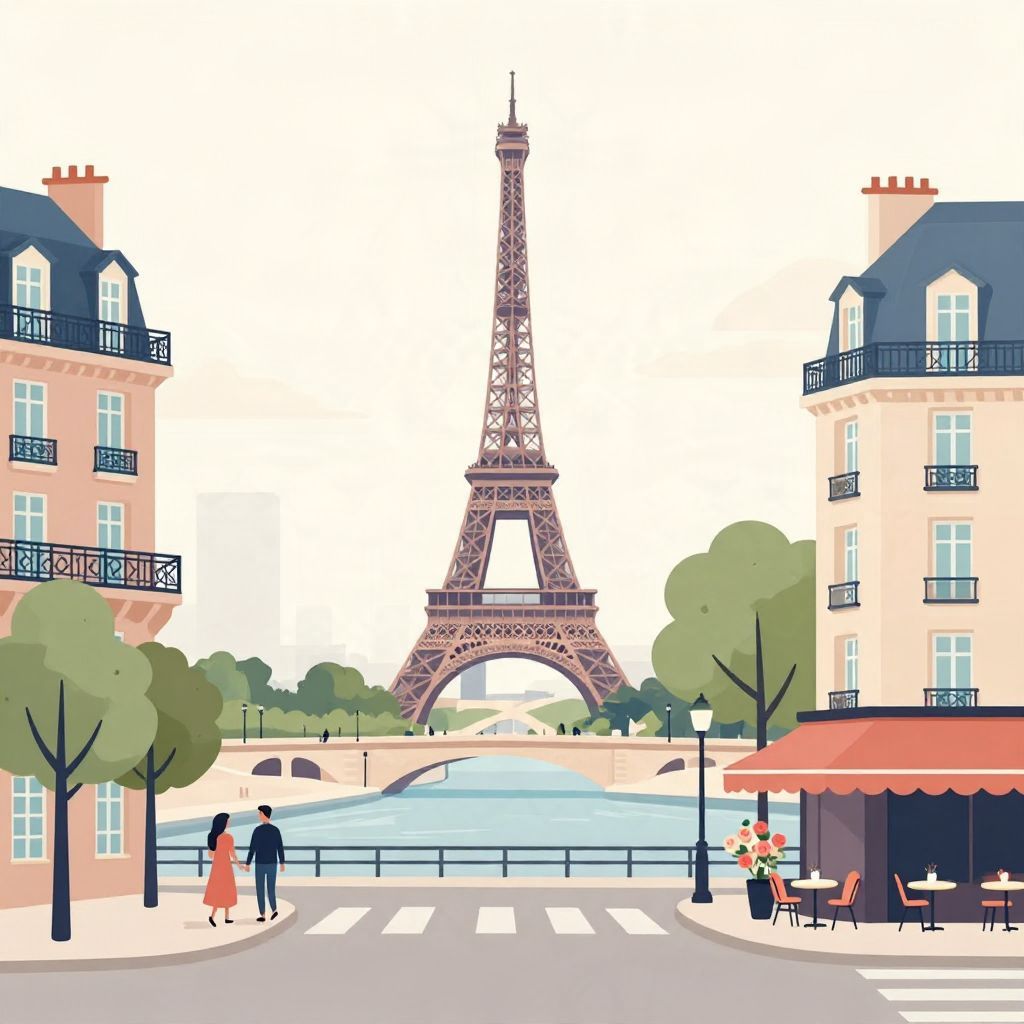
What is the city of love? In modern usage, the phrase most often refers to Paris, a city long associated with romance, art, elegant streets, and intimate public life. But the nickname is not an ancient official title; it grew gradually from literature, tourism, and popular culture.
Understanding why Paris earned this reputation means looking at both history and myth. The city’s romantic image was shaped by its architecture, cafés, riverbanks, and its role as a center of fashion, literature, and courtship in Europe.
What Is The City Of Love?
The “city of love” is most commonly Paris, France. The phrase is a cultural nickname rather than a formal designation, and it reflects Paris’s long-standing association with romance, beauty, and artistic life. Other cities have also been called romantic, but Paris is the best-known answer.
Why Paris Became Known as the City of Love
Paris became linked with love through a combination of history, urban design, and cultural reputation. Its bridges, boulevards, gardens, and river views created a setting that writers and visitors repeatedly described as ideal for romance. Over time, those descriptions became part of the city’s identity.
Literature and the romantic imagination
From the 18th and 19th centuries onward, European writers often portrayed Paris as a place of passion, elegance, and emotional intensity. Novels, poems, and travel writing helped spread the idea that the city was not just a political and commercial center, but also a stage for love affairs and artistic inspiration.
Tourism and the modern image of romance
As international tourism expanded in the 19th and 20th centuries, visitors increasingly came to Paris seeking its atmosphere as much as its monuments. The city’s cafés, theaters, and promenades encouraged public social life, while landmarks like the Seine, the Eiffel Tower, and Montmartre became symbols of romantic experience.
The Historical Background of Paris
Paris did not become famous overnight. Its romantic reputation rests on a long history that began with a much older settlement and developed through centuries of political power, urban growth, and cultural influence. The city’s identity changed many times before the modern nickname emerged.
From Roman settlement to medieval capital
The origins of Paris go back to the Parisii, a Celtic people who lived in the region before Roman rule. Under the Romans, the settlement was known as Lutetia. By the Middle Ages, Paris had become one of the major cities of Western Europe and an important center of learning, religion, and royal authority.
The rise of a royal and cultural capital
When French kings strengthened their power in and around Paris, the city gained greater prestige. The presence of the monarchy, major churches, universities, and later salons and academies helped make Paris a place where influence and refinement converged. That concentration of power and culture contributed to its later romantic aura.
How the City’s Layout Encouraged Romantic Symbolism
Paris’s physical form matters to its reputation. A city becomes “romantic” not only because of stories told about it, but also because of the spaces people move through. Paris offered settings that invited strolling, conversation, and public display, which made it especially suited to being imagined as a city of love.
Rivers, bridges, and promenades
The Seine divides and unites the city, and its bridges became natural meeting places. Riverbanks, quays, and tree-lined walks gave Parisians and visitors places to linger. In many European cities, public space was more constrained; in Paris, the experience of walking through the city became part of its charm.
Cafés and social life
Cafés played a major role in Parisian life from the 17th century onward. They were places to talk, read, argue, and meet others. This culture of public sociability helped create an image of Paris as a city where personal relationships, ideas, and emotions could flourish in visible, stylish settings.
Paris in Art, Fashion, and Popular Culture
Paris’s reputation as the city of love was reinforced by its place in the arts. Painters, filmmakers, musicians, and designers repeatedly used the city as a backdrop for stories of longing, desire, and elegance. Each new generation inherited and renewed the image.
Artistic capital of Europe
By the 19th century, Paris had become one of the world’s leading artistic centers. Artists from across Europe and beyond came to study, work, and exhibit there. The city’s creative energy helped shape a broader idea of Paris as refined, expressive, and emotionally charged.
Fashion and style
Paris also became famous as a center of fashion. Clothing, manners, and appearance mattered greatly in the city’s social life. Because romance is often linked with beauty and presentation, Parisian style contributed to the idea that the city itself embodied elegance and attraction.
Film and the global spread of the nickname
In the 20th century, cinema spread Paris’s romantic image around the world. Films set in Paris often emphasized moonlit streets, cafés, and couples walking by the Seine. These scenes were not always realistic, but they were powerful in fixing the city’s identity in the global imagination.
Is Paris Really the Only City of Love?
Not exactly. The phrase is popular, but it is not exclusive. Different cultures and languages have used similar labels for other places. Venice, Verona, Prague, and even cities outside Europe are sometimes described as romantic. Still, Paris remains the most widely recognized “city of love.”
Why the nickname varies
“City of love” is a symbolic phrase, not a historical category. People apply it to cities that seem beautiful, intimate, or emotionally resonant. The nickname depends on tourism, literature, and local branding as much as on history. That is why more than one city can claim a romantic reputation.
Why Paris stands apart
Paris stands out because its romantic image is especially durable and internationally familiar. Few other cities have been so consistently linked with love in novels, postcards, paintings, advertisements, and films. The nickname became part of the city’s global identity rather than a passing trend.
Common Myths and Historical Reality
It is easy to imagine that Paris was always called the city of love, but that is not historically precise. The phrase developed over time. Its meaning comes from cultural memory, not from a single founding moment or official proclamation.
Myth: the nickname is ancient
There is no evidence that ancient Romans or medieval Parisians formally called the city the “city of love.” The label is modern in the sense that it reflects later literary and tourist culture, even though the city itself is very old.
Myth: romance is the city’s only history
Paris is also a city of revolution, labor, state power, religion, and conflict. It was the center of major political upheavals, including the French Revolution in 1789. Its romantic image should not obscure its deeper historical role as one of Europe’s most influential capitals.
Key Facts About the City of Love
These facts help place the nickname in historical context:
- Most common answer: Paris, France
- Nickname type: cultural and promotional, not official
- Historical roots: ancient settlement, Roman Lutetia, medieval capital
- Why it fits: architecture, public spaces, literature, art, fashion, and tourism
- Modern spread: travel writing, posters, film, and global media
Why the Phrase Still Matters Today
The city of love remains a powerful phrase because it captures how history can shape emotion. Paris’s romantic reputation is not just about couples or sightseeing; it reflects centuries of urban life, cultural production, and international imagination. The nickname shows how a city can become a symbol larger than itself.
So, when people ask “What is the city of love?”, the best historical answer is Paris—while remembering that the title is a cultural tradition, not an official fact. For related historical context, you may also enjoy reading about the oldest city in America and why Bosnia and Herzegovina has that name.