
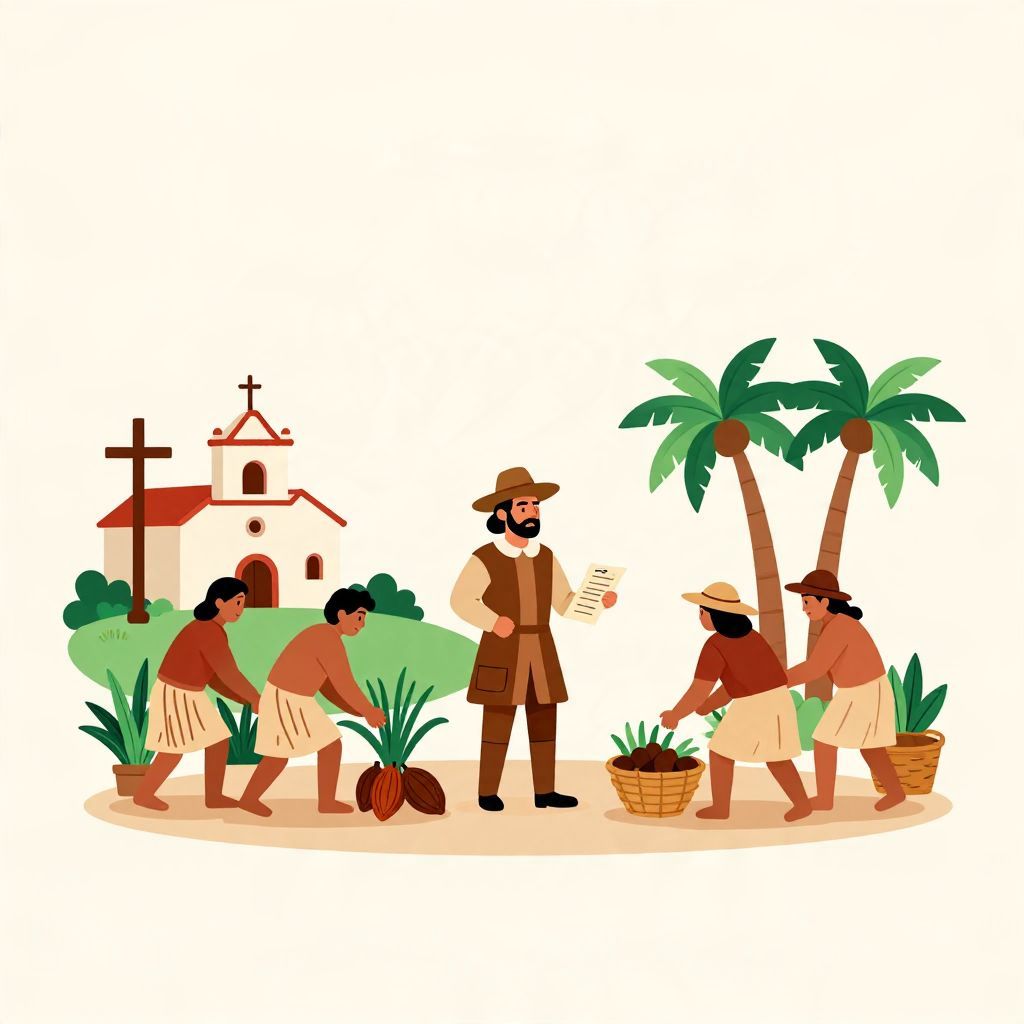
The encomienda system was a Spanish colonial labor and tribute arrangement used in the Americas after the conquest of the Caribbean and mainland regions. In APUSH terms, it is important because it shows how Spain organized empire, exploited Indigenous labor, and built wealth in the New World.
It was not slavery in name, but in practice it often forced Native peoples to work under harsh conditions while Spanish settlers claimed the right to their labor, tribute, and religious instruction.
What Was the Encomienda System APUSH?
The encomienda system was a Spanish imperial policy that granted a colonist, or encomendero, the right to collect tribute and labor from a group of Indigenous people. In theory, the encomendero was supposed to protect and Christianize them; in reality, it frequently became a system of exploitation, coercion, and demographic collapse.
Background: Why Spain Created the Encomienda
Spain developed the encomienda in the early 1500s after Christopher Columbus’s voyages opened the Americas to European conquest. Spanish officials needed a way to reward conquerors, control territory, and extract wealth quickly. The system borrowed from older Iberian traditions of tribute and labor obligations, but in the Americas it took on a much harsher colonial form.
The Spanish Crown also faced a practical problem: it did not have enough settlers or soldiers to directly govern vast new lands. By granting labor rights to colonists, the monarchy could extend its reach without paying for a huge colonial bureaucracy. The result was a system that tied conquest, profit, and empire together.
How the Encomienda Worked
Under the encomienda, a Spanish settler received a grant over a Native community, not ownership of the land itself in theory, but access to the people living there. Indigenous men, women, and sometimes children were expected to provide labor, food, or goods such as maize, cotton, or precious metals. In exchange, the encomendero was supposed to offer military protection and religious instruction.
Key features of the system
- Tribute: Indigenous communities had to pay goods, labor, or produce.
- Labor demands: Many were forced into mines, fields, construction, or transport.
- Christianization: Spanish authorities claimed the system would help convert Native peoples to Christianity.
- Local power: Encomenderos became influential colonial elites.
Although the Crown insisted that Indigenous people were not legally enslaved, the difference was often meaningless on the ground. Native communities had little ability to refuse demands, and Spanish overseers frequently used violence, intimidation, and overwork to maintain control.
Origins and Early Development in the Caribbean
The encomienda first emerged in the Caribbean colonies, especially Hispaniola, in the early 1500s. Spanish settlers there sought gold and labor, but Indigenous populations were already under severe stress from disease, warfare, displacement, and social disruption. The system intensified these pressures dramatically.
As the Spanish expanded into Mexico, Peru, and elsewhere, the encomienda spread with them. It became one of the main tools of early Spanish colonization. Conquistadors such as Hernán Cortés and Francisco Pizarro benefited from it, since it rewarded military conquest with access to labor and tribute.
Why it spread so quickly
- Spain wanted immediate economic returns from conquest.
- Conquerors expected rewards for their service.
- The Crown needed a way to organize Indigenous labor without governing every community directly.
- Colonial settlement depended on Native labor far more than on European migration.
Was the Encomienda the Same as Slavery?
Historians usually distinguish the encomienda from chattel slavery, but the line could be thin in practice. Enslaved people were legally treated as property, while Indigenous communities under encomienda were technically subjects of the Crown and not property of the encomendero. Still, both systems relied on forced labor, coercion, and racial hierarchy.
For APUSH students, the important point is that the encomienda was a form of coerced labor central to Spanish colonialism. It was justified as paternalistic and Christian, but it often functioned as exploitation. The legal language mattered to the Spanish state, yet Indigenous workers experienced it as oppression.
Consequences for Indigenous Peoples
The consequences were devastating. Indigenous populations in the Caribbean and parts of the mainland collapsed due to disease, forced labor, malnutrition, violence, and social breakdown. The encomienda did not cause all of this alone, but it magnified the destruction caused by conquest and epidemic disease.
Communities lost workers, leaders, and stability. Families were separated, local economies were disrupted, and traditional authority structures were weakened. In many areas, the system accelerated demographic decline so severe that Spanish colonists later turned to African slavery and other labor systems to fill the labor shortage.
Long-term effects
- Severe Indigenous population decline.
- Growth of colonial inequality and racial hierarchy.
- Expansion of other coerced labor systems, including African slavery and repartimiento-like labor drafts.
- Consolidation of Spanish colonial wealth and power.
Spanish Debates and Reform Efforts
The encomienda quickly became controversial within Spain itself. Some clergy and officials argued that it abused Indigenous people and violated Christian principles. One of the most famous critics was Bartolomé de las Casas, who condemned Spanish brutality and defended Indigenous rights. His writings helped push the Crown toward reform, though change was slow and incomplete.
The Spanish monarchy tried to limit the power of encomenderos because they could become too independent. The Crown feared that colonial elites might build hereditary local power bases. As a result, it issued reforms such as the New Laws of 1542, which aimed to restrict the inheritance and abuse of encomiendas. Enforcement, however, was uneven, and colonial resistance was strong.
Why reform was difficult
Spanish officials faced a contradiction: they wanted to protect Indigenous subjects in theory, but they also depended on colonial labor and tribute in practice. This tension shaped much of Spanish America. Reforms reduced some abuses over time, but they did not end exploitation.
How the Encomienda Changed Over Time
By the later 1500s and 1600s, the classic encomienda system declined in many regions, especially as Indigenous populations fell and the Crown strengthened direct control. In some places, tribute obligations continued in altered forms, but the original system lost some of its importance.
Its decline did not mean labor exploitation ended. Instead, Spanish America increasingly relied on other arrangements, including wage labor under coercive conditions, repartimiento drafts, hacienda labor, and African slavery in many regions. The basic colonial goal remained the same: extract labor and wealth from subject populations.
Why the Encomienda Matters in APUSH
APUSH courses use the encomienda system to explain early European colonization, the Columbian Exchange, and the development of colonial labor systems. It helps students see how empire was built not just through exploration and conquest, but through structures of forced labor and racial inequality.
It also helps explain later patterns in American history. Colonial labor systems shaped economic development, social hierarchy, and race relations in the Americas. Understanding the encomienda provides context for broader themes such as mercantilism, imperial competition, and the exploitation of Native peoples.
What students should remember
- It was a Spanish colonial labor and tribute system.
- It began in the early 1500s after conquest in the Caribbean.
- It gave Spanish settlers control over Indigenous labor, not usually formal land ownership.
- It was justified as protection and Christianization but often became exploitation.
- It contributed to Indigenous population collapse and colonial inequality.
Common APUSH Test Takeaway
If you see the encomienda on an APUSH exam, connect it to Spanish colonization, Indigenous labor exploitation, and the early economic foundations of the Spanish Empire. It is best understood as a coercive colonial labor system that helped Spain extract wealth from the Americas while reshaping Native societies.
In short, the encomienda system was one of the most important early institutions of Spanish America because it reveals how conquest turned into empire. For related colonial labor and economic systems, you may also want to read about the headright system and mercantilism.