
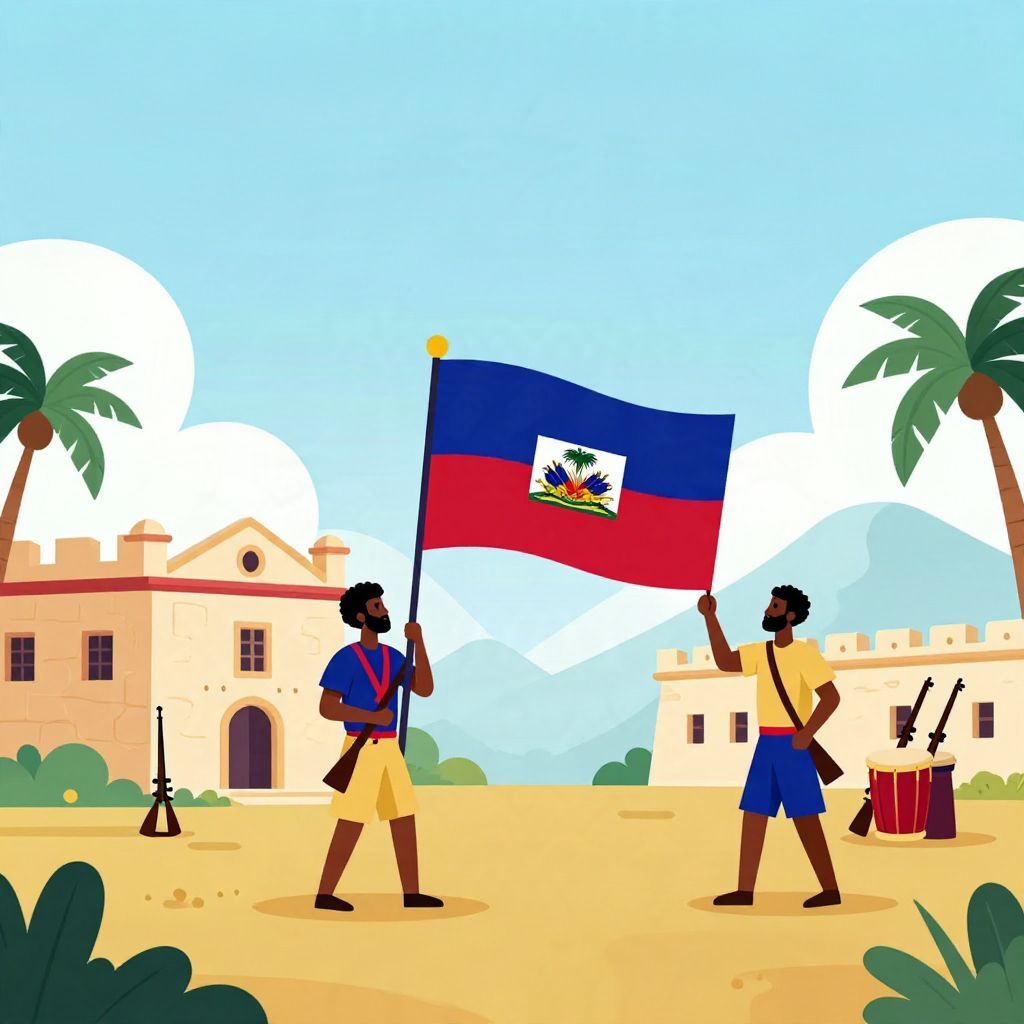
Haitian Flag Day is celebrated every year on May 18. It is one of Haiti’s most important national observances, marking the creation of the Haitian flag during the revolutionary era and honoring the struggle for independence, unity, and national identity.
The holiday is especially significant in Haiti and among Haitian communities abroad because the flag is more than a symbol of statehood: it represents the birth of a nation forged through revolution. To understand why May 18 matters, it helps to look at the history of the Haitian Revolution and the meaning attached to the flag itself.
When Is Haitian Flag Day?
Haitian Flag Day is observed on May 18 each year. The date commemorates the adoption of the Haitian flag in 1803 at the Congress of Arcahaie, during the final phase of the Haitian Revolution. It is a national holiday in Haiti and a day of cultural pride for Haitians worldwide.
Why May 18 Matters in Haitian History
May 18 is tied to one of the most important moments in Caribbean and world history: the Haitian Revolution, the only successful slave revolution in modern history. In 1803, revolutionary leaders gathered at Arcahaie and adopted a new flag that symbolized a break from French colonial rule and a new political future. The date later became a national day of remembrance and celebration.
The Congress of Arcahaie
The story of Flag Day is linked to the Congress of Arcahaie, which took place in May 1803. According to the traditional account, revolutionary leader Jean-Jacques Dessalines removed the white section from the French tricolor and asked Catherine Flon, a seamstress and relative of another revolutionary leader, to sew the blue and red bands together. This act symbolized the rejection of French authority and the creation of a Haitian identity. The exact details are part history and part national tradition, but the broader event is well established.
From Revolution to Nationhood
The flag was not just a banner for battle. It represented a political transformation. The revolution began in 1791 after enslaved people in Saint-Domingue rose against the plantation system and colonial slavery. Over more than a decade of war, alliances shifted, leaders rose and fell, and the colony moved toward independence. The flag adopted in 1803 became one of the clearest symbols of that struggle and the emerging Haitian state.
The Historical Background of Haitian Flag Day
To understand Haitian Flag Day, it is important to understand the Haitian Revolution itself. Saint-Domingue, the French colony that became Haiti, was one of the wealthiest colonies in the Atlantic world because of sugar and coffee production, but that wealth depended on brutal slavery. Enslaved Africans and their descendants formed the majority of the population, and their uprising changed the course of history.
Saint-Domingue Before Independence
Before 1804, Haiti was known as Saint-Domingue. Under French rule, the colony was highly profitable, but its social order was deeply unequal. A small white planter class held power, while free people of color faced discrimination and the enslaved majority endured extreme violence. These tensions helped make revolution possible.
The Haitian Revolution and the Flag
The revolution involved figures such as Toussaint Louverture, Jean-Jacques Dessalines, Henri Christophe, and Alexandre Pétion. Different leaders had different political visions, and the struggle was shaped by war with France, Spain, and Britain as well as internal divisions. By 1803, the revolutionary movement needed a symbol that expressed unity against colonial domination. The flag became that symbol.
What Does the Haitian Flag Mean?
The Haitian flag is usually understood as a symbol of unity, independence, and resilience. Its colors and form have changed at different points in Haitian history, but the flag’s core meaning has remained tied to the revolution and the nation’s origins. For many Haitians, it represents sacrifice, freedom, and collective identity.
Blue and Red, With a History of Change
The modern Haitian flag is blue and red in horizontal bands, with the national coat of arms centered on the white field in the middle. Historically, the flag has appeared in different versions depending on the government in power. At times Haiti used a black-and-red flag, especially under the Duvalier regime in the 20th century. These changes reflected political conflict, not a break in the holiday’s importance.
Popular Meaning and National Memory
In Haitian public memory, the flag is often associated with the end of colonial rule and the affirmation of Black sovereignty. That meaning has made Flag Day especially powerful in schools, public ceremonies, parades, and diaspora celebrations. The holiday is both patriotic and historical: it remembers the revolutionary generation while reinforcing a shared national story.
How Haitian Flag Day Is Celebrated
Haitian Flag Day is marked by ceremonies, music, speeches, school events, church services, and cultural performances. In Haiti, the day often includes public gatherings, flag-raising ceremonies, and displays of national pride. In Haitian communities abroad, especially in the United States, Canada, and the Dominican Republic, the holiday is also an important cultural event.
Public and School Celebrations
Schools often teach the history of the flag and the revolution around May 18. Students may wear the national colors, sing patriotic songs, and take part in performances or assemblies. These celebrations help connect younger generations to Haitian history and identity.
Community and Diaspora Events
For Haitians living outside Haiti, Flag Day can be a major occasion for cultural expression. Community groups may organize parades, concerts, religious services, and civic events. These gatherings often combine remembrance of the revolution with pride in Haitian language, food, music, and heritage. The holiday helps maintain ties across distance and generations.
Is Haitian Flag Day a National Holiday?
Yes. Haitian Flag Day is recognized as a national holiday in Haiti. Its official status reflects the central place of the flag in Haitian political culture and historical memory. The day is not simply ceremonial; it is one of the key dates in the national calendar, alongside Independence Day on January 1.
Flag Day and Independence Day
Haitian Flag Day and Independence Day are closely related but distinct. Independence Day on January 1 commemorates the declaration of Haitian independence in 1804. Flag Day on May 18 honors the revolutionary adoption of the flag in 1803. Together, the two dates frame the birth of Haiti: one marks the political declaration, the other the symbol that helped unite the revolution.
Historical Facts About Haitian Flag Day
- Date: May 18 every year
- Origin: Commemorates the adoption of the Haitian flag in 1803
- Historical setting: The Haitian Revolution and the Congress of Arcahaie
- Key associated figures: Jean-Jacques Dessalines, Catherine Flon, and other revolutionary leaders
- National significance: A day of patriotic celebration and remembrance in Haiti
Why Haitian Flag Day Still Matters
Haitian Flag Day remains important because it connects present-day Haiti to the revolutionary struggle that created it. The holiday reminds people that the nation was born out of resistance to slavery and colonial rule. It also offers a shared symbol that can unite Haitians across political differences, social classes, and national borders.
For historians, the day is a reminder that national symbols are not abstract decorations. They emerge from conflict, sacrifice, and political change. In Haiti’s case, the flag is inseparable from the revolution that made independence possible and from the memory of those who fought for it.
If you are exploring Haitian history further, you may also be interested in broader cultural celebrations such as what Carnival is and how public rituals shape identity, even in places far beyond Haiti.